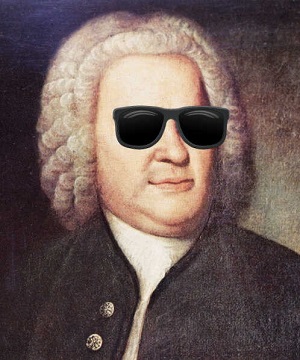
12.17.2023 – Jeanette, Isabella

Jeanette, Isabella
see how the child is sleeping
how He smiles in dreams …

In the book, Upstairs at the White House, former White House Chief Usher J.B. West relates how Mamie Eisenhower went all in on holiday decorations.

West writes, “At Eastertime there were butterflies hanging from the chandeliers, artificial birds singing with tape-recorded voices … “Would you please shut off the birds?” Mrs. Eisenhower said to the butler …

This anecdote was on my mind last night.

With all the music of the season playing everywhere, one Christmas Carol broke through the clutter and I says to myself, “Mike, what IS that tune?”

I know I had heard before in Christmas times past but this time I had the time to get online and track down the song.

What I was looking for turned out to be the French carol, Un flambeau, Jeannette, Isabelle or Bring a Torch, Jeanette, Isabella.

According to Wikipedia, it … is a Christmas carol which originated from the Provence region of France in the 17th century. The song is usually notated in 3/8 time.

The carol was first published in France, and was subsequently translated into English in the 18th century. The song was originally not meant for Christmas; it was considered dance music for French nobility.

The carol first appeared in print in 1688 with the Provençal text Venès lèu, Vèire la piéucello; Venès lèu, Genti pastourèu! in a collection of twelve Provençal noëls by Nicolas Saboly. The popularity of the melody is attested by its use four years later by Marc-Antoine Charpentier for the drinking song, Qu’ils sont doux, bouteille jolie in a 1672 revival of Molière’s Le médecin malgré lui.

To this day on Christmas Eve in Provence, children dress as shepherds and milkmaids, bringing torches and candles while singing the carol on their way to Midnight Mass.

It is a pleasant mental picture to imagine the sweet little French faces of sweet little French kids wearing sweet little shepherd clothes and walking through the villages on their way to Midnight Mass by candlelight singing this song in their sweet little French voices.

Wouldn’t it be cool if it really happens.

It is certainly a better mental picture then my memory of a Christmas Program I took part where we were all given a candle to carry until someone figured out that a bunch of 4th grade boys carrying lit candles down the aisle of the church was not the best idea in the world.

So we carried these long white candles, unlit but held high as we walked down the aisle to the microphone to sing our song.

We had to wait for some scripture reading to finish before we sang and one of my friends became transfixed by the metal mesh microphone on the stand in front of us.

For reasons never explained, as we waited, my friend reached out with his candle and rubbed it all over the microphone like it was a grater, filling the mesh with wax.

Something drove him to it, he was helpless to resist and he made sure he covered the entire mic.

In my mind I can hear my Dad, who was a major player with the procuring and maintenance of the churches sound system, saying ‘HEY! What’s that kid doing?

The rest of the program was slightly muted.

But I digress.

You Tube is filled with many versions of Un flambeau, Jeannette, Isabelle.

Instrumental and vocal.

Some in English.

Some in French.

The real show offs sing a stanza in French then sing the same stanza English.

The really real show offs sing every line in French then repeat it in English.

Some really real show offs wannabees try to have a duet with one person singing in French and the other in English but that mostly doesn’t really work.

I like an instrumental version by the Piano Guys.

I know what you are asking.

What does this have to do with Mamie Eisenhower.

I’ll tell you.

Before you go looking for this piece of music let me warn you and say that this music should have a warning.

A warning that this little tune should be labeled as an earworm.

An earworm or brain worm, also known as sticky music or stuck song syndrome, according to Wikipedia, is a catchy or memorable piece of music or saying that continuously occupies a person’s mind even after it is no longer being played or spoken about.

It causes Involuntary Musical Imagery.

I know.

I know, because starting last night and going on right now my brain is still playing the line, Bring a torch, Jeanette, Isabella! Bring a torch, to the cradle run!

Bring a torch, Jeanette, Isabella! Bring a torch, to the cradle run!

Bring a torch, Jeanette, Isabella! Bring a torch, to the cradle run!

Bring a torch, Jeanette, Isabella! Bring a torch, to the cradle run!

Over and over and over again.

Somebody, please, turn it off.

Would you please turn off the birds!

ALL NIGHT LONG.

No rest for the wicked or me either.

Just Bring a torch, Jeanette, Isabella! Bring a torch, to the cradle run!

Where is the advil.

Don’t say I didn’t warn you.

Here are the lyrics in English.

Bring a torch, Jeanette, Isabella!
Bring a torch, to the cradle run!
It is Jesus, good folk of the village;
Christ is born and Mary’s calling.
Ah! ah! beautiful is the Mother!
Ah! ah! beautiful is her Son!

It is wrong when the child is sleeping,
It is wrong to talk so loud;
Silence, all, as you gather around,
Lest your noise should waken Jesus.
Hush! hush! see how fast He slumbers;
Hush! hush! see how fast He sleeps!

Softly to the little stable.
Softly for a moment come;
Look and see how charming is Jesus,
How He is warm, His cheeks are rosy.
Hush! hush! see how the child is sleeping;
Hush! hush! see how He smiles in dreams.

12.14.2023 – thirty three one third

thirty three one third
long playing, unlimited
wasn’t long enough

With a movie on his life coming out, Leonard Bernstein has been much in the news of late and it got to me thinking about recordings of his work as a Director of an orchestra.

Looking through files available to me, I found the complete 9 Beethoven symphonies.

I downloaded the files and was adding them to my iphone when I noticed something odd.

The 9th symphony was in five sections.

The 4th movement was in 2 parts.

I listened to the files and tried to puzzle out why one section of the 4th movement was the first 8 minutes and the 2nd part was 19 minutes long and why there were 2 sections to start with.

I checked the notes that downloaded with the files and they said the CD that the files came originally from was produced back in 2004.

This CD is available still today on Amazon.

I was about to put the notes away when I noticed in small small print the line, LIVE PERFORMANCE and the year, 1980.

Ahhhhhhhhhhhhhhhhhhhhhh, I said.

This set of recordings were originally offered as records.

LP records.

Long Playing records that turned at constant speed of 33 1/3 revolutions per minute.

Those old records could hold about 22 minutes of music.

The 4th movement of Beethoven’s 9th symphony is about 26 minutes long.

Somewhere, someone had to choose a point to break that 4th movement into two parts.

My first thought was to wonder why someone didn’t bother to take the time to couple the two electronic files together into one file for the CD.

How lazy could you get that someone just took the digital masters of the vinyl recordings and lumped them together on this CD with an unfortunate skip 7 minutes into the 4th movement.

It really got to bug me when I thought of the mostly apocryphal story that when Sony created CD’s, the President of Sony, a one time classical music conductor, demanded that a CD had to be long enough so that Beethoven’s 9th Symphony could be played on a single CD which is why a when a CD came out it had 88 minutes of music.

Then another thought came to me.

No one argues that Mr. Bernstein and the music he created or had a part in creating is all incredibly wonderful.

While we have the recordings, we have the recordings via the technology of the era.

Records limited to 22 minutes.

When RCA Victor standardized the 33 1/3 record (and the first record, sold in 1931, was Beethoven’s Fifth Symphony, performed by the Philadelphia Orchestra under Leopold Stokowski) they only lasted 15 minutes.

The LP that made 23 minutes of sound available was ground breaking technology in 1948.

23 Minutes of recorded music.

Unlimited in many aspects.

But the long playing album wasn’t long enough.

Not until that 88 minute CD came out was there room enough for Mr. Beethoven and his 9th.

There are some technological advances that ARE cultural ones I guess.

Technology comes into the music picture often today with advances in recording, mastering, editing and even instruments themselves.

Listening to these audio files from 1980, what I noticed the most was the changes in microphones and what can be picked up an reproduced.

The whole concept of sounds and sound and recording and then stepping ahead to digitally reproducing the sounds gets me to the edge where, like sausage, I no longer want to know.

Just let me listen.

Somehow, regardless, the recordings or maybe the music itself still picks up personality.

Mr. Bernstein was famous for his energy as he directed.

Mr. Beethoven was famous for the energy as he composed.

The musicians, unless they were dead or something, picked up on both sources of energy and produce sounds filled with energy.

Beethoven has been dead for almost 200 years (2027)

Mr. Bernstein has been dead for over 30 years.

Loud and clear today.

12.9.2023 – God rest you merry!

God rest you merry
qualifying the object
mispunctuated

God rest you merry, sir.” so says William to Touchstone in As You Like It, Act 5, Scene 1 by Big Bill.

That is how the first line of the song by the same name should read.

God rest you merry, Gentleman.

Kind of like saying, GO BLUE, Gentleman.

We are not saying God Rest You, Merry Gentleman, in the same way we would not be saying, GO, Blue Gentleman.

Wikipedia has much to say on the subject.

The historic meaning of the phrase “God rest you merry” is ‘may God grant you peace and happiness’; the Oxford English Dictionary records uses of this phrase from 1534 onwards. It appears in Shakespeare’s play As You Like It and the phrase “rest you merry” appears in Romeo and Juliet; both plays date from the 1590s.

The transitive use of the verb rest in the sense “to keep, cause to continue, to remain” is typical of 16th- to 17th-century language.

However, in the present day, merry is often misinterpreted as an adjective modifying gentlemen.

Etymonline.com notes that the first line “often is mispunctuated” as “God rest you, merry gentlemen” because in contemporary language, rest has lost its use “with a predicate adjective following and qualifying the object” (Century Dictionary).

This is the case already in the 1775 variant, and is also reflected by Dickens’s replacement of the verb rest by bless in A Christmas Carol.

How often do we get to use that wonderful phrase, often is mispunctuated.

And don’t lets leave out Ye and You.

Again Wikipedia, “Some variants give the pronoun in the first line as ye instead of you, in a pseudo-archaism. In fact, ye would never have been correct, because ye is a subjective (nominative) pronoun only, never an objective (accusative) pronoun.

How will I ever sing this Christmas Carol again?

In truth I can’t wait to pass by some choral group singing outside next to a Salvation Army Red Bucket and hear them sing, “God Rest YE Merry Gentleman.”

I will have to get their attention and stop their singing so I can say that while I appreciate their effort at a pseudo-archaism, they cannot sing YE because use of the word is not correct, because ye is a subjective (nominative) pronoun only, never an objective (accusative) pronoun.

God rest you merry, y’all!

12.1.2023 – more down-to-earth terms …

more down-to-earth terms …
composed for music-lovers
refresh their spirits

I am not sure when I first heard the music known as the ‘Goldberg Variations’ by J.S. Bach.

Much like the ending in Casablanca, I don’t remember when I didn’t know how the movie ended and I don’t remember not knowing the Goldberg Variations.

I envy my wife because, one, she didn’t know the ending to Casablanca and was shocked to see Rick not get on the plane and two, she can’t remember how it ends, so she is consistently re-surprised by the ending.

I wish I could remember what it was like to see that for the first time.

And I wish I could remember what it was like to hear the Goldberg Variations for the first time.

I realized I would never be able to play the piano after I took piano lessons when I was the 3rd grade.

Me taking piano lessons had not be planned but happened by accident.

My sister Lisa had been signed up for lessons as my other two sisters, Mary and Janet had both had lessons from ‘Ol Lady Schonfeld.

Then Lisa started to play the violin and she told Mom that, much as she loved the piano, she felt she did not have time for two instruments.

Well, those lessons had been paid for so I was called in and told that from now on, no more carefree Wednesday afternoons, I would be going to see ‘Ol Lady Schonfeld.

Her real name was Miss Schonfield and I have no idea how old she was but all I ever thought of her was as ‘Ol Lady Schonfeld.

‘Ol Lady Schonfeld was the scariest person I have ever met in my life and as proof, talking about her with Lisa, who is a really good person, admitted, she too was scared to death of her.

But I went along with the idea without complaint and goodness knows I was good at complaining in those days.

In the back of my mind it seems I had the idea that soon I would be sitting down at the piano and effortlessly calling the notes of the Goldberg Variations out the keys much to amazement of everyone in my family, so I figured why not.

With genuine enthusiasm I got out of the car and ran up the steps to ‘Ol Lady Schonfeld ‘s house and knocked on the door.

The door opened like something out of Dracula movie and I swear she said, “Von’t you Come innnnnnnnn,” just like Bela Lugosi, and I entered a room where time had been stopped for many years.

I swear I could hear timid little voices calling from the walls, run … run now.. get out of here, but I shook them off and sat at the piano bench ready to learn.

That was my first mistake.

Lesson’s didn’t start at the piano.

They started at her dining room table where she taught me to drop my hand straight down and collapse my fingers into the proper, relaxed position to have my hands on the keyboard.

You did not drop your hand from your wrist, but from your elbow.

I positioned my hand and dropped it down on the table with what I thought, a graceful lilt.

‘Ol Lady Schonfeld tightened her lips and demonstrated the drop once more and then told me to do it again.

She kind of squinted as she crossed her arms and glared at me as I practiced.

“Again”, she would say then shake her head and say, “again!”

And I would do it again and again, and again and again, I would do it wrong.

That hand dropping took up the first lesson.

It lasted one hour and I saw my Mom’s station wagon out front and ‘Ol Lady Schonfeld was as grateful as I was that the hour was over as I felt I had aged a year.

My Mom asked how it went.

I replied, “I learned to drop my hand.”

Mom said you had to start somewhere.

And I thought about it and decided Mom was right and was ready for another go.

The next Wednesday came and I ran up the steps of ‘Ol Lady Schonfeld’s house and once inside, again sat at the piano.

She kinda glared a minute then crossed her arms and set, ‘Let me see you drop your hands.’

And I held out my right hand and let it fall on the piano keys and collapse on my fingers.

Which made a pretty loud and satisfying bang

I turned and looked at ‘Ol Lady Schonfeld with a big smile and she turned red and her eyes got big and with her arms crossed, she squeezed her upper arms until the muscles bulged (she must have weighed about 57 pounds).

Then she uncrossed her arms and raised a bony finger and pointed at me and said, “You didn’t practice!”

I remember looking around the room like people were going to jump out and yell surprise!

This had to be a joke, right?

But it wasn’t.

The only things in that room were me, that piano and one very mad ‘Ol Lady Schonfeld.

Things went down hill from there.

I think something clicked in my mind that day about the value of upper education.

But we slogged on together side by side on the piano bench.

Me trying so hard, not to play right but to play in such a way that she wouldn’t touch my hands with those bony fingers that could turn a glass of water into ice.

I do remember that I learned a little tune at some point but I never was able to grasp the barest rudiments of playing a piano.

I also found that sitting on the piano bench, I would be so nervous that my legs would start swinging like a pendulum and the arc would get bigger and bigger until I kicked the piano with the loud bang that set ‘Ol Lady Schonfeld into a tizzy for about 5 minutes.

It wasn’t long until I realized the more often I kicked the piano, the less often she was trying to teach me.

After a couple of months, we both realized that this wasn’t going to work.

Me, I more or less quit even pretending to have practiced.

And ‘Ol Lady Schonfeld?

Well, sorry to say, she had a stroke.

Sometimes these things work out.

I understand that she made a good recovery but on Doctors orders she had to give up teaching the piano.

Sometimes these things really work out.

I never made another serious attempt at learning a musical instrument.

And it was years later that it was discovered that I had no natural sense of rhythm.

I can’t even clap in time to the Michigan Fight Song.

All those times of gym teachers being mad at me for being out of step or unable to bang my rhythm blocks with the rest of class were all real, not me going for a laugh.

But I have always liked music.

Recently the Icelandic pianist Víkingur Ólafsson released a new recording of Mr. Bach’s Goldberg Variations.

As a bit of an extra, the Guardian published the story about the recordings titled, “An encyclopedia of how to think and dream on the piano.”

The article is written by Víkingur Ólafsson.

How does Mr. Ólafsson explain the effect of Bach’s music?

He quotes Mr. Bach and the words Bach wrote on the score.

Mr. Ólafsson writes, “Or, in the rather more down-to-earth terms that Bach himself used to describe his variations on the title page of the original 1741 edition, they truly are a work “composed for music-lovers to refresh their spirits”.

Mr. Ólafsson writes, “The one thing that rivals Bach’s complete intellectual mastery of his craft is his inspired, creative playfulness. When we play and listen to the Goldberg Variations, we are also in the company of Bach the cheerful, at times ecstatic, master improviser, the greatest keyboard virtuoso of his time.

When I was younger the recording of the Goldberg Variations you just HAD to listen to was the recording by Glenn Gould.

Mr. Gould was a gifted musician but with the reputation of someone wrapped so tight he just might burst.

I don’t know.

Maybe he had ‘Ol Lady Schonfeld as a teacher.

Maybe he had ‘Ol Lady Schonfeld as a teacher and LIKED IT.

For me, listening to the Gould recording, you can hear the anguish, the tense nature.

Maybe I am listening with a suspect animus but that’s what I hear, tho I love the recording.

I don’t know but I’ll tell you this.

I remember reading about Duke Ellington and John Coltrane collaborated on an album.

They would finish a take and Duke would sit back and say that’s a wrap.

Mr. Coltrane would shake his head and say, one more time.

The story went that by they 30th take, Duke would almost be in tears and Mr. Coltrane would still be searching for ‘that’ sound.

If you listen to their recording of In a Sentimental Mood YOU CAN HEAR THAT.

It is an incredible piece of music in my ears but in my head, I see Duke Ellington about to clobber John Coltrane.

But I digress.

Listening to Mr. Ólafsson play the exact same music played by Mr. Gould, I hear the inspired, creative playfulness of Mr. Bach.

Let tell you, inspired, creative playfulness were words never mentioned at ‘Ol Lady Schonfeld’s house.

But this recording.

This music.

The music is composed for music-lovers to refresh their spirits.

9.2.2023 – I took off for a

I took off for a
weekend last month just to try
recall the whole year

I don’t think I could be a part of any online enterprise that purports to celebrate word play and to recognize anyone who consciously uses words in way that causes joy just in the wonderful way something could be said and not give a shout out to examples wherever they occur.

Like I took off for a weekend last month just to try and recall the whole year.

With that in mind, I will mention Jimmy Buffett.

I am no parrot head and I never went to concert, but I enjoyed his music and his lyrics and applauded and aspired to his off work lifestyle.

The first song of his I remember had the line, “If we weren’t all crazy we would go insane

I heard the line.

Then worked it out.

Then laughed and laughed.

It really is clever to the point that double meaning doesn’t seem to do justice to the wit involved.

I listened to his music.

It is really odd to say that I was having a bad work day yesterday, if having a bad work day working for a beach side resort is possible (end of the month reports), so I played Jimmy Buffett all afternoon while working bare foot in my home office.

That night, I heard of Mr. Buffett’s passing.

Felt bad for us but good for him and I hope he landed on beach somewhere (If there’s a heaven for me, I’m sure it has a beach attached) and I also was glad that I was playing his music that afternoon and I thought that had someone described the scene of me at home, me in my favorite ratty blue jeans without knees and barefoot, writing reports about how many people visited a web site to learn about staying at the beach, Mr. Buffett would have liked that.

So today I will think of his song, Changes in Latitudes, Changes in Attitudes and when I take my grand daughter to the beach this after, maybe I will try to sing it.

I can sing to my grand children but that is about the only audience that will listen to me.

At least, in the sand of the beach, I will scratch out the refrain.

If we couldn’t laugh we just would go insane
If we weren’t all crazy we would go insane

As he sang, ““Only time will tell if it was time well-spent.”

Here are the complete lyrics to the song “Changes in Latitudes, Changes in Attitudes.”

I took off for a weekend last month just to try and recall the whole year
All of the faces and all of the places wonderin’ where they all disappeared
I didn’t ponder the question too long, I was hungry and went out for a bite
Ran into a chum with a bottle of rum and we wound up drinkin’ all night

It’s those changes in latitudes, changes in attitudes
Nothing remains quite the same
With all of our running and all of our cunning
If we couldn’t laugh we would all go insane

Reading departure signs in some big airport reminds me of the places I’ve been
Visions of good times that brought so much pleasure makes me want to go back again
If it suddenly ended tomorrow I could somehow adjust to the fall
Good times and riches and son-of-a-bitches I’ve seen more than I can recall

These changes in latitudes, changes in attitudes
Nothing remains quite the same
Through all of the islands and all of the highlands
If we couldn’t laugh we would all go insane

I think about Paris when I’m high on red wine I wish I could jump on a plane
So many nights I just dream of the ocean, god I wish I was sailin’ again
Oh, yesterday’s over my shoulder, so I can’t look back for too long
There’s just too much to see waiting in front of me and I know that I just can’t go wrong

With these changes in latitudes, changes in attitudes
Nothing remains quite the same
With all of my running and all of my cunning
If I couldn’t laugh I just would go insane

If we couldn’t laugh we just would go insane
If we weren’t all crazy we would go insane