little time we live learn painfully to practice for eternity
The oaks, how subtle and marine! Bearded, and all the layered light Above them swims; and thus the scene, Recessed, awaits the positive night.
So, waiting, we in the grass now lie Beneath the languorous tread of light; The grassed, kelp-like, satisfy The nameless motions of the air.
Upon the floor of light, and time, Unmurmuring, of polyp made, We rest; we are, as light withdraws, Twin atolls on a shelf of shade.
Ages to our construction went, Dim architecture, hour by hour; And violence, forgot now, lent The present stillness all its power.
The storm of noon above us rolled, Of light the fury, furious gold, The long drag troubling us, the depth: Unrocked is dark, unrippling, still.
Passion and slaughter, ruth, decay Descended, whispered grain by grain, Silted down swaying streams, to lay Foundation for our voicelessness.
All our debate is voiceless here, As all our rage is rage of stone; If hopeless hope, fearless is fear, And history is thus undone.
(Our feet once wrought the hollow street With echo when the lamps were dead All windows; once our headlight glare Disturbed the doe that, leaping fled.)
The caged hearts make iron stroke, I do not love you now the less, Or less that all that light once gave The graduate dark should now revoke
So little time we live in Time, And we learn all so painfully, That we may spare this hour’s term To practice for Eternity.
Bearded Oaks by Robert Penn Warren as published in The collected poems of Robert Penn Warren by Robert Penn Warren (Louisiana State University Press: Baton Rouge, 1998).
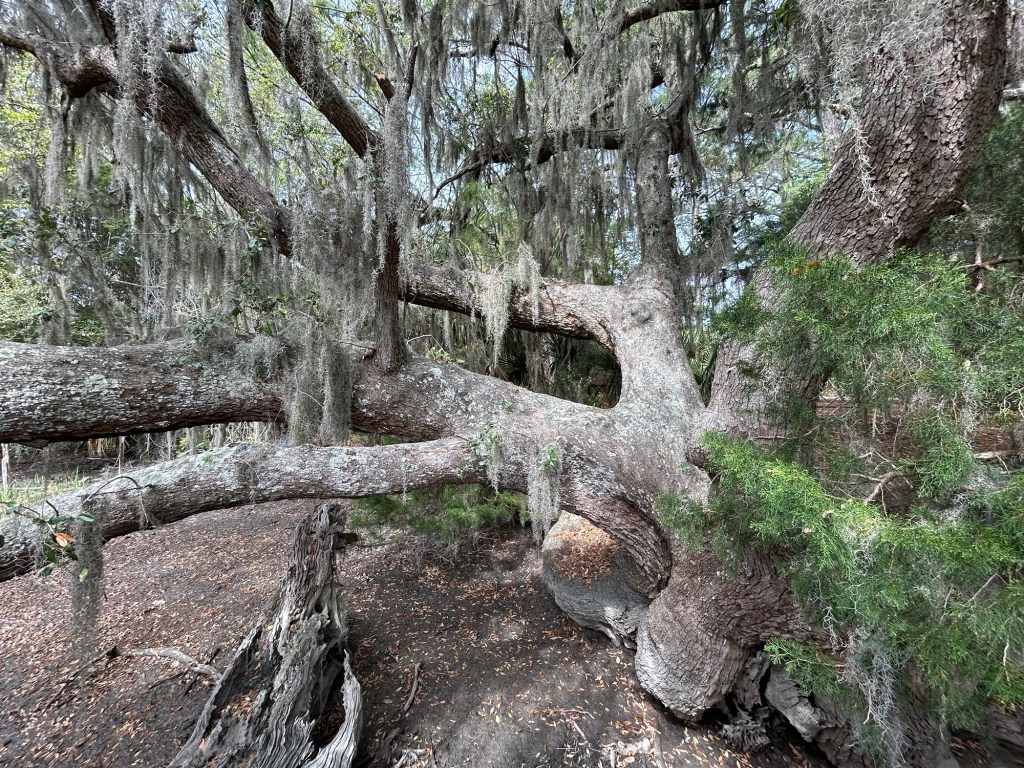
Massive … MASSIVE live oak on the grounds of the Coastal Carolina Museum on Hilton Head Island
The oaks, how subtle and marine!
Bearded, and all the layered light
Above them swims; and thus the scene,
Recessed, awaits the positive night.
The south is different.
It has a lot less snow.
It has a lot less cold.
It has a lot more sun.
It has lot more good smells.
It had lot more bad smells.
And it has live oaks.
Ages to our construction went,
Dim architecture, hour by hour;
And violence, forgot now, lent
The present stillness all its power.
Here before we were born.
Here after we will die.
The present stillness all its power.
So little time we live in Time,
And we learn all so painfully,
That we may spare this hour’s term
To practice for Eternity.
According to Wikipedia, Robert Penn Warren (April 24, 1905 – September 15, 1989) was an American poet, novelist, literary critic and professor at Yale University. He was one of the founders of New Criticism. He was also a charter member of the Fellowship of Southern Writers. He founded the literary journal The Southern Review with Cleanth Brooks in 1935. He received the 1947 Pulitzer Prize for the Novel for All the King’s Men (1946) and the Pulitzer Prize for Poetry in 1958 and 1979. He is the only person to have won Pulitzer Prizes for both fiction and poetry. Yale awarded Warren an honorary Doctor of Letters degree in 1973.
rapidly changing … no way to anticipate these occurrences
Weather, however spectacular to the eye, may present difficult conditions and compositions, especially when working with large cameras.
Setting up the camera takes several minutes during which the first promising aspects of light and cloud may disappear.
I would sometimes wait hopefully for the scene that I could visualize as an exciting image.
It was occasionally realized, but I have always been mindful of Edward Weston’s remark, “If I wait for something here I may lose something better over there.”
I have found that keeping on the move is generally more rewarding. However, it is important to say that I photographed from this particular viewpoint in Yosemite many times over many years, with widely varying results.
Clearing Winter Storm came about on an early December day.
The storm was first of heavy rain, which turned to snow and began to clear about noon.
I drove to the place known as New Inspiration Point, which commands a marvelous vista of Yosemite Valley.
I set up my 8×10 camera with my i2’/4-inch Cooke Series XV lens and made the essential side and bottom compositional decisions.
I first related the trees to the background mountains as well as to the possible camera positions allowed, and I waited for the clouds to form within the top areas of the image.
Rapidly changing situations such as this one can create decision problems for the photographer.
A moment of beauty is revealed and photographed; clouds, snow, or rain then obscure the scene, only to clear in a different way with another inviting prospect.
There is no way to anticipate these occurrences.
From Examples: The making of 40 photographs by Ansel Adams (Boston: Little, Brown Collection, 1983).
I used to be into photography and cameras and film and a darkroom that my Dad bankrolled for reasons I cannot understand today but maybe that I spent hours down in the basement away from everyone else had something to do with it.
Today I use my iPhone.
I use my iPhone and I think about the work of Ansel Adams.
Maybe it is a bit much for me to think about my camera work and Ansel Adams in the same sentence but I am the guy that edits Langston Hughes and Carl Sandburg into 17 syllables so there you are.
It is evident and important to remember that from his writings and commentary, Ansel Adams saw not just a scene, but the photograph he could make of that scene in his mind before he ever got out a camera.
He was such the master of the tools of his day that he knew just what camera, what lense, what filter, what settings, what film, what developer and what photographic paper he would use to make the final print before he snapped the shutter.
His work was getting all of these things to produce what he saw in his mind in the final print.
I think he would have loved an iPhone.
I think he would have embraced Adobe Photoshop and digital imagery as he worked to interpret what he had on his iPhone to match what he had in his mind when he envisioned a photo.
I think he would have spat on artificially generated images while at the same time, the final prints of his photos may have had a lot more to see that what his camera picked up.
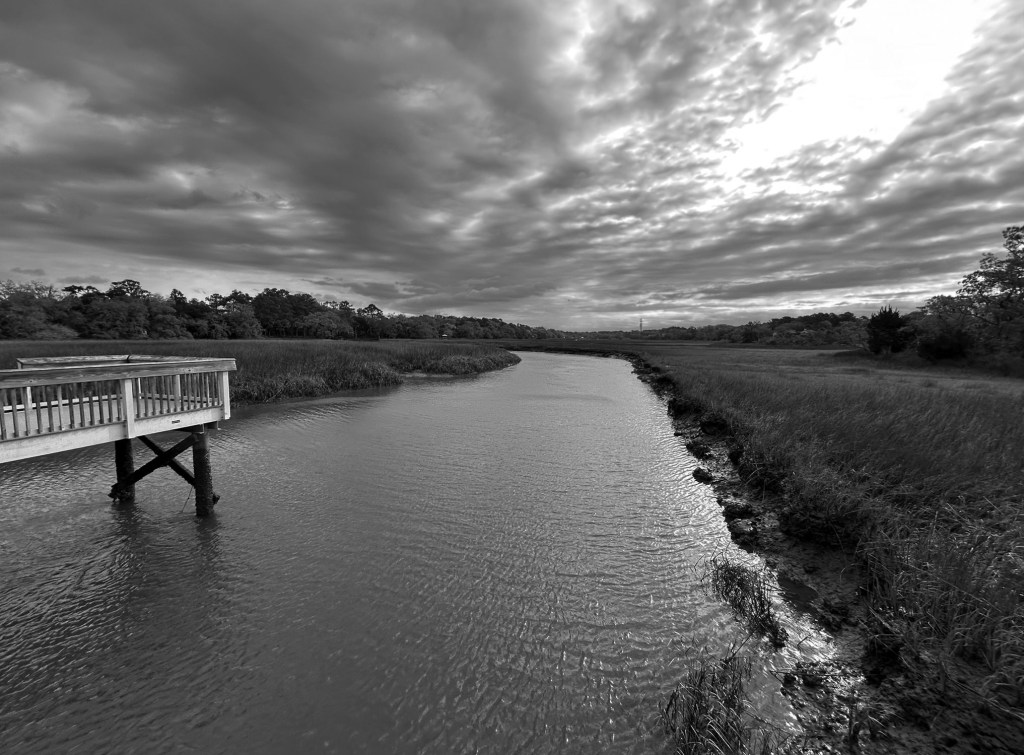
This morning I biked over to Horse Creek Landing Pier on Hilton Head Island.
My guess is that most folks could have been coming to Hilton Head for 40 years and never heard of the place.
I walked out on a narrow fishing/crabbing pier and looked into the heart of the island.
The tide was going out.
A storm front with gale force wind warnings attached to it was coming in.
The sun shone through the clouds.
Rapidly changing situations such as this one can create decision problems for the photographer.
A moment of beauty was revealed and photographed; clouds, sun, or rain then obscure the scene, only to clear in a different way with another inviting prospect.
‘Once, after I did a presentation, someone came up to me and said, ‘I don’t get eight hours of sleep a night. Am I going to die?’” says Prof Russell Foster, head of the Sleep and Circadian Neuroscience Institute at the University of Oxford. “And I said, ‘Well, yes, you’re going to die. But, you know, we all die eventually.’”
Which brought to mind Big Bill and the speech of Hamlet which I paraphrase here:
To die, to sleep, no more; and by a sleep to say we end The heart-ache and the thousand natural shocks That flesh is heir to.
To die, to sleep; to sleep, perchance to dream—ay, there’s the rub, for in that sleep of death what dreams may come, when we have shuffled off this mortal coil,
Must give us pause—there’s the respect that makes calamity of so long life but that the dread of something after death, makes us rather bear those ills we have than fly to others that we know not of?
Thus conscience doth make cowards of us all ...
I must be getting old though a recent location chnage has dropped me on an island where the median age is 62 I am middle aged again.
On that theme of getting older, let me talk about the best part of my day of late.
My after-supper nap.
I ask, why don’t I feel as refreshed as I do after my after-supper nap as when I wake up in the morning?
I read all these articles about sleeping.
We all have to sleep.
We all are going to die.
All I want is to feel refreshed, like I do when I nap, when I sleep all night.
Mr. Snape writes:
… the best advice is to prioritise sleep: recognise that it’s important, make sure you’re setting enough time aside to get as much as you need to feel well rested, and make the most adjustments you can to your current sleep environment.
“If I only did one thing, it would be invest in proper blackout curtains,” says Leschziner.
“And if you live in a noisy environment, then consider comfortable earplugs that are designed for sleeping in.”
small wonder that men hold boats in the secret place cradle to the grave
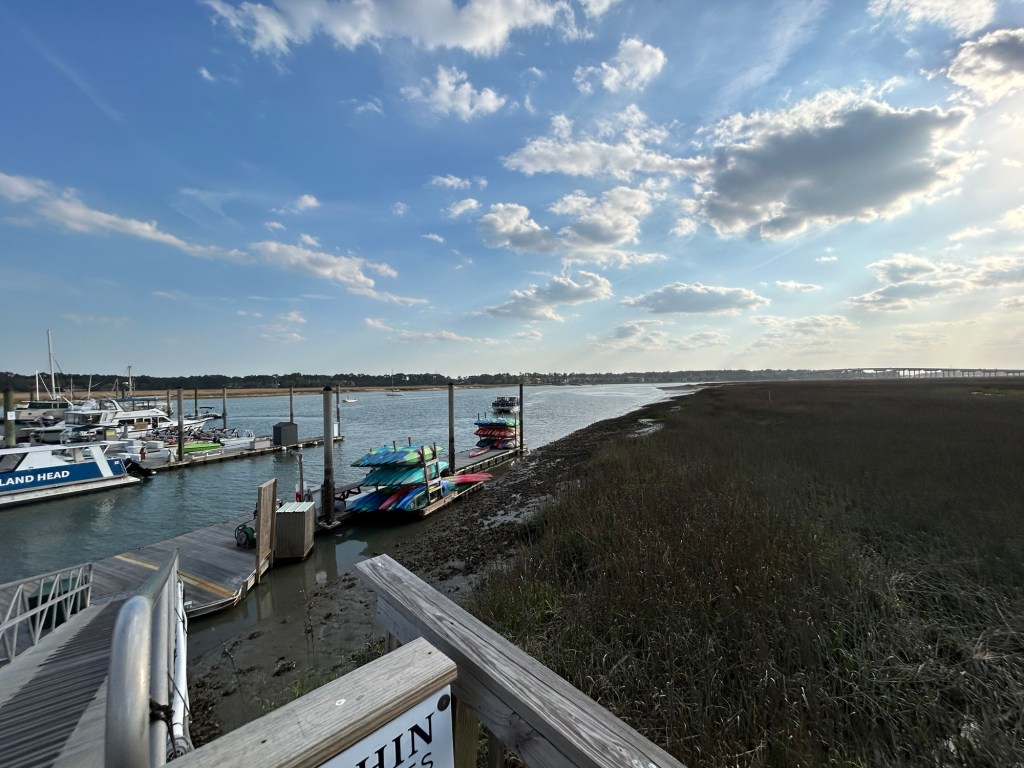
Men who ache allover for tidiness and compactness in their lives often find relief for their pain in the cabin of a thirty-foot sailboat at anchor in a sheltered cove.
Here the sprawling panoply of The Home is compressed in orderly miniature and liquid delirium, suspended between the bottom of the sea and the top of the sky, ready to move on in the morning by the miracle of canvas and the witchcraft of rope.
It is small wonder that men hold boats in the secret place of their mind, almost from the cradle to the grave.
From the essay The Sea and the Wind that Blows by E. B. White and published in The Ford Times, June 1963 and re-published in The Essays of EB White by EB White (Harper and Row, New York, 1977).
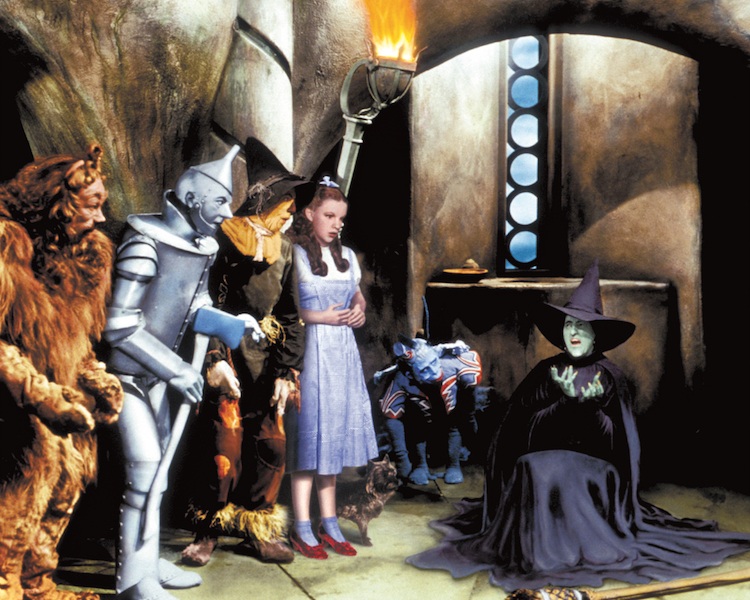
Ms. Sauma quotes Salman Rushdie describing the movie, “as his “very first literary influence.”
Ms. Sauma writes, “In all of western cinema, is there a more recognisable image than Dorothy in her blue gingham dress, arm in arm with the Scarecrow, the Lion and the Tin Man, skipping down the yellow brick road to the Emerald City, so that the Wizard can fulfil their dreams? It’s somehow cheering that this chaotic, surreal musical about a teenage girl, her dog and her three weird friends running away from a witch, searching for a wizard, and trying to become their best selves is so influential.”
I have long enjoyed thinking about this article since I first quoted from it back when it came out in 2019.
Everyone has seen the Wizard of Oz.
And, as Ms. Sauma writes, “This is the key to its influence: the fact that everyone watches it in childhood. It seeps into your unconscious and stays there.”
I had to wonder.
Was it true?
In all of western cinema, is there a more recognisable image than Dorothy?
Has everyone has seen the Wizard of Oz?
I happened to be in a Pat Conroy cycle.
Pat Conroy, the author of the Low Country.
His books (and movies of his books) include The Great Santini and Prince of Tides.
And the book about his year teaching on Dafuskie Island, about 5 miles from where I am sitting.
That book, The Water is Wide, written in the early 70’s, about how, instead of joining the Peace Corps, Conroy takes a job teaching in a two room school house where he would have the 4th through 8th graders.
These kids were Gullah kids.
Born and raised on a barrier island with little contact to the rest of the world.
Conroy writes of his first day:
At the end of the day I had compiled an impressive ledger of achievement.
Seven of my students could not recite the alphabet.
Three children could not spell their names.
Eighteen children thought Savannah, Georgia, was the largest city in the world.
Savannah was the only city any of the kids could name.
Eighteen children had never seen a hill—eighteen children had never heard the words integration and segregation.
Four children could not add two plus two.
Eighteen children did not know we were fighting a war in Southeast Asia.
Of course, eighteen children never had heard of Asia.
One child was positive that John Kennedy was the first President of the United States.
Seventeen children agreed with that child.
Eighteen children concurred with the pre-Copernican Theory that the earth was the center of the universe.
Two children did not know how old they were.
Five children did not know their birth dates.
Four children could not count to ten.
The four oldest thought the Civil War was fought between the Germans and the Japs.
Do you get they picture here?
The year was 1973 but it might have been 1773.
Conroy digs in a makes the effort to expose his class to the rest of the world and encourages discussion on topics on levels that would bring in his students.
One day had a discussion, by chance after watching an old movie of the TV Show You Are There with Walter Cronkite (Conroy had discovered a movie projector in a store room and took all the movies he could get from the County School System) about The Salem Witch Trials and that led to questions and statements from the students on witches.
From here, I will let Pat Conroy tell the story.
Big C screwed his face up into his question-mark look. “It true if you throw water on a witch, she disappear?”
Suddenly every eye in the room was riveted on me. Only the pigs grunting and rooting on the schoolyard disturbed the silence created by this single question. And there was something about the question itself, something ancient and primordial, something that disturbed the hidden and oft lost mythology of my own youth; I felt something stir as I thought about the wet witch, and knew that a feeling in my subconscious was rising like an air bubble to the surface. Then I had it.
“Big C, you’ve seen the Wizard of Oz.”
Eighteen voices shouted hosannas to the trembling faker of Oz. Cindy Lou broke off into an impromptu rendition of “Over the Rainbow.” Others pretended they were cowardly lions. Richard stood up and walked like a scarecrow suspended from his stake. Each member of the class had memorized the movie classic, had watched it religiously each time it appeared on television and had added personal interpretations to the bizarre forces rampant in the spirit-haunted land over the rainbow. And if the Yamacraw children knew about Oz, then I was convinced a hell of a lot of other children in America knew about it, too. My jeremiads against television since my first days on the island had continued undiminished, fed with the plentiful food of my students’ ignorance about people, events, and the world. Now, in a single moment, I had to retract my sweeping indictment of TV: it had not failed completely, only partially. Every child in the room knew the legend of Oz by heart, the importance of the yellow-brick road, the incarnate evil of the wicked Witch of the West, and the ultimate hypocrisy of the great wizard himself. Oz, it seemed, had entered into the consciousness of American children, and not just a selected few, but almost every child in every situation. I considered Yamacraw a touchstone: if the Yamacraw children knew about it, then the chances were excellent that the vast majority of American children had been reached. The Wizard of Oz, through the medium of television, had become part of American mythology as important and relevant to the children of America as the Homeric legends were to the children of Athens.
So Big C’s question was the catalyst for a great and memorable afternoon, one of those rare moments generated by chance, planned by no one, spontaneous and joyful, transcending the need for a teacher or a classroom, and making me once more think of education as something alive and helpful, instead of as a withered dream in need of formaldehyde. Oz took over the rest of the day. For a couple of minutes it was utter pandemonium. Fred introduced a moving argument in incomprehensible Fredese in favor of the proposition that water could evaporate witches. Prophet thought this was crap. He told Fred so. Fred told Prophet he would kick his butt if he continued to think it was crap. Mary mumbled something into her left hand about fire being better than water. Saul said that there ain’t no sure way to kill a witch.
Cindy Lou’s voice finally broke through the general upheaval of noise and offered to recite her King James Version of the story.
“O.K.,” said I.
“There was this little girl who got blown away in a rainstorm,” she started.
“That ain’t the way it was,” said Jimmy Sue.
“How was it then, you old ugly self?” Cindy Lou shot back.
“Ain’t no rainstorm, sister.”
“Damn right it was a rainstorm.”
“No, girl, it was a tor-nay-do.”
“Yeah,” the class agreed, “it was a tornado.”
“Same thing,” claimed Cindy Lou.
“No, girl. Tor-nay-do take your head clean off,” offered Mary.
“You tellin’ the story, girl?” Cindy inquired menacingly of Jimmy Sue.
“No.”
“Then you keep your mout’ out of it.”
“This girl got blown away by a wind and the house she was in hit a bad witch on the head and kill her dead. Then the girl and her little dog go marchin’ down this yellow-brick road ’til they meet this chicken lion who try to act tough.”
“No,” a chorus of voices shouted.
“No, what?” Cindy Lou asked.
“That girl don’t meet no lion,” said Samuel, in one of his first vocal contributions of the year.
“Sure she meets a lion.”
“No, girl, first she sees the scarecrow. Ain’t got no brains.”
“Yeah, scarecrow first,” the class agreed, acting out the chorus in this impromptu drama.
“You tell the story, cockeye.”
“Call me cockeye and I bust your head,” Samuel shouts, clenching his fists.
“Don’t call Samuel cockeye, Cindy Lou.”
“He is cockeye.”
“Yeah, he cockeye,” the chorus agrees.
“No,” I say.
“I bust your head,” Samuel warns the whole class.
“You cockeye,” the class chants.
“The scarecrow first,” says Richard. “Let me tell the story.”
“Oh boy, Richard, give it to us.”
So Richard rendered his version of Oz. Then Oscar, then Frank, then Mary, then Sidney, each adding their own peculiar interpretations, each emphasizing a different part of the story, and each feeling perfectly free to combine incidents from the Wizard of Oz with incidents that occurred in other television programs. Sidney got Oz confused with an episode from “Bonanza.” Hoss Cartwright battling the witches of the Purple Sage. According to Oscar, Oz and Disneyland were somehow related. Richard somehow got Captain Kangaroo confused with the wizard, and Mr. Greenjeans confused with the scarecrow.
Ethel, a purist in the group, strutted to the microphone and began a long, precise, but monotonous epic, which was technically unflawed and accurate except that everyone in the class believed she was making the stuff up. In the middle of her story, Top Cat got up and started singing a new song just released by swing-man James Brown. He hopped and swayed what he called a “new jive” while the kids clapped their hands and tapped their feet until the great head of Mrs. Brown appeared in the window, flashing a look the Romans must have worn on their faces when turning thumbs down on some prostrate Christian. But even though the kids quit responding and reverted back to their classical pose of scholars erect in their desks and lusting for knowledge, Top Cat gyrated on, a grin like a jack-o’-lantern carved on his face and eyes raised in adoration of some muse deep within him.
When Top Cat finally subsided and sank back into his desk, Prophet of the unknown tongue continued the interrupted marathon of Oz, an untranslatable potpourri of grunts and monosyllables, punctuated only by Prophet’s beautifully effusive smiles.
When the afternoon was over and the bus ambled into the schoolyard, and the kids had filed out of the room, I had on tape the story of Oz as it had never been told before—a new Oz, a land that Judy Garland had never entered, but one especially created on a December afternoon by children of an island ruled by a river, and possibly another wizard, with perhaps a greater claim to credibility.*
Ms. Sauma writes, “Everyone has their own Oz.”
You know what?
I think that’s true.
Ms. Sauma closes her 2019 article writing, “The Wizard of Oz doesn’t sugar-coat the truth: there are monsters out there, and the only things that matter are fellowship and home, wherever you find them – a message as relevant now as it was in 1939.”
I agree.
Got to end this now as it has gone on long enough and I want to check under the bed for flying monkeys.
*The Water is Wide by Pat Conroy (Boston : Houghton Mifflin Co., 1972).

 No Haiku For You