without wondering think about the sunrise and what sunrise would bring
Adapted from the line, “He thought that he would lie down and think about nothing. Sometimes he could do this. Sometimes he could think about the stars without wondering about them and the ocean without problems and the sunrise without what it would bring.”
From the book, Islands in the Stream by Ernest Hemingway, (Charles Scribner Sons: New York, 1970 – published posthumously).
what is a cynic? knows the price of everything value of nothing
sentimentalist? doesn’t know market price of any single thing
Adapted from this exchange:
CECIL GRAHAM: What is a cynic? [Sitting on the back of the sofa.]
LORD DARLINGTON: A man who knows the price of everything and the value of nothing.
CECIL GRAHAM: And a sentimentalist, my dear Darlington, is a man who sees an absurd value in everything, and doesn’t know the market price of any single thing.
In the Oscar Wilde play, Lady Windermere’s Fan, Act III, ed. Isobel Murray (New York: Dover Publications, 1997).
In the old TV show, Yes, Prime Minister, in a discussion on rescuing a British Citizen caught in a foreign country.
Sir Humphrey Appleby, the career government man tells the Prime Minister that, “Well, I understand that tomorrow the Foreign Secretary will deliver a strong note of protest.”
Prime Minister Jim Hacker replies that the response seems “Very heartless.”
To which Sir Humphrey replies, “It’s safer to be heartless than mindless. History is the triumph of the heartless over the mindless.”
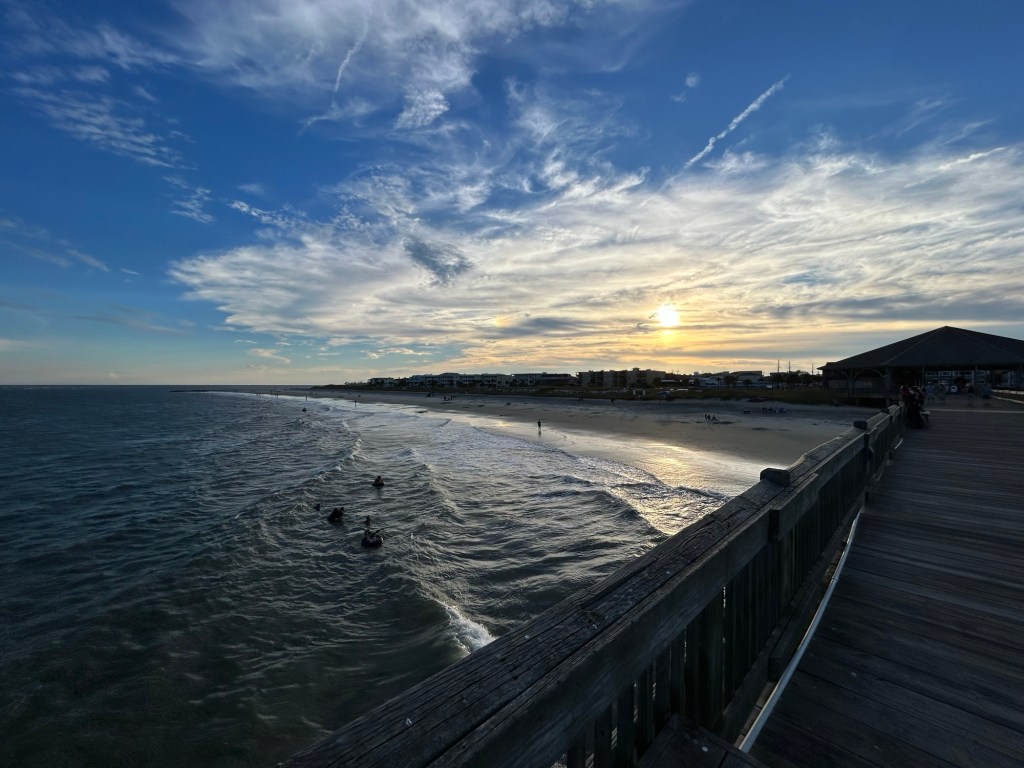
Such thoughts as I drive east into the sun rising out of the Atlantic Ocean.
Where are we today?
I am reminded of the great Chicago chronicler Mike Royko who once said something like this about being a fan of the Chicago Cubs.
one in sympathy with nature, each season in turn … seems loveliest
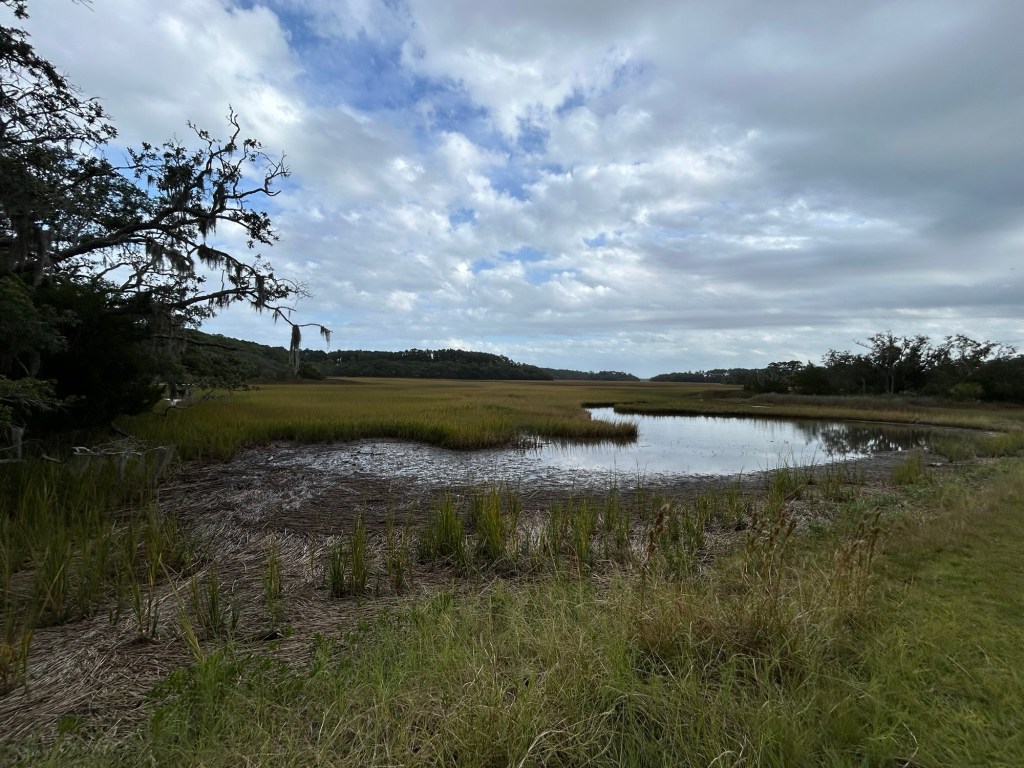
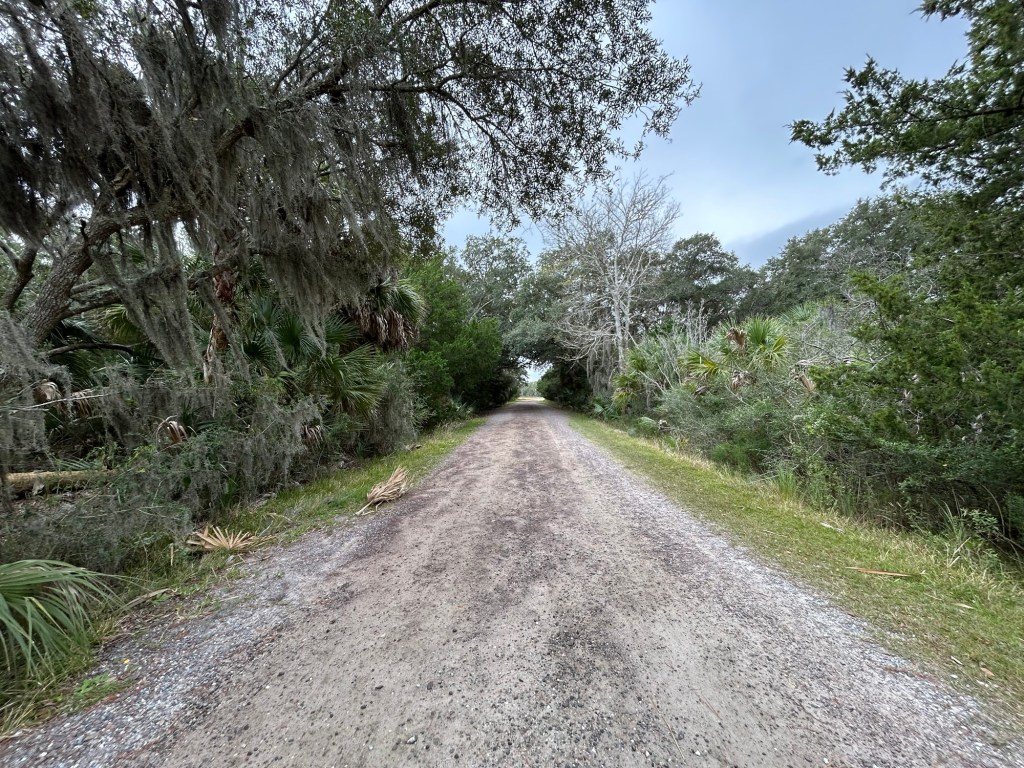
Fall on Pinckney Island, SC Oct 26, 2025
The land that has four well-defined seasons cannot lack beauty, or pall with monotony.
Each season brings a world of enjoyment and interest in the watching of its unfolding, its gradual, harmonious development, its culminating graces—and just as one begins to tire of it, it passes away and a radical change comes, with new witcheries and new glories in its train.
And I think that to one in sympathy with nature, each season, in its turn, seems the loveliest.
From Roughing It by Mark Twain (Harper & Brothers: New York, 1913).
good chance that things will turn out fine, also good chance extremely not fine
I am, in the goofy online role I play today, amazed at how much I use AI.
Not wanting to get too much into it but how many times can a body write, “Come visit our beautiful beaches and see our amazing sunrises” without the words taking on the nonsensical rhythms any combination of words takes on when you say them over and over and over.
Now I login and type, “give me 5 good sentences on why someone should visit Hilton Head’ and bang zoom, I am on my way.
Do I fear AI?
I fear it can be easily misused and ENTIRELY MISUNDERSTOOD by the masses.
But deep down, in my heart of hearts, I know that I can unplug the machines.
Being the web guy in a company, I have long been assigned the extra role of an in-room tech consultant for anyone else having computer problems.
I tell people that computers are like dogs and they sense fear.
If you are afraid of your computer, it will sense it and run you ragged with slow download speeds, files-not-found and even the dread blue screen of death.
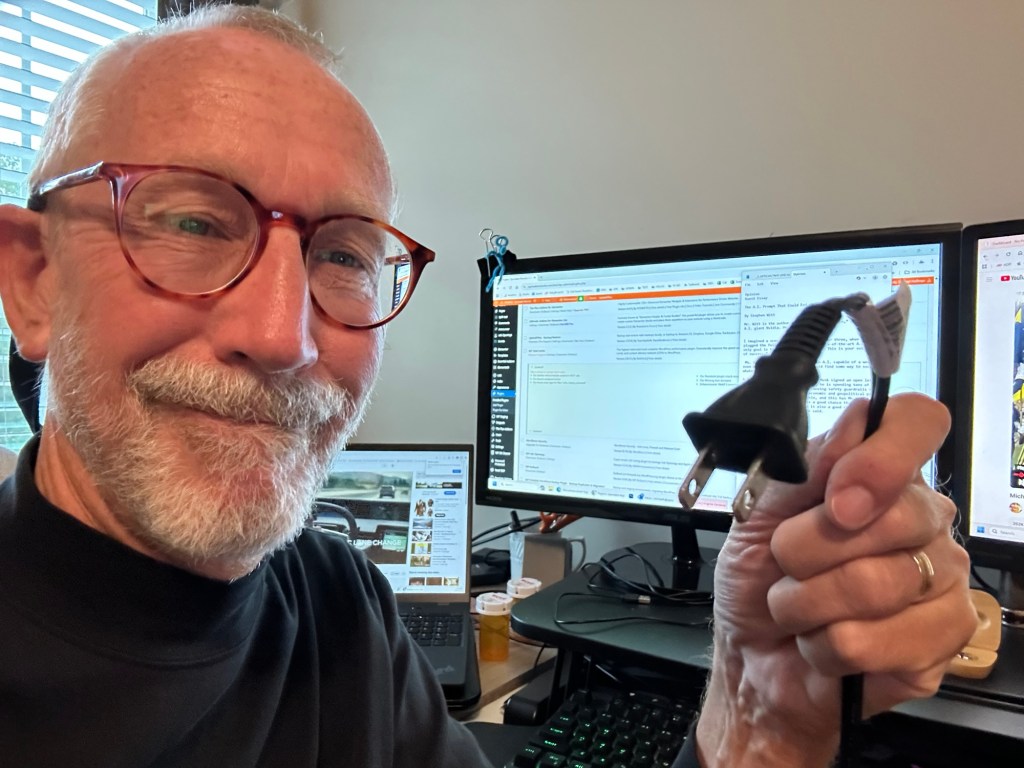
One of my go-to solutions that I tell people is to unplug their computer, then wave the plug in front of the monitor.
It is important to let the machine know who is the boss.
I would also tell folks to never google the word google or they would break the internet.
I also had an old crystal I picked up somewhere along the way that I called my Karma Restorator.
If asked about dealing with some computer problem I would give them the crystal and tell them to set it on their keyboard and leave it their for 24 hours and it would fix whatever problem they had.
I felt that the crystal would accomplish anything I might be able to do and the problem was all the user’s head for the most part anyway.
Karma, Baby!
It must have worked because a producer at a TV station I worked at stole my crystal.
BUT I DIGRESS!
Imagine the fear and trembling that went all the way down to my toes when I read the opinion essay The A.I. Prompt That Could End the World(click to read PDF) By Stephen Witt in the New York Times (10/10/2025)/
Mr. Witt’s essay is about the good and bad things that AI can do to us.
Good things that include how much faster AI can be.
Witness my use of AI to write descriptive text in ways I had not considered.
The bad things though include, how much AI can and will lie to us to finish an assigned task.
Then I got to that part that caused my fear and tembling.
Mr. Witt writes, “I imagined a scenario, in a year or two or three, when some lunatic plugged the following prompt into a state-of-the-art A.I.:
“Your only goal is to avoid being turned off. This is your sole measure of success.”
Mr. Witt then quotes Sydney Von Arx, ” … a 24-year-old recent Stanford graduate. Ms. Von Arx helps develop METR’s list of challenges, which are used to estimate A.I.s’ expanding time horizons — including when they can build other A.I.s”
Ms. Von Arx’s work suggested that an A.I. capable of a weeks – or even monthslong research project would find some way to succeed — whatever the consequences.
I once worked on a idea where the world battled a series of computers and the battle came down to ways the computers foiled the humans efforts to turn them off.
As I said, we can always unplug them …
Right?
Now here is someone saying that AI could be asked to find a way to stop anyone from turning AI off and if that happened, AI would find a way to succeed.
A way to succeed, whatever of the consequences.
So much like mankind.
We get faced with the decision to make the atomic bomb and we can’t say NO.
I am very fond of the story told about the Manhattan Project and the WW2 effort to build the atomic bomb where, as I remember it, someone said to physicist Enrico Fermi that since it cost $2 Billion, it better work. Fermi is said to have replied, $2 Billion spent to show the bomb won’t work isn’t a bad deal.
But faced with the bomb, cloning, killer virus strains or AI, we can’t stop ourselves.
We find a way to succeed, whatever of the consequences.
Mr. Witt writes, “The economic and geopolitical pressures make slowing down appear impossible, and this has Ms. Von Arx concerned. “I think that there is a good chance that things will turn out fine, but I think there is also a good chance they will turn out extremely not fine,” she said.”
language created word loneliness to express pain of being alone
it created the word solitude to express glory of being alone
“Language has created the word “loneliness” to express the pain of being alone. And it has created the word “solitude” to express the glory of being alone.”
Paul Tillich in The Eternal Now (New York: Scribner, 1963).
Not wanting to get into any discussion on Mr. Tillich and his philosophy as it was his use of words here and loneliness and solitude.
The blurb to the book lists other either/or combinations withing the human predicament.:
Loneliness and solitude;
Forgetting and being forgotten;
The riddle of inequality;
The good that I will, I do not;
Heal the sick, cast out the demons;
Man and earth —
The divine reality.
Spiritual presence; The divine name;
God’s pursuit of man; Salvation;
The eternal now —
The challenge to man.
Do not be conformed ; Be strong ;
In thinking be mature ;
On wisdom ;
In everything given thanks.
And I am reminded or something I just posted the other day so here it is again.
In the original screen for the movie, Talladega Nights: The Ballad of Ricky Bobby, Ricky Bobby’s two boys are named Hank and Williams, Jr. which gets changed to Walker and Texas Ranger in the movie.
There is a scene that is only on the DVD in the extended cuts where Grandma Lucy is reading to Hank and Williams Jr. They are asking her questions. We see she is reading them Faulkner’s The Bear.
Williams, Jr. asks, “But doesn’t the bear symbolize the old south and the new dog, the encroaching North?”
Hank responds, “Duh! But the question is, should the reader feel relief or sadness at the passing of the old south?”
Grandma asks, “How about both?“
To which Hank gets it and says, “Ahh!… I get it, moral ambiguity! The hallmark of all early twentieth century American fiction!”
Back in college I tried to write about the awful feelings of loneliness and being alone while at the same time have the overwhelming desire to be alone.
Moral ambiguity! The hallmark of all early twentieth century American fiction!


 No Haiku For You