6.4.2024 – We .. we will go south

We .. we will go south
We will go to the sun lands
where there is no snow

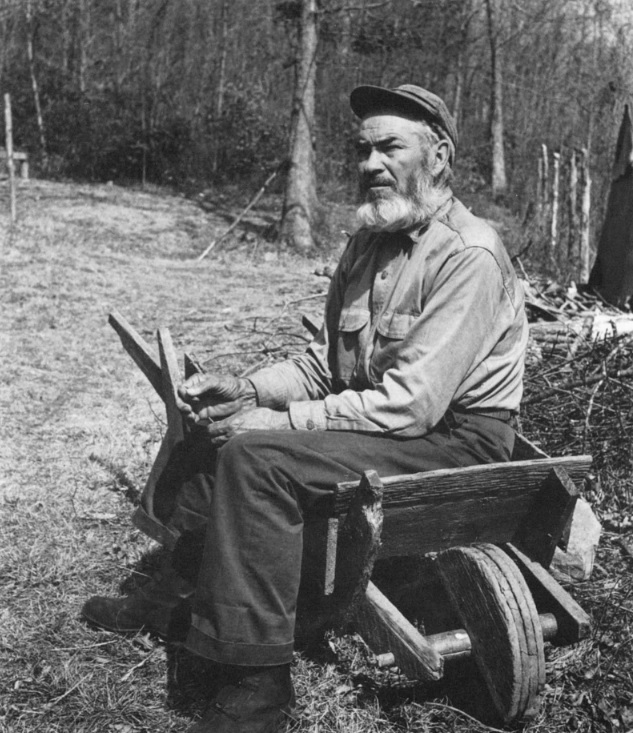
We will go south before the winter catches us. We will go to the sun lands where there is no snow. But we will return. I have seen much of the world, and there is no land like Alaska, no sun like our sun, and the snow is good after the long summer.

Fragment from The Wit of Porportuk by Jack London

6.1.2024 – waylaid flotilla was

waylaid flotilla was
collectively hauling tons
of Fiji water

Among the ships held in the queue was the CSCL Spring, a Hong Kong-flagged vessel that was carrying a whopping 138 containers from Yihai Kerry International, a major Chinese agricultural conglomerate. Together, they held 7.3 million pounds of canola meal pellets — enough animal feed to sustain 20,000 cows for a week. Their delay was exacerbating shortages of feed afflicting livestock producers in the United States.

Five ships in this waylaid flotilla were collectively hauling 13 million pounds of Fiji bottled water. More than 17 million pounds of Heineken beer was held up. The Singaporean-flagged Wan Hai 625 was carrying almost three million pounds of polyethylene terephthalate resin, a key element for manufacturing synthetic fabrics and plastic bottles used to package soft drinks — another commodity in short supply. The same ship held 5.2 million pounds of solar panels and 1.6 million pounds of material for chain-link fencing.

From The Floating Traffic Jam That Freaked Us All Out by Peter S. Goodman.

Slugged, The coronavirus pandemic schooled the world in the essential role of global supply chains. Have we learned anything from it?

13 Millions pounds of bottled water was held up in shipment when the supply chain broke during covid.

5 container ships worth.

I don’t much understand micro economics but if everything works, some one can bottle water from Fiji and ships it overseas, the water is sourced from Yaqara, on the north shore of Viti Levu, the largest island of Fiji, according to Wikipedia, some 7.460 miles from where I live, and sell for $2.69 at my local Kroger and … make money doing it.

Milo Minderbender bought eggs for seven cents, sold them to the mess halls for five cents, and made money too.

There has to be a catch.

5.27.2024 – their disillusion

their disillusion
was deep and they had to fall
farther to reach it

Based on :

Those fanciful old ideas about the glory of a waving flag, the shame of running from danger, the high importance of dying with one’s face to the foe — since that war they have come to seem as out of date as the muzzle-loaders that were used for weapons in those days.

The American soldier of later, more sophisticated eras may indeed die rather than retreat, and do it as courageously as any, but he never makes a song about it or strikes an attitude.

His heroism is without heroics, and fine phrases excite his instant contempt, because he knows even before he starts off to war that fine phrases and noble attitudes and flags waving in death’s own breeze are only so many forms of a come-on for the innocent; nor does he readily glimpse himself as a knight of the ancient chivalry.

But in the 1860s the gloss had not been worn off.

Young men then went to war believing all of the fine stories they had grown up with; and if, in the end, their disillusion was quite as deep and profound as that of the modern soldier, they had to fall farther to reach it.

From Mr. Lincoln’s Army by Bruce Catton, Doubleday & Co, Garden City, NY, 1951

It would be another two years before Mr. Lincoln said:

It is rather for us to be here dedicated to the great task remaining before us,

that from these honored dead we take increased devotion to that cause for which they gave the last full measure of devotion,

that we here highly resolve that these dead shall not have died in vain,

that this nation,

under God,

shall have a new birth of freedom,

and that government of the people, by the people,

for the people,

shall not perish from the earth.

And what kind of nation was Mr. Lincoln talking about?

A new nation,

conceived in liberty,

and dedicated to the proposition that all men are created equal.

On this Memorial Day, 2024 I close with this thought from Mr. Lincoln’s 1st Inaugeral Address, March 4, 1861.

 The mystic chords of memory, stretching from every battlefield and patriot grave to every living heart and hearthstone all over this broad land, will yet swell the chorus of the Union, when again touched, as surely they will be, by the better angels of our nature.

 The mystic chords of memory, stretching from every battlefield and patriot grave let us know that we didn’t get this far on our own.

We are standing on the shoulders of a lot of other folks.

To slip now …

Time to depend on those better angels of our nature.

5.24.2024 – I live in the past

I live in the past
have to admit it is more
comfortable there

A few weeks ago I was talking movies with one of the younger people on the staff and I mentioned The Good, The Bad and The Ugly.

He had never seen it.

I mentioned Patton.

He had never seen it.

I mentioned The Maltese Falcon.

He had never seen it.

I asked, for crying out loud, what movies had he been watching?

“Movies that had been released in the last 20 years,” he said.

He had me there.

I couldn’t think of but a handful of ‘new movies’ that I had seen or at least remembered seeing.

This morning, The Guardian had a list of the top 100 books of the last 20 years.

I felt that here I would be on much firmer ground.

I like to read.

I like to think I read EVERYTHING.

I scanned the list of top 100 books of the last 20 years … and recognized 3.

I knew some of the authors.

But for the most part …

The book the author picked as their best book was Wolf Hall.

I think I got through three pages and it was walking though wet cement and I dropped it.

So what do I read then?

My Kindle’s are so full, I have to delete books and keep floating libraries on my google drive.

I am always reading.

Always reading the same thing.

Little known and less read titles on history and biography and the type of fiction that catches my interest.

And old novels.

Novels I first read years ago.

Novels that I have read and re-read over and over again.

I am comfortable with those books.

I like how they were written.

I know how they end.

Maybe if I was a kid when I first read them, when I read them now, I am a kid again.

I am comfortable with old movies.

I like how they were made.

I know how they end.

Maybe if I was a kid when I first saw them, when I see them now, I am a kid again.

In a kids world you don’t worry much about who is President, or which country is mad at which country or even what the price of gas is.

Who wouldn’t want to be a kid again?

For a lot of reasons, I live in the past.

Mostly, though, I am more comfortable there.

5.16.2024 – tout passe, the French say,

tout passe, the French say,
in an idiom often
more succinct than ours

The Rose and the Weed

In a country garden a lovely rose looked down upon a common weed and said, “You are an unwelcome guest, economically useless, and unsightly of appearance. The Devil must love weeds, he made so many of them.”

The unwelcome guest looked up at the rose and said, “Lilies that fester smell far worse than weeds, and, one supposes, that goes for roses.”

“My name is Dorothy Perkins,” the rose said haughtily. “What are you—a beetleweed, a bladderweed, a beggarweed? The names of weeds are ugly.” And Dorothy shuddered slightly, but lost none of her pretty petals.

“We have some names prettier than Perkins, or, for my taste, Dorothy, among them silverweed, and jewelweed, and candyweed.” The weed straightened a bit and held his ground. “Anywhere you can grow I can grow better,” he said.

“I think you must be a burglarweed,” said the disdainful Miss Perkins, “for you get in where you aren’t wanted, and take what isn’t yours—the rain and the sunlight and the good earth.”

The weed smiled a weedy smile. “At least,” he said, “I do not come from a family of climbers.”

The rose drew herself up to her full height. “I’d have you know that roses are the emblem of old England,” she said. “We are the flower of song and story.”

“And of war,” the weed replied. “The summer winds take you by storm, not you the winds with beauty. I’ve seen it happen many times, to roses of yesteryear, long gone and long forgotten.”

“We are mentioned in Shakespeare,” said the rose, “many times in many plays. The lines are too sweet for your ears, but I will tell you some.”

Just then, and before Miss Perkins could recite, a wind came out of the west, riding low to the ground and swift, like the cavalry of March, and Dorothy Perkins’ beautiful disdain suddenly became a scattering of petals, economically useless, and of appearance not especially sightly. The weed stood firm, his head to the wind, armored, or so he thought, in security and strength, but as he was brushing a few rose petals and aphids from his lapels, the hand of the gardener flashed out of the air and pulled him out of the ground by the roots before you could say Dorothy Perkins, or, for that matter, jewelweed.

MORAL: Tout, as the French say, in a philosophy older than ours and an idiom often more succinct, passe.

From Further fables for our time by James Thurber, (New York : Simon and Schuster, 1956).

PS – Tout passe – anything goes … I had to look it up