
Would you, could you fix
Van Gogh? Destroy his art? save …
Vincent or the cat?
You are in a burning house and you can save one thing as you run out.
There is a Van Gogh painting on the wall.
There is a cat on the sofa.
Do you save the Van Gogh … or the cat?
So the conundrum goes.
Don’t come looking for an answer today though.
But as a twist on this question consider this.
I was reading this morning a wonderfully written essay on the what-might-have-been of John F. Kennedy, Jr.
The writer states, “I have a weakness for alternative histories that play on the idea of fixing a past wrong.”
As an example she uses a clip from the TV Show, Dr. Who, where the Doctor shows “Vincent van Gogh how beloved he would one day be.”
In this scene, the actor Bill Nighy, playing an art museum curator, relates the importance of the Van Gogh to the world in 100 words.
What Mr. Nighy does not know is that is is explaining this to Van Gogh.
I am sorry if you want me to explain how this all works because I can’t.
If this is important to you all I can recommend is that you don’t watch Dr. Who.
Mr. Nighy’s character says, “He [Van Gogh] transformed the pain of his tormented life into ecstatic beauty. Pain is easy to portray, but to use your passion and pain to portray the ecstasy and joy and magnificence of our world, no one had ever done it before. Perhaps no one ever will again.“
From my point of view and history and such, I can’t argue with this statement.
I wouldn’t want to.
But here is the point.
If you could show Van Gogh how much his painting meant to world.
If you could ease his pain. (Wasn’t that also a line from the feller in the corn field in Iowa?)
If you could remove his torment.
Would you do it?
Understanding that it was his passion and pain to portray the ecstasy and joy and magnificence of our world, if you remove the passion and pain, do you remove the motivation for the art?
Do you fix Vincent but destroy his art.
If you destroy his art, do you destroy Vincent?
Growing up, I was lucky that my father had a friendship with a painter in the Grand Rapids Michigan area by the name of Armond Merizon.
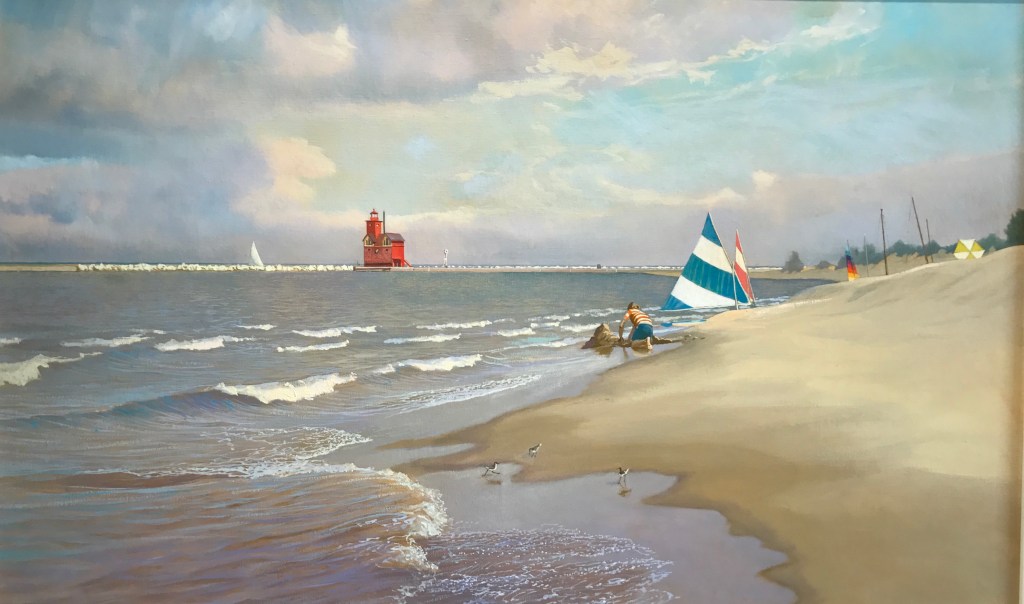
Most people I know knew his brother who taught for years at Grand Rapids Central High School.
Mr. Merizon would come by our house and bring along a few of his latest works to show my Dad.
I would sit nearby and listen to the conversation.
On one visit, Mr Merizon related a recent trip to Chicago to see a Van Gogh show.
Mr. Merizon told how overcome he was by the passion, the pain and the torment in the paintings.
Mr. Merizon was hit so hard by the pain that he said as he got closer to the end of the show, knowing how the story would end, he could not go on, and he had to leave the museum.
The passion, the pain and the torment was too much.
There are indeed artists who had the passion but not the pain.
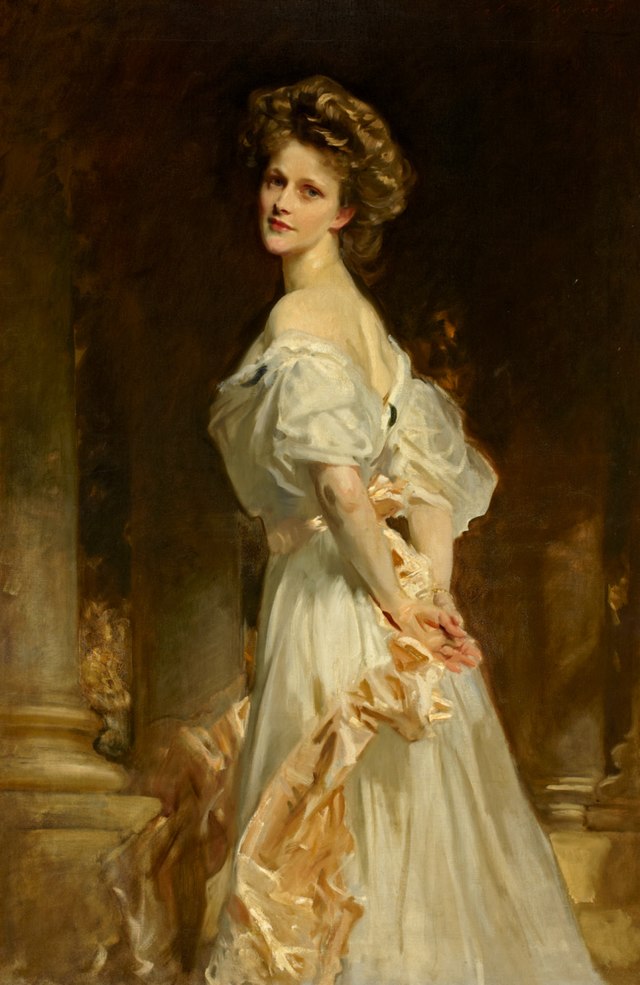
Consider John Singer Sargent.
His life was nothing like Mr. Van Gogh.
According to some accounts, Mr. Sargent averaged a portrait commission a month at a modern day $150,000 per commission.
The pain Mr. Sargent went through as he put it, was having to talk with these people to get them to smile.
Andy Warhol famously commented on John Singer Sargent that, “made everybody look glamorous. Taller. Thinner. But they all have mood, every one of them has a different mood.”
But they all have mood.
Everyone one of them.
Has a different mood.
Like the other architect said about Frank Lloyd Wright, “I don’t know who it does that. If I did, I would do it.”
Motivation is the thing.
As Abraham Lincoln put it, that grub that gets to gnaw at you.
I have a weakness for alternative histories that play on the idea of fixing a past wrong.
I am exploring motivation and lost motivation.
So much motivation seems to be grounded in torment, passion and pain.
If I had a choice to be ‘creative’ but the price was pain, what would I choose.
Do you save the Van Gogh or the cat?
I will continue my exploration.
But it will continue at the beach.


 No Haiku For You