11.6.2024 – Democracy – the

Democracy – the
recurrent suspicion that
the people are right

In July of 1943, the Writer’s War Board (According to wikipedia, the Writers’ War Board was the main domestic propaganda organization in the United States during World War II. Privately organized and run, it coordinated American writers with government and quasi-government agencies that needed written work to help win the war. It was established in 1942 by author Rex Stout at the request of the United States Department of the Treasury) reached out to E.B. White at the New Yorker Magazine and asked for a statement on the meaning of democracy.

Mr. White started out by writing, “It is presumably our duty to comply with such a request, and it is certainly our pleasure. Surely, the board knows what democracy is.”

Mr. White continued:

It is the line that forms on the right.

It is the don’t, in don’t shove.

It is the hole in the stuffed shirt through which the sawdust slowly trickles; the dent in the high hat.

Democracy is the recurrent suspicion that more than half of the people are right, more than half of the time.

It is the feeling of privacy in the voting booths; the feeling of communion in the libraries; the feeling of vitality everywhere.

Democracy is the letter to the editor.

Democracy is the score at the beginning of the ninth.

It is an idea which hasn’t been disproved yet; a song, the words of which have not gone bad.

It’s the mustard on the hot dog, and the cream in the rationed coffee.

Democracy is a request from a War Board – in the middle of the morning, in the middle of a war – wanting to know what democracy is.

On the one hand, I feel called upon to play my part of good loser.

Fought the good fight and lost but ready to go on.

I want to admit that maybe, just maybe, Democracy is the recurrent suspicion that more than half of the people are right, more than half of the time.

But I can’t.

I feel the picture Mr. White paints of America in World War 2, believe or not, was a much sunnier place, a much more hopeful place than America today.

I wish my feeling for Democracy had the elasticity that the faith of those on other side has that allows them to bend their faith and their beliefs to embrace that guy.

I want the country to feel the feeling of vitality everywhere.

But it sure seems we are, to quote Mr. Churchill, about to enter a new dark age.

I am going to have faith in the Constituion.

And hang on and hold my breath for the next 4 years.

Still thinking about 1943 and the era Mr. White writes about that FDR won again, again and again.

I am reminded of an anecdote that I have written about before.

I like the story, but I cannot recall where I read it or the citation for it but here it is.

This author was a kid during WW2 and grew up in the Republican strong hold of Grosse Pointe, Michigan.

He reminded a spring evening once where all the people in the neighborhood built bonfires and danced in big circles, joining hands around the fires to celebrate.

Looking at a calendar, he puzzled out that this had to have happened in April or May of 1945 and he asked his mother if she remembered and was the celebration for VE, Victory in Europe, Day, the day Germany surrendured.

OH NO,” said his mother, “We danced because Roosevelt was dead.”
11.23.2023 – simply not supposed …

simply not supposed …
to happen, brain numb, God’s way
offering mercy

I gathered together today, Thanksgiving Day, 2023, with my favorite people.

Five of my grandchildren with number 6 not here but much on my mind.

One granddaughter grabbed my hand and said, “You sit by me” and I sat at the kids table and had the best time.

A day of Thanksgiving.

And I am thankful.

Thankful for my family, always skating on the thin of ice of tragedy but somehow not crashing through.

I think of my extended outer family.

A group that has seen too much of tragedy in the last couple of years for reasons unknown and unknowing.

And my heart goes out to them but there are few if any words that might be said.

In recent reading of a Garrison Keillor book his story hits on the death of his 17 year old grand son and he pauses.

A roomful of people in shock gathered for the memorial. I sat behind his brother, Charlie, and his mother, Tiffany, and his grandmother Julie. All I felt was a great heaviness, no tears, just shock. It simply wasn’t possible to imagine Freddy absent from the world. I stood up with Bob and Adam and we sang “Calling My Children Home” and sat down. We all lose our parents, but losing a child is simply not supposed to happen. The brain goes numb, God’s way of offering mercy. If we were fully cognizant, it would be unbearable.

Mr. Keillor also wrote his grandson’s obituary where he said, “… earthy journey ended much too early on Monday at the age of seventeen, leaving behind many questions as well as countless comforting memories of a gentle, sensitive soul …”

The brain goes numb.

If we were fully cognizant, it would be unbearable.

Leaving behind many questions as well as countless comforting memories.

God’s way of offering mercy.

Much to be thankful for.

7.2.2023 – of course we are loaned

Of course we are loaned
this life, suddenly one day
it is overdue

Of course we are loaned this life, then suddenly one day it’s overdue.

This is a little tight and nifty but so was Rochefoucauld.

I fully expect to make a long walk to Virgo to see the clusters of a trillion stars. I wonder how they counted them?

I had worried about reaching the year 2000, at which I’ve been successful.

All my dark dreams about dying young like so many in my humble trade never happened.

Hundreds warned me I was going to die young from smoking and drinking but I disappointed them.

From the essay Courage and Survival by Jim Harrison in The Brick.

One of Jim Harrison’s last published works.

I quote a lot.

That’s the whole point of this blog and these haiku.

To point out the wonderful word combinations that real writers accomplish in print and bring to the attention of my vast audience.

I don’t like to change the original word order of anyone’s work.

I especially don’t like to change the original word order just to make in my American grammar school haiku rhythm of 5 – 7 – 5 syllables (and yes I have read all the arguments about this and that Japanese sound patterns and English syllables are not necessarily equivalent but its my blog my rules and my rules say a haiku, for the purpose of this blog, follows the 5 -7 -5 pattern so there) but I did in this case and the change made quite the impact.

Mr. Harrison wrote: Of course we are loaned this life, then suddenly one day it’s overdue.

Which, due to the 5 – 7 – 5 rule, I hammered into:

of course we are loaned
this life then suddenly it’s
one day overdu
e

In a way, I liked that.

I like that a lot.

Suddenly, it’s one day overdue.

Overdue or just one day overdue, when we are talking about the loan of life is the same and yet it isn’t.

Just one day …

Can I have just one day more …

One more day …

Just one day or not, life has no amnesty day or forgiveness policy.

I have to wonder if Mr. Harrison would have liked and I can say, with pretty much solid confidence, he would NOT.

Famously he refused to talk to an editor for years who dared edit something he wrote.

With that in mind, I stayed with the phrase and worked it into:

Of course we are loaned
this life, suddenly one day
it is overdue

I had to split the contraction of it’s to it is.

Mr. Harrison still would have rolled his eyes.

But there it is.

6.13.2023 -once ready to write

once ready to write
words flowed hands thinking, not a …
conscious process

“When you write something down you pretty well kill it,” he said. “Leave it loose and knocking around up there and you never know — it might turn into something.”

Once he was ready to write, he said, the words flowed.

“My hands do the thinking,” he said. “It is not a conscious process”

From Early Cormac McCarthy Interviews Rediscovered by Elizabeth A. Harris.

Elizabeth A. Harris writes about books and publishing for The Times.

Cormac McCarthy, the formidable and reclusive writer of Appalachia and the American Southwest, whose raggedly ornate early novels about misfits and grotesques gave way to the lush taciturnity of “All the Pretty Horses” and the apocalyptic minimalism of “The Road,” died on Tuesday at his home in Santa Fe, N.M. He was 89.

4.14.2023 – he had been standing

he had been standing
shadowy deck formless boat
as it rushed, he woke

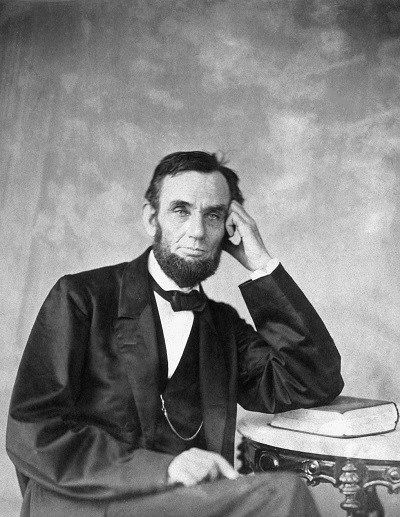
The gaunt man, Abraham Lincoln, woke one morning
From a new dream that yet was an old dream
For he had known it many times before
And, usually, its coming prophesied
Important news of some sort, good or bad,
Though mostly good as he remembered it.

He had been standing on the shadowy deck
Of a black formless boat that moved away
From a dim bank, into wide, gushing waters–
River or sea, but huge–and as he stood,
The boat rushed into darkness like an arrow,
Gathering speed–and as it rushed, he woke.

He found it odd enough to tell about
That day to various people, half in jest
And half in earnest–well, it passed the time
And nearly everyone had some pet quirk,
Knocking on wood or never spilling salt,
Ladders or broken mirrors or a Friday,
And so he thought he might be left his boat,
Especially now, when he could breathe awhile
With Lee surrendered and the war stamped out
And the long work of binding up the wounds
Not yet begun–although he had his plans
For that long healing, and would work them out
In spite of all the bitter-hearted fools
Who only thought of punishing the South
Now she was beaten.
But this boat of his.
He thought he had it.
“Johnston has surrendered.
It must be that, I guess–for that’s about
The only news we’re waiting still to hear.”
He smiled a little, spoke of other things.

That afternoon he drove beside his wife
And talked with her about the days to come
With curious simplicity and peace.
Well, they were getting on, and when the end
Came to his term, he would not be distressed.
They would go back to Springfield, find a house,
Live peaceably and simply, see old friends,
Take a few cases every now and then.
Old Billy Herndon’s kept the practice up,
I guess he’ll sort of like to have me back.
We won’t be skimped, we’ll have enough to spend,
Enough to do–we’ll have a quiet time,
A sort of Indian summer of our age.

He looked beyond the carriage, seeing it so,
Peace at the last, and rest.

They drove back to the White House, dressed and ate,
Went to the theatre in their flag-draped box.
The play was a good play, he liked the play,
Laughed at the jokes, laughed at the funny man
With the long, weeping whiskers.
The time passed.
The shot rang out. The crazy murderer
Leaped from the box, mouthed out his Latin phrase,
Brandished his foolish pistol and was gone.

Lincoln lay stricken in the flag-draped box.
Living but speechless. Now they lifted him
And bore him off. He lay some hours so.
Then the heart failed. The breath beat in the throat.
The black, formless vessel carried him away.

On the anniversary of the assassination of Abraham Lincoln, 248 years ago.

This passage is taken from John Brown’s Body by Stephen Vincent Benét.

According to Wikipedia, John Brown’s Body (1928) is an epic American poem written by Stephen Vincent Benét. Its title references the radical abolitionist John Brown, who raided the federal armory at Harpers Ferry, Virginia in October 1859. He was captured and hanged later that year. Benét’s poem covers the history of the American Civil War. It won the Pulitzer Prize for Poetry in 1929. It was written while Benét lived in Paris after receiving a Guggenheim Fellowship in 1926.