4.28.2022 – I take the deep breath

I take the deep breath
how unlikely that death is
a hole in the ground

Based on the poem, Heron Rises From The Dark, Summer Pond, by Mary Oliver.

Again, a big thank you to my sister Lisa, to telling me about Ms. Oliver.

Feel free to touch base and tell me what to read.

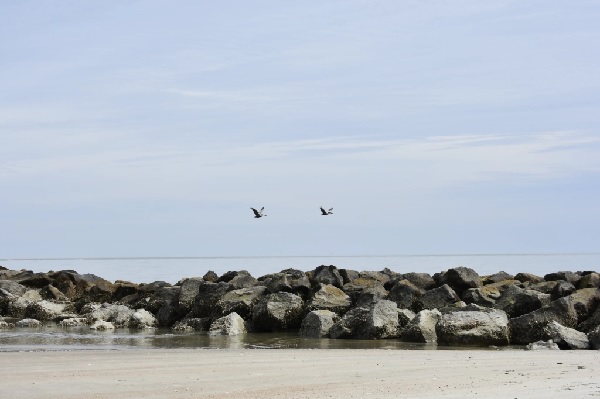
For me, herons, seeing a heron, has been and still is a harbinger of good fortune, a good omen.

Not that you saw herons all that often in West Michigan where I grew up but maybe that was part of it.

And not that I really believe in good omens but more in line that seeing one made me feel that, surely, this wasn’t as black a world as I made it out to be.

And I have had enough Latin and roman history to not think about omens and not smile inwardly.

It is in the movie Spartacus that Roman Senator Sempronius Gracchus, played by Charles Laughton, walks out of the Senate and buys a pigeon saying “Let’s make a good old-fashioned sacrifice.

Still I cannot see a heron and somehow, not feel better.

I also cannot see a heron that I do not think of the time that Doug, my college roommate, and I were driving back to Ann Arbor, Michigan on I-96 and a heron dove out of the sky and swooped low, just above the median between the two sides of the freeway in a glide..

As I remember it, we were going about 60 miles an hour.

This was way back in the ‘Drive 55’ era and it took forever to get to Ann Arbor.

The heron passed us.

Here is the poem.

Heron Rises From The Dark, Summer Pond by Mary Oliver.

So heavy
is the long-necked, long-bodied heron,
always it is a surprise
when her smoke-colored wings

open
and she turns
from the thick water,
from the black sticks

of the summer pond,
and slowly
rises into the air
and is gone.

Then, not for the first or the last time,
I take the deep breath
of happiness, and I think
how unlikely it is

that death is a hole in the ground,
how improbable
that ascension is not possible,
though everything seems so inert, so nailed

back into itself–
the muskrat and his lumpy lodge,
the turtle,
the fallen gate.

And especially it is wonderful
that the summers are long
and the ponds so dark and so many,
and therefore it isn’t a miracle

but the common thing,
this decision,
this trailing of the long legs in the water,
this opening up of the heavy body

into a new life: see how the sudden
gray-blue sheets of her wings
strive toward the wind; see how the clasp of nothing
takes her in.

So heavy
is the long-necked, long-bodied heron,
always it is a surprise
when her smoke-colored wings

open
and she turns
from the thick water,
from the black sticks

of the summer pond,
and slowly
rises into the air
and is gone.

Then, not for the first or the last time,
I take the deep breath
of happiness, and I think
how unlikely it is

that death is a hole in the ground,
how improbable
that ascension is not possible,
though everything seems so inert, so nailed

back into itself–
the muskrat and his lumpy lodge,
the turtle,
the fallen gate.

And especially it is wonderful
that the summers are long
and the ponds so dark and so many,
and therefore it isn’t a miracle

but the common thing,
this decision,
this trailing of the long legs in the water,
this opening up of the heavy body

into a new life: see how the sudden
gray-blue sheets of her wings
strive toward the wind; see how the clasp of nothing
takes her in.

– – – – – – –

Readers of this blog may remember that from time to time I struggle with the weight of effort of producing a daily Haiku and any thoughts I may have about the words and time that went in the Haiku that day.

This daily schedule of missing a day can bring on a personal mental paralysis wherein writing these entries becomes impossible.

I learned to deal with this by not dealing with it and let it go.

Then when I look at my register of entries and see blank days with no post, I will grab a topic or book or poem for a source and produce a series of Haiku to fill in those blank dates.

This is one of the great benefits of this effort being my blog and my blog, my rules.

It IS cricket because I say it is.

It is ‘according to Hoyle’ because I say it is.

Thus I have this series of haiku based on the poem ‘Heron Rises From The Dark, Summer Pond‘ by Mary Oliver.

4.26.2022 – barnacle scarred

barnacle scarred
nothing at all whole or shut
but tattered split

Based on the poem, Breakage, by Mary Oliver.

Thank you to my sister Lisa, to telling me about Ms. Oliver.

Here is the poem.

Breakage by Mary Oliver.

I go down to the edge of the sea.
How everything shines in the morning light!
The cusp of the whelk,
the broken cupboard of the clam,
the opened, blue mussels,
moon snails, pale pink and barnacle scarred—
and nothing at all whole or shut, but tattered, split,
dropped by the gulls onto the gray rocks and all the moisture gone.
It’s like a schoolhouse
of little words,
thousands of words.
First you figure out what each one means by itself,
the jingle, the periwinkle, the scallop
full of moonlight.

Then you begin, slowly, to read the whole story.

go down to the edge
of the sea – How everything shines
in the morning light

It’s like a schoolhouse
of little words, thousands of words
First you figure out what each one means by itsel

– – – – – – –

Readers of this blog may remember that from time to time I struggle with the weight of effort of producing a daily Haiku and any thoughts I may have about the words and time that went in the Haiku that day.

This daily schedule of missing a day can bring on a personal mental paralysis wherein writing these entries becomes impossible.

I learned to deal with this by not dealing with it and let it go.

Then when I look at my register of entries and see blank days with no post, I will grab a topic or book or poem for a source and produce a series of Haiku to fill in those blank dates.

This is one of the great benefits of this effort being my blog and my blog, my rules.

It IS cricket because I say it is.

It is ‘according to Hoyle’ because I say it is.

Thus I have this series of haiku based on the poem ‘Breakage’ by Mary Oliver.

4.23.2022 – past past the image

past past the image
above the waves, sound of waves
a voice voice speaking

Adapted from the poem, The Sound of Waves by William Carlos Williams in the The Collected Later Poems of William Carlos Williams (1950).

A quatrain? Is that

the end I envision?

Rather the pace

which travel chooses.

Female? Rather the end

of giving and receiving

—of love: love surmounted

is the incentive.

Hardly. The incentive

is nothing surmounted,

the challenge lying

                elsewhere.

No end but among words

looking to the past,

plaintive and unschooled,

wanting a discipline

But wanting

more than discipline

a rock to blow upon

as a mist blows

or rain is driven

against some

headland jutting into

a sea – with small boats

perhaps riding under it

while the men fish

there, words blowing in

taking the shape of stone

    . . . . .

Past that, past the image:

a voice!

out of the mist

above the waves and

the sound of waves, a

voice . speaking!

4.15.2022 – How everything shines in

How everything shines in
morning light full of moonlight
morning moonlight light

Based on the poem, Breakage, by Mary Oliver.

Thank you to my sister Lisa, to telling me about Ms. Oliver.

Here is the poem.

Breakage by Mary Oliver.

I go down to the edge of the sea.
How everything shines in the morning light!
The cusp of the whelk,
the broken cupboard of the clam,
the opened, blue mussels,
moon snails, pale pink and barnacle scarred—
and nothing at all whole or shut, but tattered, split,
dropped by the gulls onto the gray rocks and all the moisture gone.
It’s like a schoolhouse
of little words,
thousands of words.
First you figure out what each one means by itself,
the jingle, the periwinkle, the scallop
full of moonlight.

Then you begin, slowly, to read the whole story.

go down to the edge
of the sea – How everything shines
in the morning light

It’s like a schoolhouse
of little words, thousands of words
First you figure out what each one means by itsel

– – – – – – –

Readers of this blog may remember that from time to time I struggle with the weight of effort of producing a daily Haiku and any thoughts I may have about the words and time that went in the Haiku that day.

This daily schedule of missing a day can bring on a personal mental paralysis wherein writing these entries becomes impossible.

I learned to deal with this by not dealing with it and let it go.

Then when I look at my register of entries and see blank days with no post, I will grab a topic or book or poem for a source and produce a series of Haiku to fill in those blank dates.

This is one of the great benefits of this effort being my blog and my blog, my rules.

It IS cricket because I say it is.

It is ‘according to Hoyle’ because I say it is.

Thus I have this series of haiku based on the poem ‘Breakage’ by Mary Oliver.

4.11.2022 – sea and sky welded

sea and sky welded
together without a joint
vanishing flatness

Adapted from the opening lines of Heart of Darkness by Joseph Conrad.

Conrad writes: In the offing the sea and the sky were welded together without a joint, and in the luminous space the tanned sails of the barges drifting up with the tide seemed to stand still in red clusters of canvas sharply peaked, with gleams of varnished sprits. A haze rested on the low shores that ran out to sea in vanishing flatness. The air was dark above Gravesend, and farther back still seemed condensed into a mournful gloom

According to Wikipedia, Conrad “wrote stories and novels, many with a nautical setting, that depict trials of the human spirit in the midst of what he saw as an impassive, inscrutable universe.

Conrad was “was always at heart a writer who sailed, rather than a sailor who wrote.”

Conrad himself said about his writing that, “the public mind fastens on externals” such as his “sea life”, oblivious to how authors transform their material “from particular to general, and appeal to universal emotions by the temperamental handling of personal experience”.

I am near the water not out on the water, still I will say, that the overall overwhelming size of the ocean and the pace of tide puts a different pace to human endeavor, experience and feeling condensing them into a mournful gloom.

Sitting on the beach, on the ocean side I am reminded of Huckleberry Finn floating down the big still river saying, ” We had mighty good weather as a general thing, and nothing ever happened to us at all.