9.12.2024 – is glittering in

is glittering in
the first rays of the sun, which
has not yet reached us

August 10 – The air at sunrise is clear and pure, and the morning extremely cold, but beautiful.

A lofty snow peak of the mountain is glittering in the first rays of the sun, which has not yet reached us.

The long mountain wall to the east, rising two thousand feet abruptly from the plain, behind which we see the peaks, is still dark, and cuts clear against the glowing sky.

A fog, just risen from the river, lies along the base of the mountain.

A little before sunrise, the thermometer was at 35°, and at sunrise 33°.

Water froze last night, and fires are very comfortable.

The scenery becomes hourly more interesting and grand, and the view here is truly magnificent; but, indeed, it needs something to repay the long prairie journey of a thousand miles.

The sun has just shot above the wall, and makes a magical change.

The whole valley is glowing and bright, and all the mountain peaks are gleaming like silver.

Though these snow mountains are not the Alps, they have their own character of grandeur and magnificence, and will doubtless find pens and pencils to do them justice.

From the Report of the Exploring Expedition to the Rocky Mountains – 1842 by John C. Fremont as reprinted in The American Landscape: A Critical Anthology of Prose and Poetry edited by John Conron, London, Oxford University Press 1973.

9.1.2024 – hence in a season

hence in a season
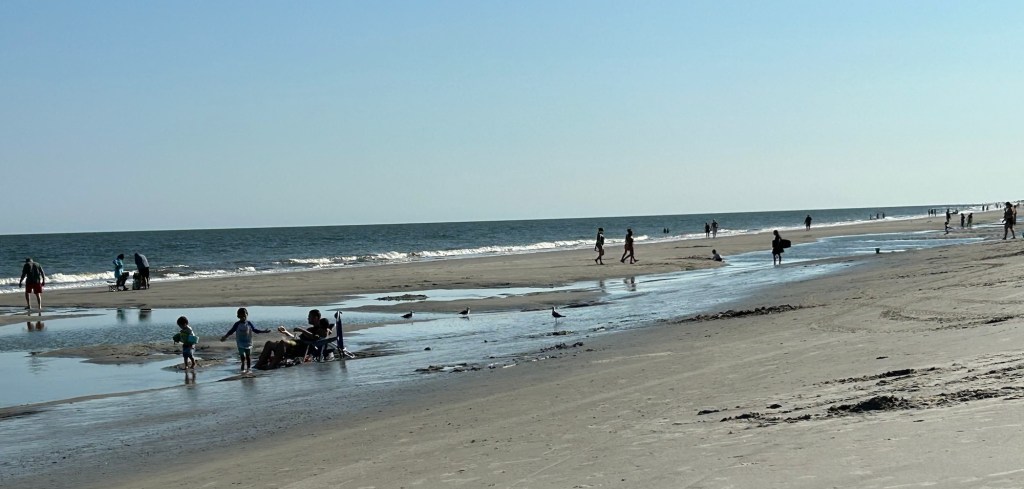
of calm weather, see children
sport upon the shore

Adapted from this small part of Ode: Intimations of Immortality from Recollections of Early Childhood By William Wordsworth as printed in Poems: In two volumes, Longman, Hurst, Rees, and Orme in 1807.

Nor all that is at enmity with joy,
Can utterly abolish or destroy!
Hence in a season of calm weather
Though inland far we be,
Our Souls have sight of that immortal sea
Which brought us hither,
Can in a moment travel thither,
And see the Children sport upon the shore,
And hear the mighty waters rolling evermore.

There are those who might figure I am looking to associate this passage and the the line Nor all that is at enmity with joy, and the following line Can utterly abolish or destroy! with one of the two current Presidential campaigns that, some say, are hoping to return joy to the American way of life.

Joy not grumpyness.

Joy, not meanness.

Joy, not accusatory oratory.

Joy with the understanding that Nor all that is at enmity with joy, Can utterly abolish or destroy!

The joy of the ocean.

The joy of watching children sport upon the shore.

Joy.

Well, if there are those who figure that … I will not dispute it.

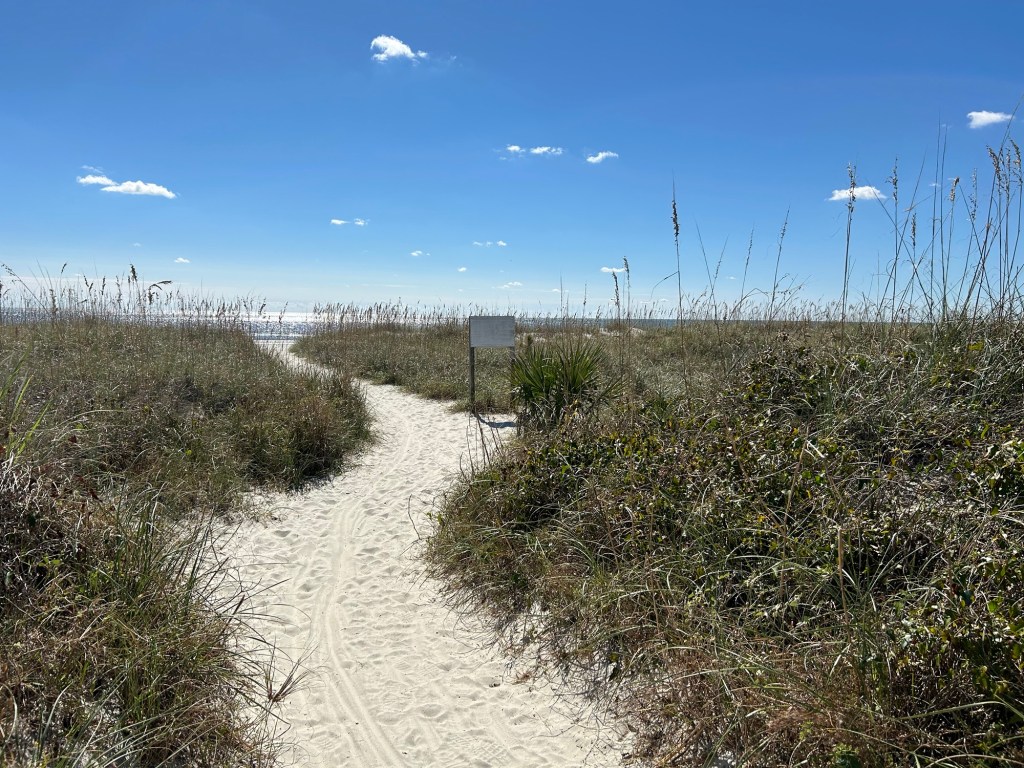
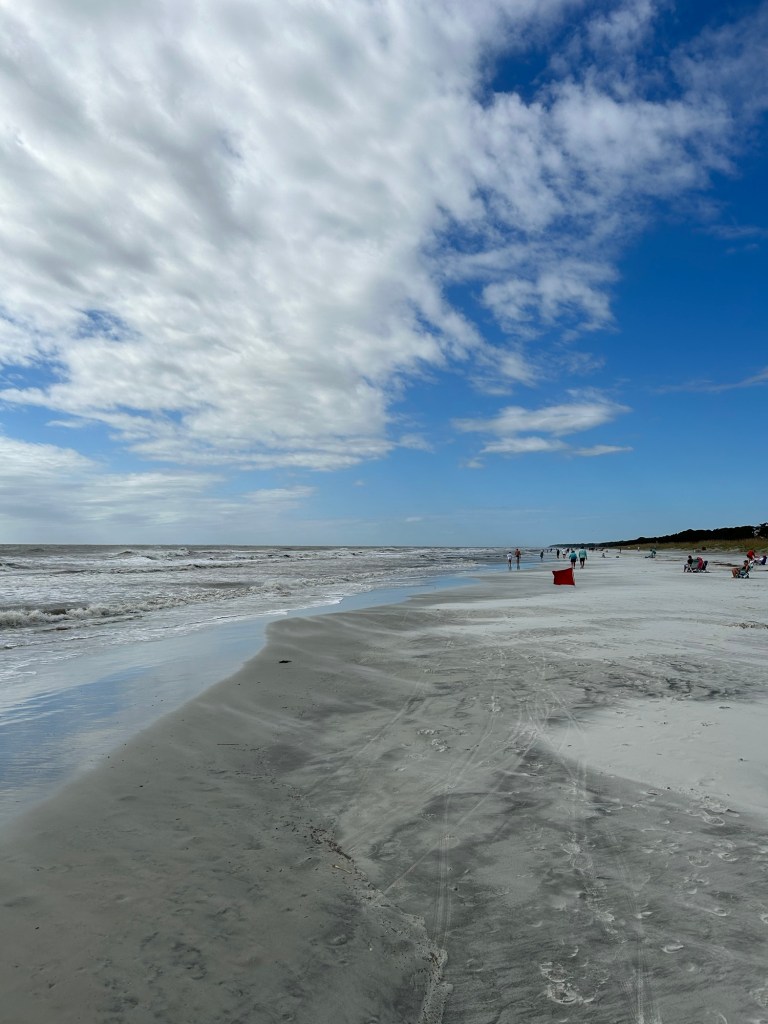
8.18.2024 -if not best spot, still …

if not best spot, still …
a very good second best
sunny, sandy toes

The temperature was in the high 80’s

The WATER temperature was in the low 80’s

The lifeguards kept us close to shore because of rip tides due to Ernesto.

The sun was out.

A warm constant breeze was blowing out of the south.

We got there at low tide so there was plenty of beach.

There was sun in our faces and sand on our toes.

There was sun on our faces and sand in our toes as well.

If this wasn’t the best place in the world to be this afternoon, it was a very good second best.

BTW I stole that last line from a description of the plans for the invasion of France in World War 2.

Better known as D-Day, Winston Churchill said it may not have been the best plan, but it was a very good second best.

7.11.2024 – go down to the shore

go down to the shore
in the morning – excuse me
I have work to do

Based on the poem I Go Down To The Shore by Mary Oliver.

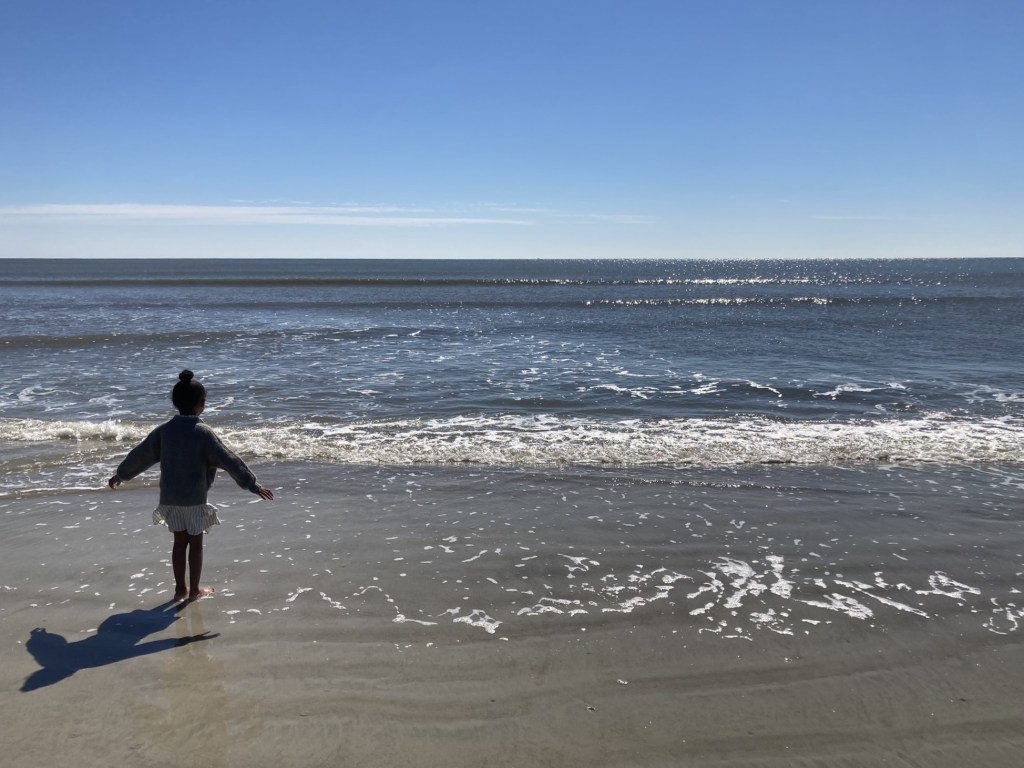
I go down to the shore in the morning
and depending on the hour the waves
are rolling in or moving out,
and I say, oh, I am miserable,
what shall—
what should I do? And the sea says
in its lovely voice:
Excuse me, I have work to do.

In an interview quoted in Wikipedia, Mary Oliver said, “[I] go off to my woods, my ponds, my sun-filled harbor, no more than a blue comma on the map of the world but, to me, the emblem of everything.”

I drive towards the Atlantic Coast when I go in to the office for work.

I end up a couple blocks from the coast line.

In the grand scheme of maps of the United States, my desk is a line, a razor’s edge away from the ocean and the waves that, depending on the hour, that are rolling in or moving out.

Not miserable but plaintive, I say as I park my car, what shall, what should I do?

I stand and I listen.

Some mornings I can hear the waves.

And the sea says in its lovely voice, “Excuse me, I have work to do … too.

6.29.2024 – contradict the

contradict the
belief cubozoans are
semelparity

I live in the what is called the low country of South Carolina, along the Atlantic coast, just north of Savannah.

I work closer to the beach than I live and I am able to spend my lunch time breaks walking along the wave line dodging the people who are spending untold amounts of money to be here for just one week.

We get to the beach when ever we can and in season, I spend a lot of time in the water.

I don’t worry to much about the things that live in the ocean.

They leave me alone and I leave them alone and we do just fine.

BUT reading the article, Enjoy the beach this summer, but beware the sting of the jellyfish by Elizabeth Weise in USA TODAY on June 29, 2024 did prick at my level of awareness.

You see, Ms. Weise writes that “One concerning shift has been in the range of box jellyfish, some species of which can be deadly.

“The box jellyfish that we have an abundance of in Hawaii has recently caused injuries in various beaches in Florida. The changing range of these jellies and increasing human population density, these things all work together in U.S. waters,” said Angel Yanagihara, a research professor in the department of tropical medicine at the University of Hawaii who studies jellyfish venom.”

The only thing I know about box jelly fish is what Bill Bryon wrote in his book on travels in Australia, In a sunburned country (Broadway Books, New York, 2000) when Mr. Bryson said this:

(Remember this sounds much better if you read in the slow cadence of Mr. Bryson’s audio readings – especially that last sentence.)

But all of these are as nothing compared with the delicate and diaphanous box jellyfish, the most poisonous creature on earth. We will hear more of the unspeakable horrors of this little bag of lethality when we get to the tropics, but let me offer here just one small story.

In 1992 a young man in Cairns, ignoring all the warning signs, went swimming in the Pacific waters at a place called Holloways Beach. He swam and dove, taunting his friends on the beach for their prudent cowardice, and then began to scream with an inhuman sound.

It is said that there is no pain to compare with it.

The young man staggered from the water, covered in livid whiplike stripes wherever the jellyfish’s tentacles had brushed across him, and collapsed in quivering shock. Soon afterward emergency crews arrived, inflated him with morphine, and took him away for treatment.

And here’s the thing.

Even unconscious and sedated …

he was still screaming.

The idea of Box Jellyfish off the Carolina Coast would certainly make an impact on I spent my free time.

I had do some more research and was happy to have wikipedia tell me that 51 species of box jellyfish were known as of 2018. These are grouped into two orders and eight families.A few new species have since been described, and it is likely that additional undescribed species remain.

And not all of them have the terrible stings and venom as described by Mr. Bryson.

I was fascinated by the caption of a photograph of a jelly that had washed up on the beach that read: Box Jellyfish species Chiropsalmus quadrumanus; contradict the belief that Cubozoans are semelparity.

I was relieved!

And I don’t even know what it means.

Great words anyway!

I have yet to be stung, bit, tasted or in anyway made contact with by anything that lives in the ocean side from bumping into a dead cannon ball jelly fish so that doesn’t count as being something that lives.

I have read all the literature on what to do if I am ever stung by a jelly fish.

In my mind are countless remedies that are listed on posters, websites, beach guides and other informational websites so I feel I know what to do if I ever did get stung.

Then I got to the bottom of the Wikipedia page on Jellyfish.

Who ever wrote the contact had read all the same source information I had and had had enough.

For Wikipedia states:

Although commonly recommended in folklore and even some papers on sting treatment, there is no scientific evidence that:

urine,

ammonia,

meat tenderizer,

sodium bicarbonate,

boric acid,

lemon juice,

fresh water,

steroid cream,

alcohol,

cold packs,

papaya,

or hydrogen peroxide will disable further stinging, and these substances may even hasten the release of venom.

Heat packs have been proven for moderate pain relief.

The use of pressure immobilization bandages, methylated spirits, or vodka is generally not recommended for use on jelly stings.

Well GEE WHIZ .. there goes all my reading.

What does work?

Well this article says vinegar and that vinegar is made available on Australian beaches and in other places with venomous jellyfish.

But just to cover itself, the article also states, “A 2014 study reported that vinegar also increased the amount of venom released from already-discharged nematocysts; however, this study has been criticized on methodological grounds.”

For me?

Happy that Box Jellyfish species Chiropsalmus quadrumanus contradicts the belief that Cubozoans are semelparity, I will continue to walk along the beach.

If I could somehow block Bill Bryson out of my brain …