Some of these beach haiku were written by random trips to beach.
Most of these are part of a series based on afternoons spent at the beach on Hilton Head Island with my pad out ( a real paper note pad), hoping for words with my iPhone camera handy to add illustration to my thoughts.
I wanted to see if I would be ‘inspired’ by what I saw, by what I heard, by what I smelled, by what I tasted, what I felt emotionally and what I felt tactilely.
Some turned out okay.
Some were too forced.
Some were just bad.
Some did involve some or all of those feelings.
As far as it goes, I guess I was inspired by by what I saw, by what I heard, by what I smelled, by what I tasted, what I felt emotionally and what I felt tactilely.
Please aware that most of these haiku were NOT WRITTEN on the date in the title – for an explanation of this please see The Series link in the navigation table.
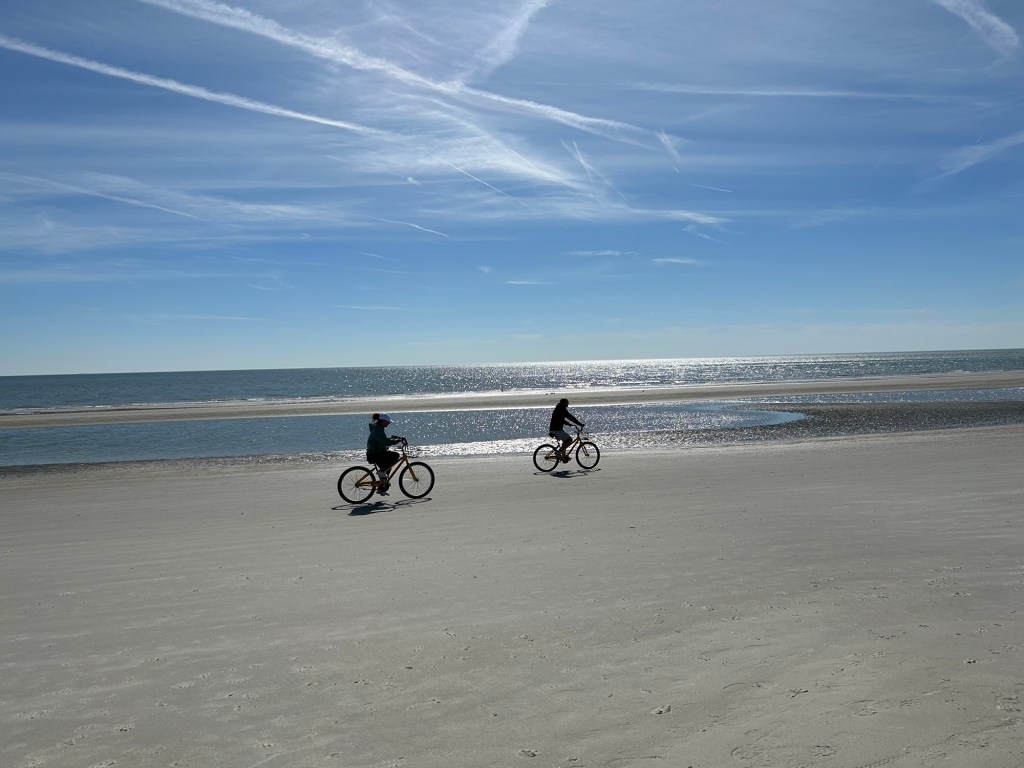
shadows of the bikes low blue lustre tardy and soft inrolling tide
Adapted from Sketch by Carl Sandburg in Chicago Poems as published in The Complete Poems of Carl Sandburg, (Harcourt Brace and Company, New York, 1950).
The shadows of the ships Rock on the crest In the low blue lustre Of the tardy and the soft inrolling tide.
A long brown bar at the dip of the sky Puts an arm of sand in the span of salt.
The lucid and endless wrinkles Draw in, lapse and withdraw. Wavelets crumble and white spent bubbles Wash on the floor of the beach.
Rocking on the crest In the low blue lustre Are the shadows of the ships.
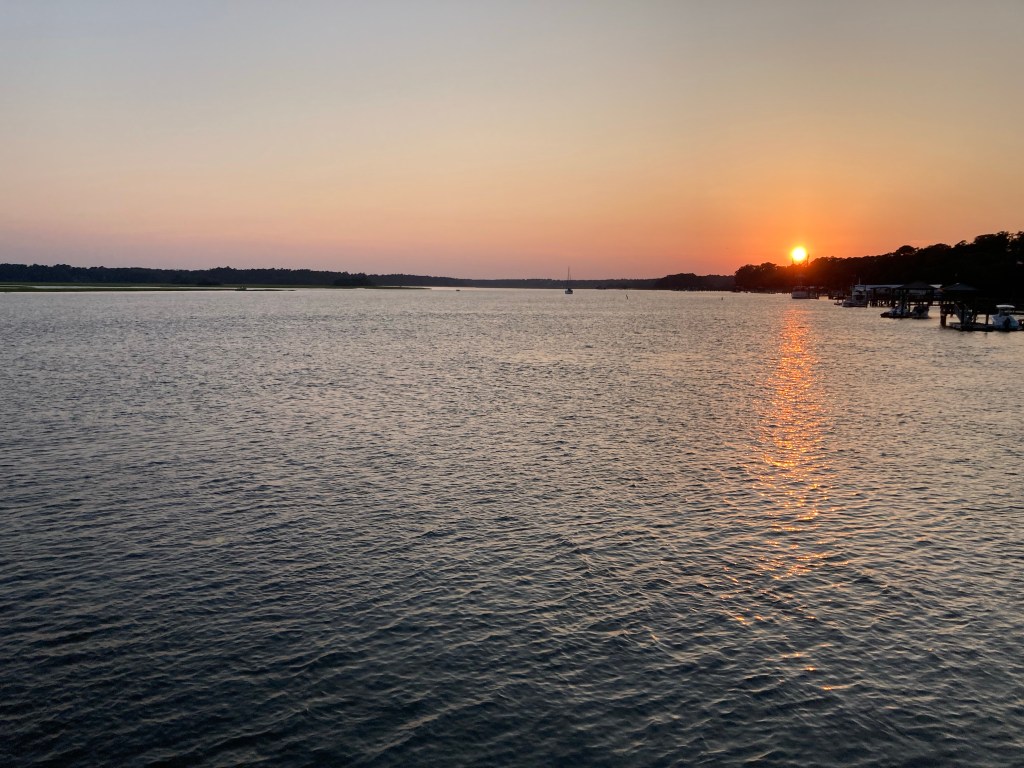
sea sunset give us keepsakes, pay us for prayers mountain clouds bronze skies
Sea sunsets, give us keepsakes Prairie gloamings, pay us for prayers Mountain clouds on bronze skies — Give us great memories Let us have summer roses Let us have tawny harvest haze in pumpkin time Let us have springtime faces to toil for and play for Let us have the fun of booming winds on long waters Give us dreamy blue twilights — of winter evenings — to wrap us in a coat of dreaminess Moonlight, come down — shine down, moonlight — meet every bird cry and every song calling to a hard old earth, a sweet young earth
Adapted from Good Morning America Part 21 as published in Complete Poems by Carl Sandburg (Harcourt, Brace and Company, New York, 1950).
stood in the doorway where the sun’s last rays faded in brilliant display
At Sunset
I stood in the doorway at evening, And I looked to the hills far away Where the sun’s last rays seemed to linger, Ere they faded in brilliant display.
Yes, lingered in beautiful splendor, And the scene was rare to behold, A pale blue sky was its back-ground, With stretches of pink and gold.
What wonder that Nature’s rare beauty So inspires the soul and thrills Our beings with tender emotions, As we look far away to the hills!
To the “hills” of which “David” has spoken, “From whence comes my help,” said he, And we have the same blest assurance, As we gaze on their majesty.
And we think of the Power who formed them, They seem like a tower of defence To protect and to ward off the evil Until we depart and go hence;
Where the sunlight fades not, but lingers, And to-night my waiting soul thrills As I stand in the doorway at sunset, As I look far away to the hills.
At Sunset by Olivia Ward Bush-Banks published in the book, Driftwood by Olivia Ward Bush-Banks, (Atlantic Printing Co., Providence, R.I., 1914).
According to Wikipedia: Olivia Ward Bush-Banks (née Olivia Ward; February 27, 1869 – April 8, 1944) was an American author, poet and journalist of African-American and Montaukett Native American heritage. Ward celebrated both of her heritages in her poetry and writing. She was a regular contributor to the Colored American magazine and wrote a column for the New Rochelle, New York publication, the Westchester Record-Courier.
The Banks established and ran the Bush-Banks School of Expression in Chicago, which became a place for black artists to gather and nurture their art. Actors and musicians gave recitals and performances at the school. Ward continued her artistic endeavors, focusing on drama. She also worked teaching drama in the Chicago public school system.



 No Haiku For You