6.29.2025 – moral failure for

moral failure for
American society
as a whole … all … each

Adapted from the New York Times article, Catholic Bishops Try to Rally Opposition to Trump’s Immigration Agenda (NYT June 29, 2025), where Elizabeth Dias writes:

Leading Catholic prelates including Cardinal McElroy and Cardinal Joseph W. Tobin of Newark went even further in an interfaith letter to Senate leadership on Thursday night, strongly urging them to vote against the bill entirely.

In their letter they claimed that the bill, which calls for billions of dollars to bolster ICE, would spur immigration raids, harm hard-working families and fund a border wall that would heighten peril for migrants.

“Its passage would be a moral failure for American society as a whole,” the letter states.

The letter was organized by Archbishop John C. Wester of Santa Fe, N.M., who attended an ecumenical protest against the bill last week.

“This draconian, heavy-handed, meanspirited way that the country is dealing with immigrants today, it is not fair, it is not humane, it is not moral,” he said.

“It’s something we have to really be earnest about, and do everything we can within the law to make our voices heard.”

I think that last needs to be repeated.

This draconian, heavy-handed, meanspirited way that the country is dealing with immigrants today, it is not fair, it is not humane, it is not moral.

It’s something we have to really be earnest about, and do everything we can within the law to make our voices heard.

Is that hard to understand?

This is not statement from a national news service not named FOX.

This is a statement in a letter to the United States Senate (as it us understood) from the hierarchy of the Catholic Church in America.

This draconian, heavy-handed, meanspirited way that the country is dealing with immigrants today, it is not fair, it is not humane, it is not moral.

It’s something we have to really be earnest about, and do everything we can within the law to make our voices heard.

Will folks dismiss this as just something from a bunch of liars?

I will wait to see anything similar for organizations like the Southern Baptist Church or Protestant leaders like Franklin Graham.

I will wait, but I won’t hold my breath.

I will add that this would be a moral failure for American society as a whole.

As a WHOLE.

That’s all of us.

As Mr. Lincoln said, “We … will be remembered in spite of ourselves. No personal significance, or insignificance, can spare one or another of us. The fiery trial through which we pass, will light us down, in honor or dishonor, to the latest generation.

That also is worth repeating.

We … will be remembered in spite of ourselves.

No personal significance, or insignificance, can spare one or another of us.

Christians talk about a judgment day.

When that day comes, no personal significance, or insignificance, can spare one or another of us.

Where do you want to line up on that day?

The Last Judgment by Michelangelo – this is on the wall in the Sistine Chapel and Cardinals get to ponder it while selecting the next Pope.

6.27.2025 – farewell, friends, farewell

farewell, friends, farewell
I cannot tell you why; but
here I go, goodbye

Based on the poem:

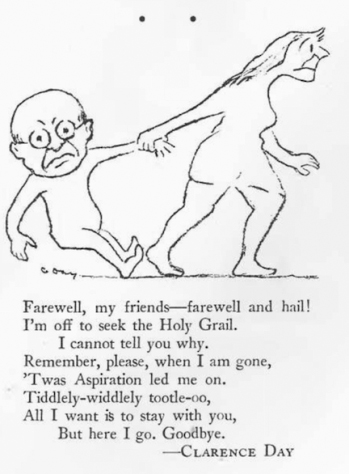
Farewell, my friends, farewell and hail;
I’m off to seek the holy grail;
I cannot tell you why;
Remember, please when I am gone,
’twas aspiration led me on;
Tiddly-widdly-tootle-oo,
all I want is to stay with you,
But here I go, goodbye.

The poem, written by Clarence Day, was published in the New Yorker Magazine on Dec 12, 1934, along with an original drawing by Mr. Day.

Day was famous for his Life with Father stories about Turn of the 19th Century New York City.

They were so good that the editor of the New Yorker, Harold Ross, said if he had done nothing more than published Day’s stories, he would have been satisfied with the standing of his magazine.

It was the last bit of Clarence Day published in the New Yorker and Day died a year later.

Clarence Day was also famous for once commenting:

“The world of books is the most remarkable creation of man.

Nothing else that he builds ever lasts. Monuments fall, nations perish, civilizations grow old and die out; and, after an era of darkness, new races build others.

But in the world of books are volumes that have seen this happen again and again, and yet live on, still young, still as fresh as the day they were written, still telling men’s hearts of the hearts of men centuries dead.”

I turn to that today because of the news from Washington.

A feel like a piece of the jenga pile of things that made America, America was pulled out today and the whole thing is coming down.

Suffice it to say I have no words for how I feel because I have no words for how I feel.

I have asked myself often what will cause me to stop writing these writings and having no words may just be the push off the cliff.

I have no words left it seems.

I have questions.

I have questions like, how do people have so much hate inside themselves.

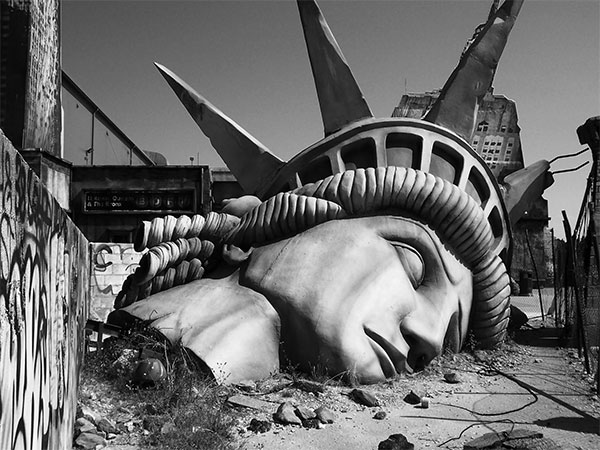
I have questions like, when does the Statue of Liberty come down?

Won’t that be a day to rival the book burnings in Berlin?

But as Mr. Day said, Monuments fall, nations perish, civilizations grow old and die out; and, after an era of darkness, new races build others.

I should not be surprised.

Liberty lasting wasn’t ever in the cards.

For today, we still have books.

The world of books where there are volumes that have seen this happen again and again, and yet live on, still young, still as fresh as the day they were written, still telling men’s hearts of the hearts of men centuries dead.

But they will come for the books next.

Safe money bets, they will come with masks on as they know its wrong and deep down, they will ashamed.

Not enough to stop them.

But enough that they will wear masks.

Shame.

6.26.2025 – a different man

a different man
altogether than one who
began the journey

In his 1st book, The Coming Fury, of his three book centennial history of the United States Civil War, Bruce Catton wrote about Abraham Lincoln and Robert E. Lee:

In a singular way, Lee began his journey more in the mood of Lincoln than in the mood of Davis. Davis had fewer doubts than either of the others.

He knew, broadly, what he was supposed to do, and he knew how to set about it, and he neither knew nor cared what it might cost him.

Lincoln and Lee took more doubts with them — doubts not only about the future but about the precise parts they themselves might have to play.

Each man would say things, in the early stages of this journey, that he would not have said later.

Each man would find the dimensions of the crisis enlarging as he came closer to it, his own probable role growing as the crisis grew; and each man would grow with the crisis itself, shaped by it but at the same time giving shape to it, becoming finally larger than life-size, a different man altogether than the one who began the journey.

The capacity to grow in office is a trait long discussed of American Presidents after leaving office.

Did they grow into the office or … did they fail?

Like so much of accepted historical practices, this question seems to have gone out the window.

What did it all matter if it came to this?

Being President of the United States used to mean something here at home and around the world.

The current administration has lowered the expectations of the office to the level of the Cook County Sheriff as described by Mike Royko in his biography, Boss, of Chicago Mayor Richard Daley when he wrote:

The Cook County Sheriff’s Department was a notorious money pot.

The sheriff’s police were supposed to patrol the roads and residential areas in the sizable unincorporated parts of the suburbs and were empowered to enter any town if local police weren’t doing their job.

They spent most of their time, however, shaking down motorists and making collections at suburban bars and brothels.

Since a sheriff couldn’t succeed himself, most of them got in, got it, and got out.

Few left without being the subject of scandal.

Catton would add of Lincoln and Lee, “Each man would find the dimensions of the crisis enlarging as he came closer to it, his own probable role growing as the crisis grew; and each man would grow with the crisis itself, shaped by it but at the same time giving shape to it, becoming finally larger than life-size, a different man altogether than the one who began the journey.”

The current man if office will also be different.

A lot richer for one thing.

He has got in.

He is getting it.

He will get out … someday.

Different?

Doubt it.

But how about us?

We certainly will be different than we were when we started this journey.

6.24.2025 – he was a man of

he was a man of
integrity – feared God more
than most people do …

Adapted from the verse in the Bible in the book of Nehemiah, Chapter 7, Verse 2:

I put in charge of Jerusalem my brother Hanani, along with Hananiah the commander of the citadel, because he was a man of integrity and feared God more than most people do.

I opened up CHAT GTP and asked it … how do you measure integrity?

It replied:

Integrity is the quality of being honest and having strong moral principles that you consistently uphold, even when it’s difficult or when no one is watching. It’s about doing the right thing—not because of external pressure or the potential for reward, but because it’s aligned with your core values.

Key aspects of integrity include:

  • Honesty: Telling the truth and being transparent.
  • Consistency: Acting according to your principles in all situations.
  • Accountability: Taking responsibility for your actions, including mistakes.
  • Reliability: Being dependable and following through on commitments.

In short, integrity is the internal compass that guides ethical behavior.

To go the next step, Nehemiah put his brother Hanani in charge of Jerusalem because he was a man of integrity …

… and feared God more than most people do.

It’s about doing the right thing … not because of external pressure or the potential for reward, but because it’s aligned with your core values.

Somehow, I don’t know that Hanani would have found a place in the current administration.

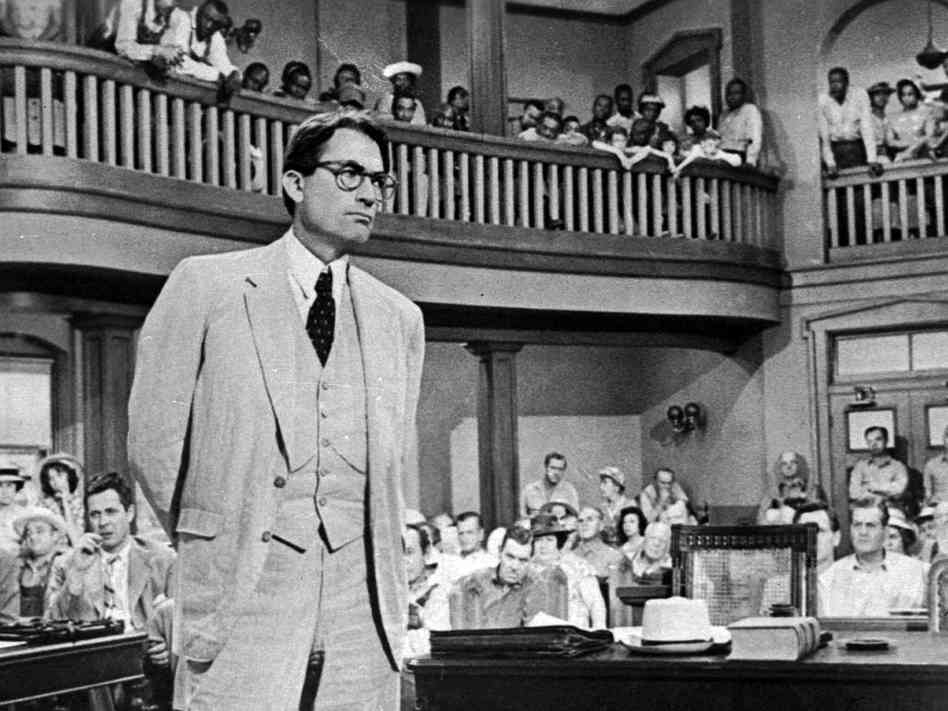
Somehow I don’t know that Atticus Finch would have found a place in the current administration.

Somehow, I know, Robert. E. Lee “Bob” Ewell would have found a place in the current administration without having to fill out an application.

6.19.2025 – one of those which sells

one of those which sells
you the disease in order
to sell you the cure

Adapted from the book review, The Genius Myth by Helen Lewis review – bright wrong things by Houman Barekat where Mr. Barekat writes:

The Genius Myth is one of those popular nonfiction books in which an author sells you the disease in order to sell you the cure. As is customary in this genre, it comes with its own bespoke jargon: Lewis has coined a term – “the deficit model of genius” – to denote the prevalence of certain handicaps or character flaws among extremely talented scientists and artists. A banal truism is thus passed off as sociological insight.

My wife and I still watch the network evening news.

We go back and forth between networks but at 6:30 p.m. our kids know we will have the TV on to learn about the day.

If you watch these programs, you must have noticed that almost everyday there is a new commercial for a new drug with some goofy name like Latuda, Xeljanz, Humira or Abilify.

These commercials have a lot in common.

One, the name is outrageous.

Tofacitinib?

I often say I would have enjoyed being in the board room where that name was picked out and that I would hate to see what names were that got rejected.

Two, most likely you have never heard of the disease these drugs treat.

Tofacitinib is for rheumatoid arthritis, psoriatic arthritis, ankylosing spondylitis, polyarticular course juvenile idiopathic arthritis, and ulcerative colitis.

Three, the side effects sound worse than the disease.

The side effects are so bad that they are read a quiet voice and double the speed of the normal speech.

When I read the phrase sells you the disease in order to sell you the cure I knew just what Mr. Barekat meant.

Until you heard about the possible symptoms, you didn’t have the symptoms.

Once you had the symptoms, the idea of the drug seemed to be a good idea, regardless of the side effects.

These thoughts stayed with me through my morning drive to work.

And it hit me.

It came to me that this explains the talking points of the current administration.

Did we need DOGE layoffs?

Did we need ICE raids?

Did we need to nuke Iran?

This current administration had to sell the disease.

Maybe a disease we didn’t even know about.

To sell us the cure.

And they found a lot of buyers.

Regardless of the side effects.

More Thurber Drawings – Click here