10.23.2025 – I cried over things

I cried over things
knowing no beautiful things,
not one, not one … lasts

Adapted from:

I cried over beautiful things knowing no beautiful thing lasts.
The field of cornflower yellow is a scarf at the neck of the copper sunburned woman,
The mother of the year, the taker of seeds.
The northwest wind comes and the yellow is torn full of holes,
New beautiful things come in the first spit of snow on the northwest wind,
And the old things go, not one lasts.

Autumn by Carl Sandburg in Chicago Poems as published in The Complete Poems of Carl Sandburg, (Harcourt Brace and Company, New York, 1950).
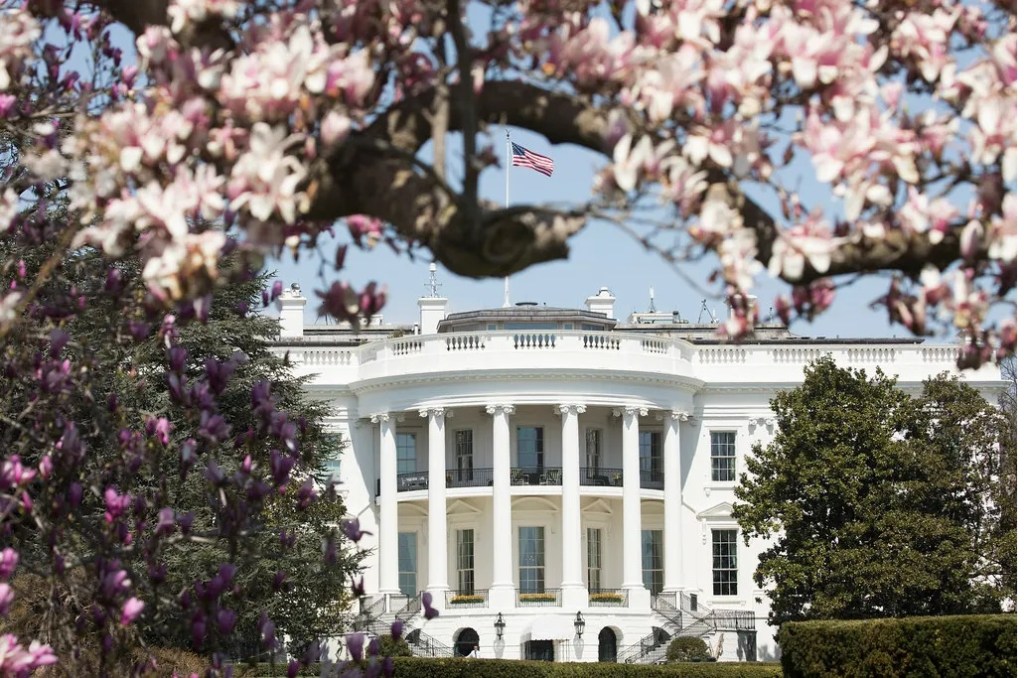
It’s just a building, I know.

And I know it was MASSIVELY renovated under Mr. Truman.

But understand, without much structural attention since being turned over to John Adams and being burned by the Brits in 1812, that building was falling down.

According to wikipedia:

By late 1948, three main options were considered for replacement of the White House:

  • Demolish and rebuild the interior, keeping the exterior walls intact.
  • Demolish the building entirely and construct a new executive mansion.
  • Demolish the building entirely, salvage the exterior walls and rebuild them and a new interior.

Two of the options were DEMOLISH ENTIRELY.

And the decision was made to Demolish and rebuild the interior, keeping the exterior walls intact.

Also from Wikipedia, Historic preservation of buildings during this time was not as strict or defined as it became later. For its time, simply not demolishing the entire structure was deemed “preservation”. Winslow envisioned many of the interior items – from doors, trim, woodwork, and ornamental plaster – would be reused. Most were carefully dismantled, labelled, catalogued, and stored. Much of the paneling was reinstalled in the main public rooms, but other historic elements were simply copied to accommodate increasing cost and time constraints. Many of the original materials that were not deemed of significantly identifiable historic value, such as marble fireplace mantels, or not deemed to be readily reused, such as pipes, were sent to landfills.

So is it the building where Mrs. Adams hung her laundry up in to dry, where Lincoln walked and FDR rolled?

Well not really, but there is this scene in my memory that I read about where Carl Sandburg, visited FDR in what is now the Yellow Room but in that day, was FDR’s study.

Sandburg, according to the story, stood at a window, hand on the window frame, and said something like, “This is where Lincoln stood, looking south to Virginia.”

FDR asked, “How can you know?”

Sandburg responded, “… I can tell.”

That window, the window Mr. Lincoln looked through, the window that Sandburg rested his hand on, that’s still there.

Still there … for now.
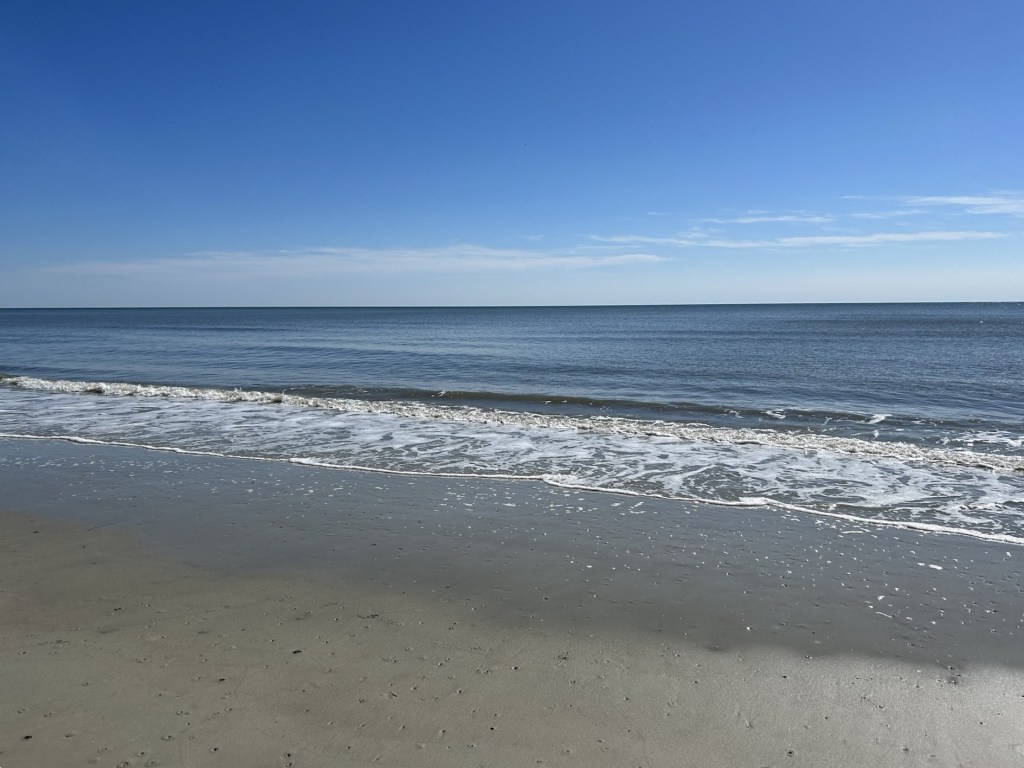
10.22.2025 -La mer est tout, son

La mer est tout, son
souffle est pur et sain que
mouvement et amour 

Based on the passage: La mer est tout ! Elle couvre les sept dixièmes du globe terrestre. Son souffle est pur et sain. C’est l’immense désert où l’homme n’est jamais seul, car il sent frémir la vie à ses côtés. La mer n’est que le véhicule d’une surnaturelle et prodigieuse existence ; elle n’est que mouvement et amour ; c’est l’infini vivant, comme l’a dit un de vos poètes. Et en effet, monsieur le professeur, la nature s’y manifeste par ses trois règnes, minéral, végétal, animal.”

From Vingt mille lieues sous les mers : Tour du monde sous‑marin by Jules Verne( Paris : Éditions J. Hetzel & Cie, 1870).

Or … The sea is everything!

It covers seven-tenths of the earth’s surface. Its breath is pure and healthy.

It is the vast desert where man is never alone, for he feels life stirring on all sides.

The sea is only the vehicle for a supernatural and prodigious existence;

it is nothing but movement and love;

it is living infinity, as one of your poets said.

And indeed, Professor, nature manifests itself there in all three of its kingdoms: mineral, vegetable, and animal.”

From Twenty Thousand Leagues Under the Seas: A Tour of the Underwater World by Jules Verne (Paris: J. Hetzel & Co., 1870).

What?

Another excuse to show off that this is where I take my lunch time?

La mer est tout!

The sea is everything!

Elle n’est que mouvement et amour!

It is nothing but movement and love!

And … another excuse to show off that this is where I take my lunch time.

10.21.2025 – implements of war

implements of war,
subjugation – arguments
to which kings resort

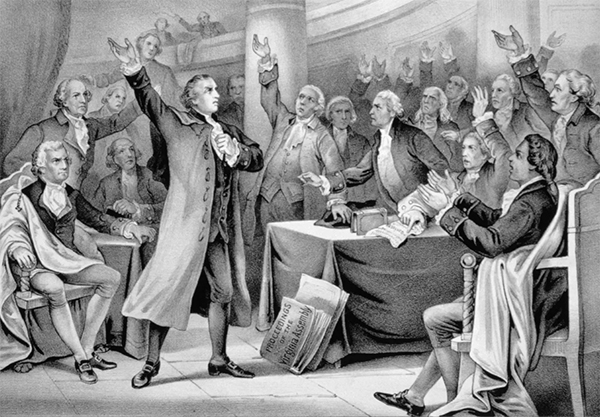
Based on these excepts from the speech known as, Give Me Liberty or Give Me Death by Patrick Henry as published in American Oratory, 1760–1900: Critical Studies and Sources, edited by Gregory Schneider, 18–23 (New York: Oxford University Press, 2000).

Are fleets and armies necessary to a work of love and reconciliation?
Have we shown ourselves so unwilling to be reconciled that force must be called in to win back our love?
Let us not deceive ourselves, sir.
These are the implements of war and subjugation—the last arguments to which kings resort.

It is in vain, sir, to extenuate the matter. Gentlemen may cry, Peace, Peace—but there is no peace. The war is actually begun!
The next gale that sweeps from the north will bring to our ears the clash of resounding arms!
Our brethren are already in the field!
Why stand we here idle?
What is it that gentlemen wish?
What would they have?
Is life so dear, or peace so sweet, as to be purchased at the price of chains and slavery?
Forbid it, Almighty God!
I know not what course others may take; but as for me, give me liberty or give me death!

According to Wikipedia, Mr. Henry made the speech to the Second Virginia Convention on March 23, 1775, at St. John’s Church in Richmond, Virginia. Henry is credited with having swung the balance in convincing the convention to pass a resolution delivering Virginian troops for the Revolutionary War. Among the delegates to the convention were future United States presidents Thomas Jefferson and George Washington.

According to Edmund Randolph, the convention sat in profound silence for several minutes after Henry’s speech ended.

10.20.2025 – break the law, let your

break the law, let your
life be a counter friction
to stop the machine

what I have to do
is not lend myself to the
wrong which I condemn

If the injustice is part of the necessary friction of the machine of government, let it go, let it go: perchance it will wear smooth—certainly the machine will wear out.

If the injustice has a spring, or a pulley, or a rope, or a crank, exclusively for itself, then perhaps you may consider whether the remedy will not be worse than the evil;

but if it is of such a nature that it requires you to be the agent of injustice to another, then, I say, break the law.

Let your life be a counter‑friction to stop the machine.

What I have to do is to see, at any rate, that I do not lend myself to the wrong which I condemn.

From Walden; or, Life in the Woods by Henry David Thoreau (Boston: Ticknor and Fields, 1854).

Or, as it he said, Ralph, what are you doing … out there.

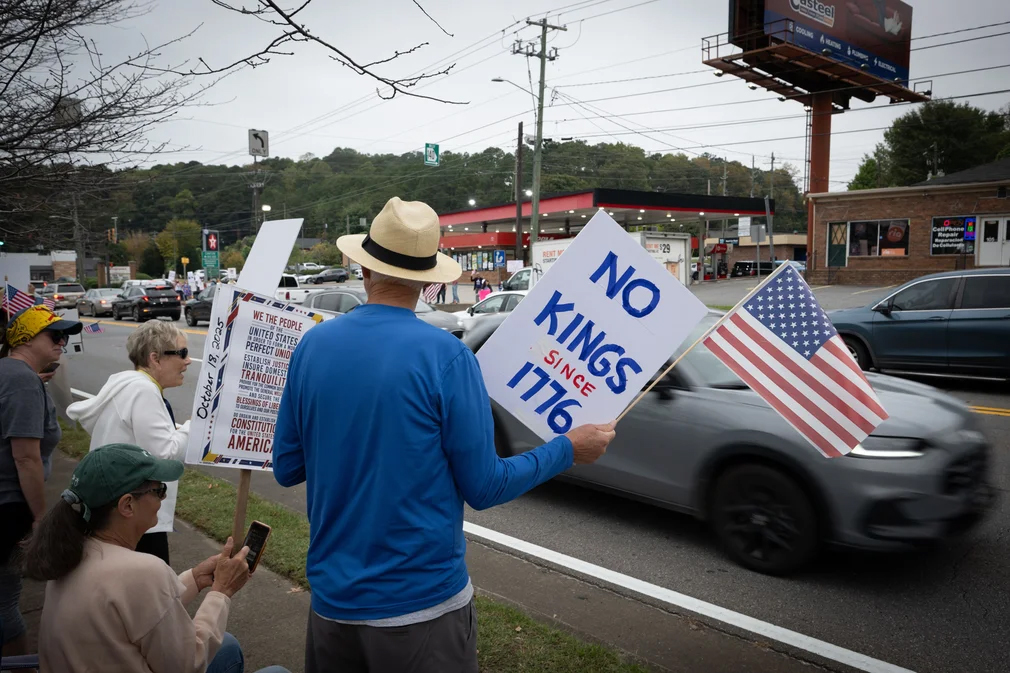
10.19.2025 – little value in

little value in
survival if traditions
do not survive

The very word “secrecy” is repugnant in a free and open society; and we are as a people inherently and historically opposed to secret societies, to secret oaths and to secret proceedings.

We decided long ago that the dangers of excessive and unwarranted concealment of pertinent facts far outweighed the dangers which are cited to justify it.

Even today, there is little value in opposing the threat of a closed society by imitating its arbitrary restrictions.

Even today, there is little value in insuring the survival of our nation if our traditions do not survive with it.

And there is very grave danger that an announced need for increased security will be seized upon by those anxious to expand its meaning to the very limits of official censorship and concealment.

That I do not intend to permit to the extent that it is in my control.

And no official of my Administration, whether his rank is high or low, civilian or military, should interpret my words here tonight as an excuse to censor the news, to stifle dissent, to cover up our mistakes or to withhold from the press and the public the facts they deserve to know.

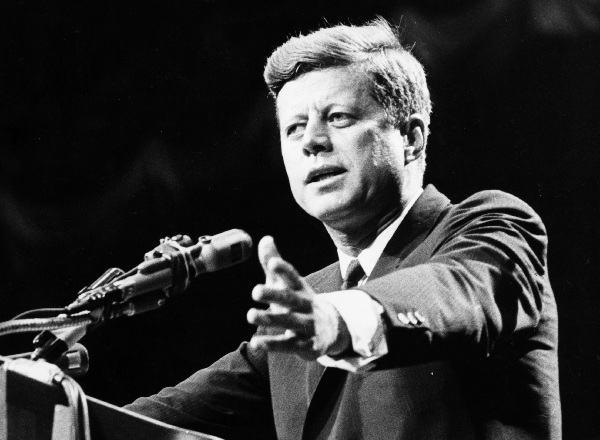
President John F. Kennedy speaking on The President and the Press, before The American Newspaper Publishers Association at the Waldorf-Astoria Hotel, New York City on April 27, 1961. (Listen to the full speech on You Tube – from an era when Presidents spoke in complete sentences).