10.28.2025 – sea forced us to tell

sea forced us to tell
ourselves property here is
no longer worth much

In the distance, about half a mile away, you can see the outline of the 400 or so buildings in the village of Miquelon. It sits only 2 metres above sea level on the archipelago of Saint-Pierre and Miquelon. Situated off the Canadian coast to the south of Newfoundland, it is an “overseas collectivity” of France, and the country’s last foothold in North America.

“The constraint of no longer being able to build here – of not being sure that we are sufficiently protected from the sea, with storms that are getting stronger and more frequent – forced us to tell ourselves that our property here is no longer worth much,” he says.

From the article, As rising tides eat away at Canada’s Saint-Pierre and Miquelon archipelago, plans to move the historic village to higher ground have divided friends and families By Sara Hashemi
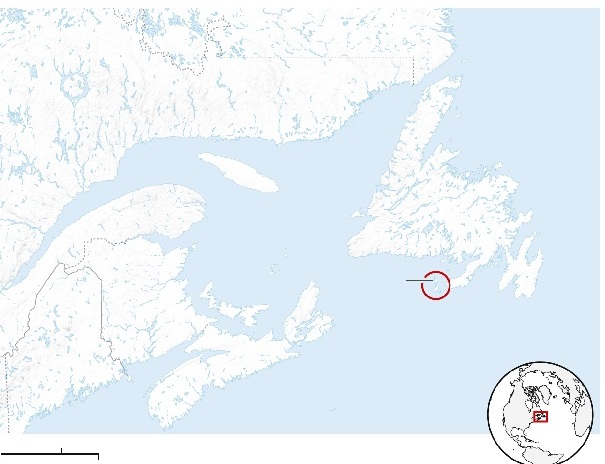
The islands were an overseas territory of the Nazi-controlled regime of Vichy France after the fall of France in World War II, and were liberated a year and a half later by Free French forces in 1941. After the war, the fishing industry continued to languish, and now fish stocks have fallen so low that fishing is severely restricted. Saint Pierre and Miquelon are now trying to diversify their economy into tourism and other areas.

During the early years of World War II, the United States maintained formal relations with Vichy France. Under the Monroe Doctrine, the US was strongly opposed to any change in control of the islands by force. However, Canada (perhaps due to pressure from Winston Churchill) expressed worries about Vichy forces near Canada. De Gaulle realized that Canada might want to capture Saint Pierre and Miquelon (thereby eliminating French territory so close to Quebec), so he secretly planned its seizure by Free France. On Christmas Eve 1941, Free French forces (three corvettes and the submarine Surcouf, led by Rear-Admiral Émile Muselier) “invaded” the islands. The Vichy officials immediately surrendered.

In the late 1950s De Gaulle offered all French colonies political and financial independence. Saint Pierre and Miquelon chose to remain part of France.

I have long been fascinated with the islands of Saint-Pierre and Miquelon and that a legal part of France was off the coast of Newfoundland.

I remember the old joke of why go all the way to Paris when you can go to Quebec and have people be rude to you.

Of course, I would respond why go all the Quebec when you can shop at Jacobsen’s and have people be rude to you.

But you had to live in West Michigan a long time ago to get that joke.

But there it is, islands, ruled by Government of France, right there 13 miles off the coast of Canada.

It was like after the French and Indian War, those Europeans divvied up all the Risk Cards and someone dropped the Saint-Pierre and Miquelon card on the floor.

Conceivably during World War 2, then Nazis could have staged U Boats out of there, if they could have got there in the first place.

Now they are finding that the Atlantic Ocean is creeping in and that ocean front property, as they say, is no longer worth much.

The constraint of no longer being able to build here – of not being sure that we are sufficiently protected from the sea.

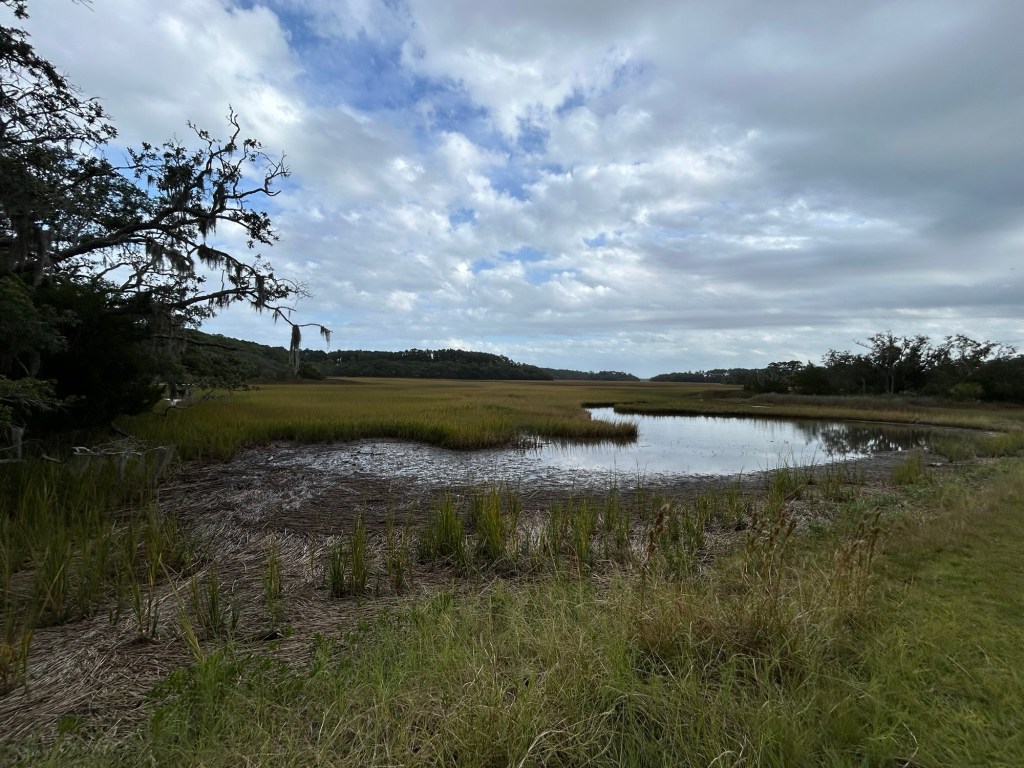
Here I sit in what is called the low country of South Carolina.

The pandemic era WORK FROM HOME concept has caused this area to blow up population wise.

The city of Bluffton, where I live had 900 people living here 25 years ago.

It now has 40,000 and more are moving in every day with new developments both for residents and vacationers.

Houses, Town Homes and Apartments turn up before our eyes.

Vacant marsh land overnight is now a golf course.

But the sea is still a problem for us and it pretty much runs the show.

First off, no one gets to live on the coast.

There is only so much of that.

Second, this is still the low country.

At high tide, 50% of the Beaufort County is under water.

As well as cutting back on available dry land, which pretty much was taken over for roads and railway right-of-ways a long time ago, the amount of fresh water here was maxed also a long time ago.

City and County leaders point out almost every day that the limit for water services and road expansion has been reached.

Then the zoning boards approve another 5,000 homes.

On to of that, the entire area could be wiped off the map by a hurricane.

At some point all of this has to come to smash and the folks here will be forced to tell themselves that their property here is no longer worth much.
10.27.2025 – kind of behavior

kind of behavior
could make a nun kick in a
stained-glass window

He’s tried to restore Confederate statues and names. He’s retreating from the Civil Rights Act of 1964. His flunkies have downplayed Black icons like Harriet Tubman, the Tuskegee Airmen and Jackie Robinson.

That kind of behavior could make a nun kick in a stained-glass window. And it certainly won’t get you into heaven.

From the opinion piece, Trump’s Slavish Stupidity by Maureen Dowd (Aug 28, 2025).

Maureen Dowd is an Opinion columnist for The Times. She won the 1999 Pulitzer Prize for distinguished commentary. 

I like the writing of Ms. Dowd.

She has a way often of writing just what I feel.

She has a ‘style’ as they say, all her own.

Be that as it may, she is not above sneaking in the occasional odd reference to American literature.

In this case, a tribute to the great Raymond Chandler who wrote in his novel, Farewell, My Lovely, that wonderful line … “It was a blonde. A blonde to make a bishop kick a hole in a stained-glass window.”

I just wanted to say to Ms. Dowd, that I got it and I loved it.

PS – Found this in my drafts from back in August and never published it and as I am on vacation, I thought it would be a good day to use it.

10.26.2025 – one in sympathy

one in sympathy
with nature, each season in
turn … seems loveliest

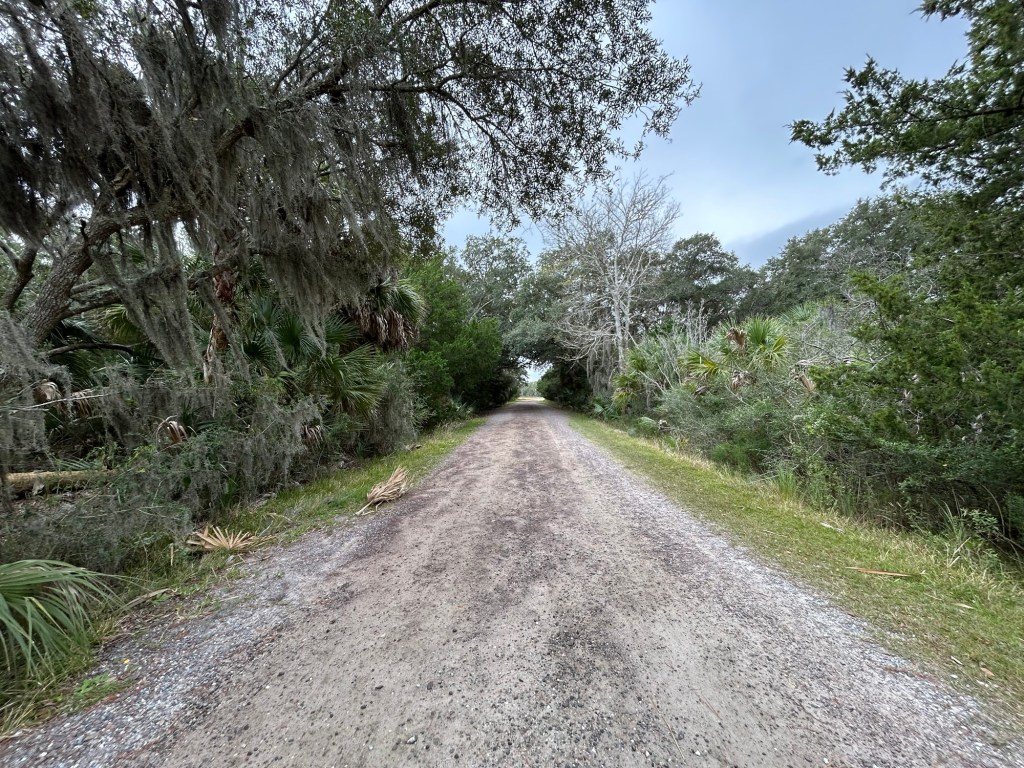
Fall on Pinckney Island, SC Oct 26, 2025

The land that has four well-defined seasons cannot lack beauty, or pall with monotony.

Each season brings a world of enjoyment and interest in the watching of its unfolding, its gradual, harmonious development, its culminating graces—and just as one begins to tire of it, it passes away and a radical change comes, with new witcheries and new glories in its train.

And I think that to one in sympathy with nature, each season, in its turn, seems the loveliest.

From Roughing It by Mark Twain (Harper & Brothers: New York, 1913).

Fall on Pinckney Island, SC Oct 26, 2025

10.25.2025 – this office has been

this office has been
a sacred trust and an honor
beyond words, measure

“When people tell me that I became President on January 20th, 1981, I feel I have to correct them. You don’t become President of the United States. You are given temporary custody of an institution called the Presidency, which belongs to our people. Having temporary custody of this office has been for me a sacred trust and an honor beyond words or measure.”

Remarks of President Ronald Reagan at the Republican National Convention, New Orleans, LA (8/15/88).

As a measure of how far things have gone, I am quoting Ronald Reagan.

Truth be told, I didn’t like him very much, but the farther away he gets, the better he looks to me.

Just for this quote alone and the important points Mr. Reagan makes about the office.

And for the recognition of that all important word, temporary.

There seem to be two ends to this story.

That guy in office wins out, history is rewritten, he goes down as the greatest President, The Art of the Deal is given a red cover, is placed in all churches and the little red book becomes required reading for all starting in 4th grade, the Washington Monument comes down and new gold tower is raised in its place and along the way, the United States apologizes to Germany for making them feel bad about WW2.

Or all this is temporary.

The Burgermeister Meisterburger’s picture falls off the wall and is thrown away.

The folks who currently hold offices like the President, The Chief Justice, and the Speaker of the Voice are all remembered as some of the worst office holders in the history of the nation.

And lets be fair here.

That bar to succeed in these offices is low.

When you get the job, you get a rule book called the Constitution of the United States and you follow the rules and you are assured of at least passing grades if not really high marks in the record book of History.

And the Country survives and goes on after a really bad bump in the road.

Doesn’t look like there are other options at this point.

There, for me, is truly no parallel in history to this guy.

And, for me, there is is truly no parallel in fiction to this guy.

Not even Tom Clancy in his wildest novels came up with a scenario like the one we are dealing with.

The closest thing I can come up to match is some of the odder villains in James Bond movies.

But I am telling you this much.

Had you gone to Hollywood with a plot with the evil nemesis of the world would in one week, blow up the minions of his perceived enemies by shooting missiles at motorboats, tear down part of the White House, demand that the Government that he directed pay him $300 Million dollars while releasing cartoons of himself wearing a crown, flying fighter jet, dropping poop on American citizens, you would have been thrown out before your butt hit the leather.

Mr. Reagan looks better and better every day.

10.24.2025 – whole world was watching

whole world was watching
and other nations could not …
help but be impressed

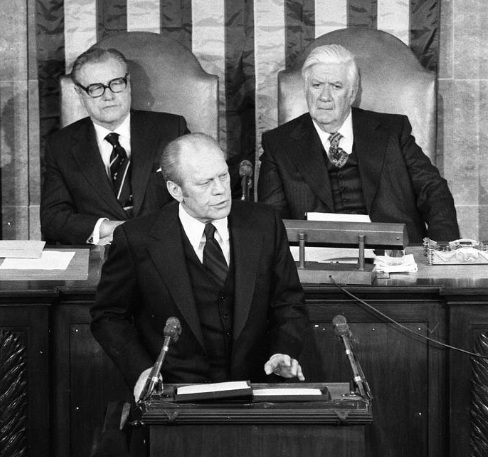
I’ve never been a Nixon-hater, and I felt no pleasure when he resigned.

But if it had to be, I’m glad it happened the way it did.

A president fell and a new president took over, and yet there was no scuffling, no guns, no harsh bickering, no crowds in the streets— not so much as a fistfight.

The whole world was watching, and other nations couldn’t help but be impressed.

After all, when leaders fall, their governments usually collapse as well.

But our transition was orderly and by the book, and this period, as much as anything in our history, showed the strength of our great democracy.

Man of the House : the life and political memoirs of Speaker Tip O’Neill by Tip O’Neill (New York: Random House, 1987).

I have to ask, what has the recent effort to make America great again achieved over this?

About the last 10 years there is little to contribute to writing that this period, as much as anything in our history, showed the strength of our great democracy.

Mr. O’Neill concluded his book with an epilogue titled, What I Believe.

He wrote:

I BEGAN my political career in 1936, on a slogan of “work and wages.” Today, more than half a century later, I’m still a bread-and-butter liberal who believes that, every family deserves the opportunity to earn an income, own a home, educate their children, and afford medical care.

That is the American dream, and it’s still worth fighting for. In my view, the federal government has an obligation to help you along the line until you achieve that dream. And when you do, you have an obligation to help out the next group that comes along.

What a dreamer and what a dream.

Let’s repeat those last two sentences.

The federal government has an obligation to help you along the line until you achieve that dream.

And when you do, you have an obligation to help out the next group that comes along.

Just boil it down to the simple statements that the federal government has an obligation to help you and you have an obligation to help the next group.

Those two statement as much as anything in our history, show the strength of our great democracy.

That is where the focus should be if anyone wants to make America great again.

Speaker Tip O’Neill was Speaker of the House from Gerald Ford to Ronald Reagan and most likely that last of Speaker of House to hold real power in politics.

When he died, President Bill Clinton paid tribute to him, saying, “Tip O’Neill was the nation’s most prominent, powerful and loyal champion of working people… He loved politics and government because he saw that politics and government could make a difference in people’s lives. And he loved people most of all.

AS KIND OF A POSTSCRIPT, Mr. O’Neill also wrote:

God has been good to America, especially during difficult times.

At the time of the Civil War, he gave us Abraham Lincoln.

And at the time of Watergate, he gave us Gerald Ford—the right man at the right time who was able to put our nation back together again.

Nothing like Watergate had ever happened before in our history, but we came out of it strong and free, and the transition from Nixon’s administration to Ford’s was a thing of awe and dignity.

Making an assessment based on the folks now in Government, I think God doesn’t like us much right now.