1.6.2026 – have been treacherous

have been treacherous
in order good might come out
apparent evil
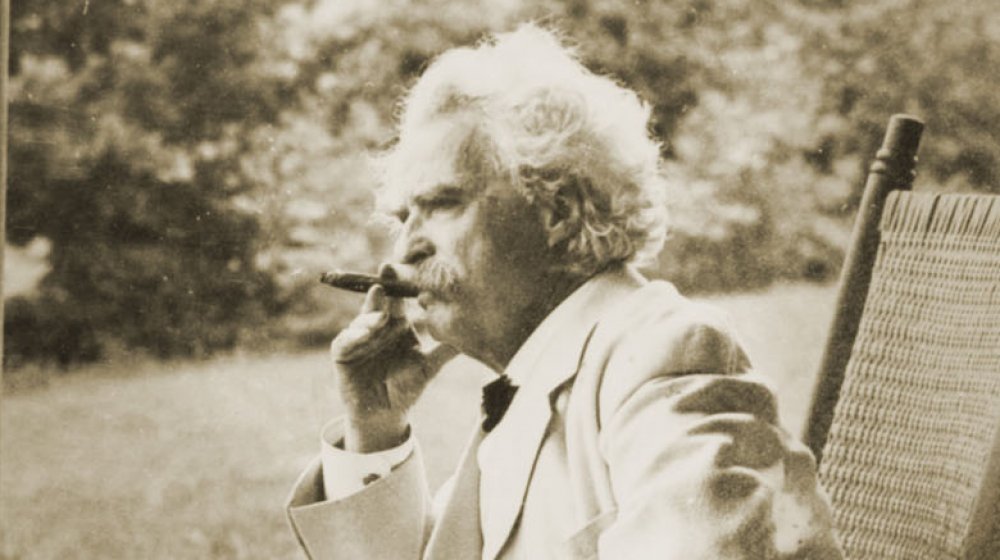
Adapted from Mark Twain’s essay, “To the Person Sitting in Darkness” published in 1901.

Mr. Twain writes:

Having now laid all the historical facts before the Person Sitting in Darkness, we should bring him to again, and explain them to him. We should say to him:

“They look doubtful, but in reality they are not.

There have been lies; yes, but they were told in a good cause.

We have been treacherous; but that was only in order that real good might come out of apparent evil.

True, we have crushed a deceived and confiding people; we have turned against the weak and the friendless who trusted us; we have stamped out a just and intelligent and well-ordered republic; we have stabbed an ally in the back and slapped the face of a guest; we have bought a Shadow from an enemy that hadn’t it to sell; we have robbed a trusting friend of his land and his liberty; we have invited our clean young men to shoulder a discredited musket and do bandit’s work under a flag which bandits have been accustomed to fear, not to follow; we have debauched America’s honor and blackened her face before the world; but each detail was for the best.

We know this.

The Head of every State and Sovereignty in Christendom and ninety percent. of every legislative body in Christendom, including our Congress and our fifty State Legislatures, are members not only of the church, but also of the Blessings-of-Civilization Trust. This world-girdling accumulation of trained morals, high principles, and justice, cannot do an unright thing, an unfair thing, an ungenerous thing, an unclean thing. It knows what it is about. Give yourself no uneasiness; it is all right.

Now then, that will convince the Person. You will see. It will restore the Business. Also, it will elect the Master of the Game to the vacant place in the Trinity of our national gods; and there on their high thrones the Three will sit, age after age, in the people’s sight, each bearing the Emblem of his service: Washington, the Sword of the Liberator; Lincoln, the Slave’s Broken Chains; the Master, the Chains Repaired.

According to Wikipedia, “To the Person Sitting in Darkness” is an essay by American author Mark Twain published in the North American Review in February 1901. It is a satire exposing imperialism as revealed in the Boxer Rebellion and its aftermath, the Boer War, and the Philippine–American War, expressing Twain’s anti-imperialist views.

I had kinda sorta made a New Year’s resolution to keep my posts in the world of words and avoid political commentary.

So the resolution lasted 6 days into the New Year.

Ahhhhhhhhhhhhhhhhhhhhh, well, there it is.

I keep coming back to something Barack Obama said during the 2024 election.

President Obama referred to the birth certificate claims that were made about him and Mr. Obama said, “Remember when we thought this was crazy as he could get?”

As President George W. Bush said back in 2017, “That’s some weird shit.

There on their high thrones the Three will sit, age after age, in the people’s sight, each bearing the Emblem of his service:

Washington, the Sword of the Liberator;

Lincoln, the Slave’s Broken Chains;

The Master, the Chains Repaired.

And so we watch.

Twain’s suggested new flag

1.5.2026 – much emotional

much emotional
content occurs before we
are nineteen, twenty

Probably everyone feels this on their first true flight from whatever nest, but it is no less real for being so universally shared!

We all have mothers and fathers, and what sweet anguish, sometimes terror, there is in those names.

If you give it much thought, the skeleton of life is stupendously ordinary.

So much of the emotional content of our lives seems to occur before we are nineteen or twenty, doesn’t it?

After that, especially by our age, we seem like stone walls, mortared together by scar tissue.

The whole point is not to be.

From all my reading done in construction camps throughout the world, the main point or challenge is to stay as conscious as possible, absurd as that seems.

Sundog: a novel : the story of an American foreman, Robert Corvus Strang, as told to Jim Harrison by Jim Harrison (Washington Square Press: New York, 1989).

1.4.2025 – there’s a gallon of

there’s a gallon of
milk from 1908 that’s
aged better than that

This thing of writing these essays started as an effort to recognized use of words in today’s media.

With that in mind, I cannot recall the last time I read anything like the line, “There’s a gallon of milk from 1908 that’s aged better than that.”

From the New York Times story, What we got right — and wrong — in weird NFL season: Concern for Bills, belief in Chiefs by Saad Yousuf where, under the heading, “Things we got wrong,” Mr. Yousuf writes:

The “genuinely mediocre” teams: Back in Week 3, we took on the task of categorizing the 12 teams that split their first two games and sat at 1-1. One of the categories was “genuinely mediocre,” and it included three teams: the Patriots, Denver Broncos and Jacksonville Jaguars. That’s right. The only three teams that enter Week 18 with a chance to clinch the top seed in the AFC were labeled as “genuinely mediocre.” There’s a gallon of milk from 1908 that’s aged better than that.

I have to say that based on what was going on in Week 3, Mr. Yousef’s choices looked pretty safe but who could have known how the NFL, through their officiating proxies, would ordain that the season play out?

Back in the day I was sitting in a pre-election meeting at a TV station in Atlanta, Georgia and the News Director put on the table the idea of creating a list of the greatest un kept election year promises in Georgia history.

I banged the table and yelled, “Sherman will never cross the border!

I’d have to say that there are gallons of milk for 1864 that aged better than that one.

No one could come up with anything better, though ‘Izzy will be loved by generations of Atlantan’s‘ came close.

1.3.2025 – I guess I mean this

I guess I mean this
if lived well … then just as true …
is the peace you feel

Adapted from the book, I See You’ve Called in Dead – A Novel by John Kenney (Zibby Publishing: New York, 2025), where Mr. Kenney writes: (Tim, the landlord and friend of Bud, the hero of the novel, is speaking)

I don’t really know what I mean either.

I guess I mean this.

That at the end — and I’ve had the privilege to be in the room with a few people now, my parents, two friends—I think, and it’s just a guess, but I think we let go of everything and the true nature of experience falls over us.

This … miracle that is existence.

Which we layer with so much.

With anxiety and fear and greed and smallness and what’s next and hurry up and I’ve got a meeting and all the … stuff … that gets in the way.

I’m not saying we should all go live like a monk.

I’m saying that if you haven’t lived the life you want, if you haven’t loved life, then at the end, I think a deep and very sad regret comes over you.

But if you have, if you’ve lived well … friends and family and … if you’ve lived … then just as true is the peace you feel. I’ve seen it.

Does this make any sense or do I sound mad?

With anxiety and fear and greed and smallness and what’s next and hurry up and I’ve got a meeting and all the … stuff … that gets in the way.

Does this make any sense or do I sound mad?

Mad, not meaning angry but crazy.

I think the passage makes, if anything, too much sense.

Maybe that’s the craziest part of the passage.

The Moth and the Star

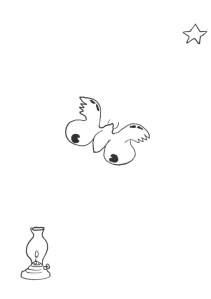
A young and impressionable moth once set his heart on a certain star. He told his mother about this and she counseled him to set his heart on a bridge lamp instead. “Stars aren’t the thing to hang around,” she said; “lamps are the thing to hang around.” “You get somewhere that way,” said the moth’s father. “You don’t get anywhere chasing stars.” But the moth would not heed the words of either parent. Every evening at dusk when the star came out he would start flying toward it and every morning at dawn he would crawl back home worn out with his vain endeavor. One day his father said to him, “You haven’t burned a wing in months, boy, and it looks to me as if you were never going to. All your brothers have been badly burned flying around street lamps and all your sisters have been terribly singed flying around house lamps. Come on, now, get out of here and get yourself scorched! A big strapping moth like you without a mark on him!”

The moth left his father’s house, but he would not fly around street lamps and he would not fly around house lamps. He went right on trying to reach the star, which was four and one-third light years, or twenty-five trillion miles, away. The moth thought it was just caught up in the top branches of an elm. He never did reach the star, but he went right on trying, night after night, and when he was a very, very old moth he began to think that he really had reached the star and he went around saying so. This gave him a deep and lasting pleasure, and he lived to a great old age. His parents and his brothers and his sisters had all been burned to death when they were quite young.

Moral: Who flies afar from the sphere of our sorrow is here today and here tomorrow.

1.2.2026 – try to remember

try to remember
people you have ever known
back to earliest

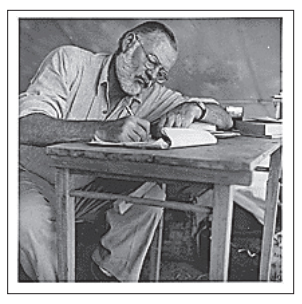
But some nights I could not fish, and on those nights I was cold-awake and said my prayers over and over and tried to pray for all the people I had ever known. That took up a great amount of time, for if you try to remember all the people you have ever known, going back to the earliest thing you remember — which was, with me, the attic of the house where I was born and my mother and father’s wedding cake in a tin box hanging from one of the rafters, and, in the attic, jars of snakes and other specimens that my father had collected as a boy and preserved in alcohol, the alcohol sunken in the jars so the backs of some of the snakes and specimens were exposed and had turned white — if you thought back that far, you remembered a great many people. If you prayed for all of them, saying a Hail Mary and an Our Father for each one, it took a long time and finally it would be light, and then you could go to sleep, if you were in a place where you could sleep in the daylight.

From the short story, Now I lay Me in The Nick Adams Stories by Ernest Hemingway (New York, Scribner: New York, 1972).

I get up in the morning and see what happened over night.

Hemingway have seen what happened overnight as well.

In his short story, A Clean Well Lighted Place, Mr. Hemingway write, “Now, without thinking further, he would go home to his room. He would lie in the bed and finally, with daylight, he would go to sleep. After all, he said to himself, it is probably only insomnia. Many must have it.”

Going to bed, knowing everything that could happen overnight, who could sleep.

I lie in the bed and finally, with daylight, I can go to sleep.

After all, I say to myself, it is probably only insomnia. Many must have it.