
I cried over things
knowing no beautiful things,
not one, not one … lasts
Adapted from:
I cried over beautiful things knowing no beautiful thing lasts.
The field of cornflower yellow is a scarf at the neck of the copper sunburned woman,
The mother of the year, the taker of seeds.
The northwest wind comes and the yellow is torn full of holes,
New beautiful things come in the first spit of snow on the northwest wind,
And the old things go, not one lasts.
Autumn by Carl Sandburg in Chicago Poems as published in The Complete Poems of Carl Sandburg, (Harcourt Brace and Company, New York, 1950).
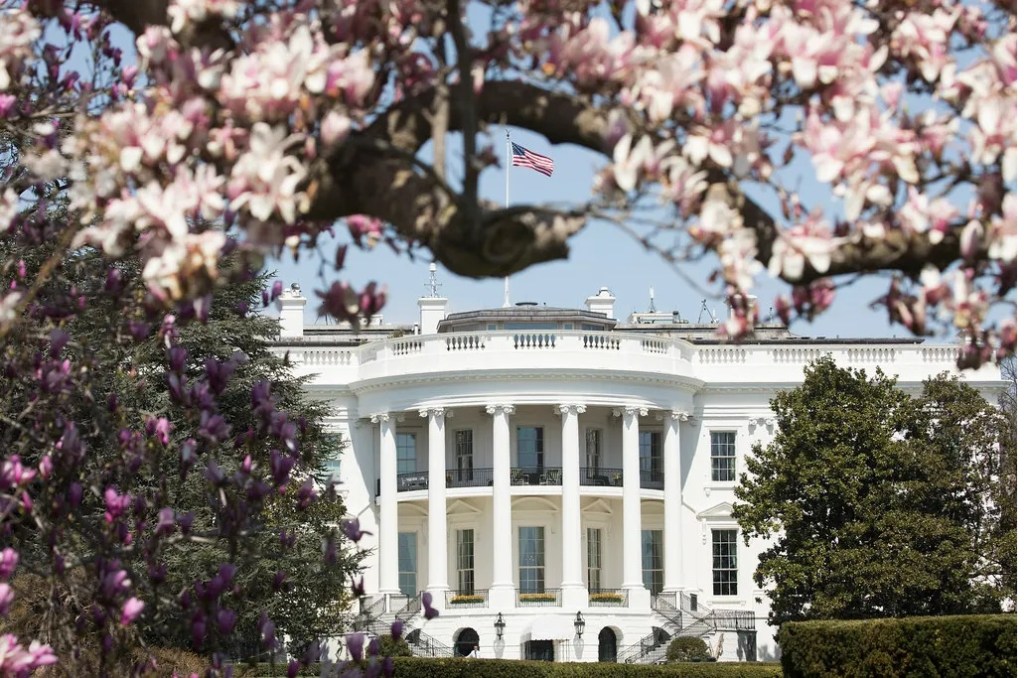
It’s just a building, I know.
And I know it was MASSIVELY renovated under Mr. Truman.
But understand, without much structural attention since being turned over to John Adams and being burned by the Brits in 1812, that building was falling down.
According to wikipedia:
By late 1948, three main options were considered for replacement of the White House:
- Demolish and rebuild the interior, keeping the exterior walls intact.
- Demolish the building entirely and construct a new executive mansion.
- Demolish the building entirely, salvage the exterior walls and rebuild them and a new interior.
Two of the options were DEMOLISH ENTIRELY.
And the decision was made to Demolish and rebuild the interior, keeping the exterior walls intact.
Also from Wikipedia, Historic preservation of buildings during this time was not as strict or defined as it became later. For its time, simply not demolishing the entire structure was deemed “preservation”. Winslow envisioned many of the interior items – from doors, trim, woodwork, and ornamental plaster – would be reused. Most were carefully dismantled, labelled, catalogued, and stored. Much of the paneling was reinstalled in the main public rooms, but other historic elements were simply copied to accommodate increasing cost and time constraints. Many of the original materials that were not deemed of significantly identifiable historic value, such as marble fireplace mantels, or not deemed to be readily reused, such as pipes, were sent to landfills.
So is it the building where Mrs. Adams hung her laundry up in to dry, where Lincoln walked and FDR rolled?
Well not really, but there is this scene in my memory that I read about where Carl Sandburg, visited FDR in what is now the Yellow Room but in that day, was FDR’s study.
Sandburg, according to the story, stood at a window, hand on the window frame, and said something like, “This is where Lincoln stood, looking south to Virginia.”
FDR asked, “How can you know?”
Sandburg responded, “… I can tell.”
That window, the window Mr. Lincoln looked through, the window that Sandburg rested his hand on, that’s still there.
Still there … for now.
 No Haiku For You