
news unstoppably
not by week and day but by
the hour and minute
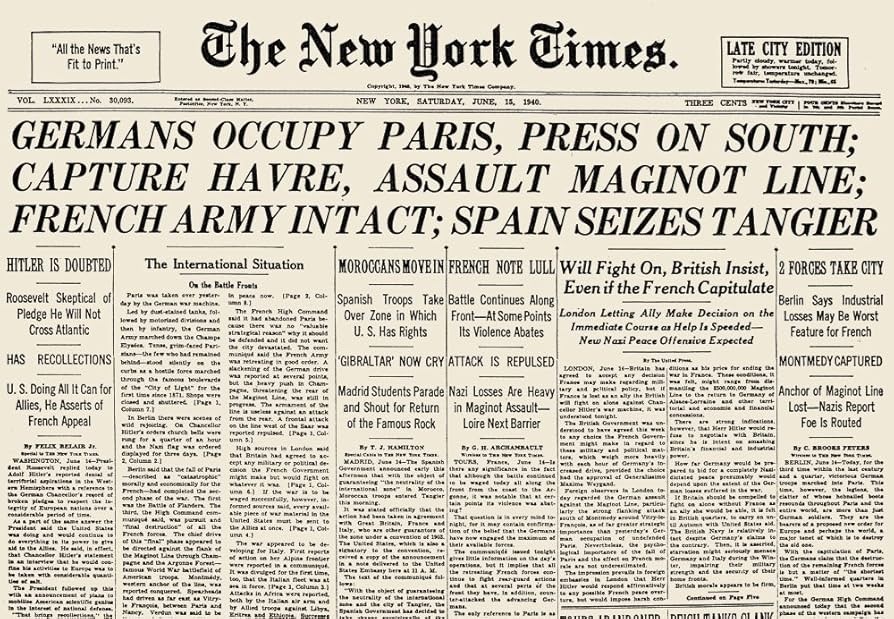
During the Second World War, the volume of information dispensed by what were beginning to be called the media — newspapers, magazines, books, movies, and, a few years later, TV — multiplied to an extent that nobody has been able so far to make an accurate reckoning of.
It was a change so great that even the remotest illiterate hermit could not fail to be altered by it; for the first time, with astonishment and sometimes with dismay, one sensed that a Niagara of news was flooding unstoppably in upon us, not by the week and day but by the hour and minute.
People sat by their radios and listened with satisfaction to news bulletins, infinitesimally rewritten as they were repeated, about victories and defeats throughout the world, and then went out and bought newspapers and magazines and gorged themselves on the same information for a tenth or twentieth time.
From Here at the New Yorker by Gill, Brendan, (New York: Viking Press, 1975).
Can you imagine such a world?
One sensed that a Niagara of news was flooding unstoppably in upon us, not by the week and day but by the hour and minute.
Let’s repeat that.
Not by the week.
Not by the day.
But by the hour
But by the minute.
People gorged themselves on the same information for a tenth or twentieth time.
Flooding unstoppably.
Unstoppably!
What a great word, but I digress.
A change so great that even the remotest illiterate hermit could not fail to be altered by it.
1941.
The state of news once the United States got into World War 2.
Looking back at the change wrought in the “media”, Mr. Gill wrote in 1975 that “nobody has been able so far to make an accurate reckoning of.”
On the one hand … no kidding.
On the other, how long will it take to make an accurate reckoning of the social media age?
Will anybody care?
 No Haiku For You