
has true Dickinson
spirit except gets fed up
occasionally
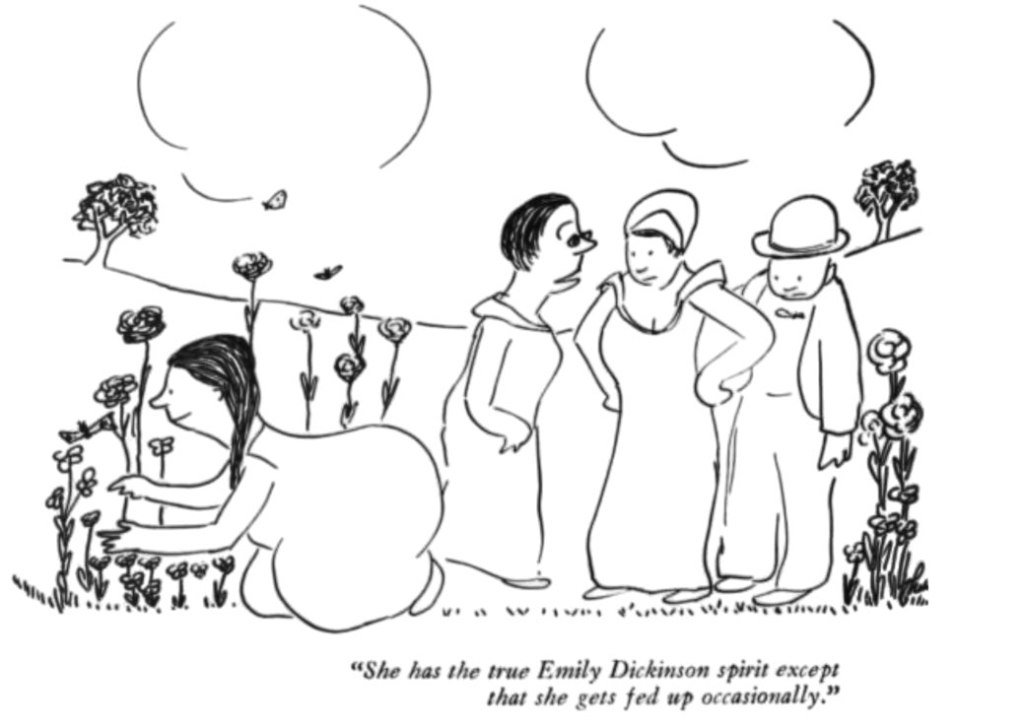
has true Dickinson
spirit except gets fed up
occasionally
and not by eastern
windows only, when daylight
comes, comes in the light
Adapted from Say not the Struggle Nought Availeth by
Arthur Hugh Clough as published in The Oxford Book Of English Verse (The Clarendon Press, Oxford, 1927).

Say not, the struggle nought availeth,
The labour and the wounds are vain,
The enemy faints not, nor faileth,
And as things have been they remain.
If hopes were dupes, fears may be liars;
It may be, in yon smoke concealed,
Your comrades chase e’en now the fliers,
And, but for you, possess the field.
For while the tired waves, vainly breaking,
Seem here no painful inch to gain,
Far back, through creeks and inlets making,
Comes silent, flooding in, the main.
And not by eastern windows only,
When daylight comes, comes in the light,
In front, the sun climbs slow, how slowly,
But westward, look, the land is bright.
If hopes were dupes, fears may be liars …
It may be, in yon smoke concealed,
Your comrades chase e’en now the fliers,
And, but for you, possess the field.
If hopes were dupes.
Fear may be liars.
And, but for you, possess the field.
any reader knows
unique delight of settling
down with a good book
When I was in college, most of my classes were in the field of history and came with extensive reading lists.
One in particular landed with a thump on the table when it was passed out by the Professor. (I think it was a class on Imperial Russian History and it listed War and Peace with the note YES – ALL OF IT).
I was always reading.
My roommates were in The School of Engineering and they had other forms of homework but I was always just reading.
One of my roommates finally said to me, “Are you reading for class … or for fun?”
“What’s the difference?“, I replied.
As long as I can remember, I have been a reader.
I have abibliophobia or the anxious feeling that I might run out of books or other things to read.
So it was with some interest that I read the New York Times article, “Fewer People Are Reading for Fun, Study Finds” by Maggie Astor who says that she, “… covers the intersection of health and politics, including the effects of public policies and of climate change.”
Ms. Astor writes, “Researchers from University College London and the University of Florida examined national data from 2003 to 2023 and found that the share of people who reported reading for pleasure on a given day fell to 16 percent in 2023 from a peak of 28 percent in 2004 — a drop of about 40 percent. It declined around 3 percent each year over those two decades.
There is evidence that reading for pleasure has been declining since the 1940s, the researchers said, but they called the size of the latest decrease “surprising,” given that the study defined reading broadly, encompassing books, magazines and newspapers in print, electronic or audio form.”
Lets do some diagnostics here.
From Gutenberg to the invention of the radio … there was reading.
Then came TV.
Then came the World Wide Web.
Then came hand held phones.
And there is evidence that reading for pleasure has been declining since the 1940s.
Well knock me over with a feather!
Who pays for these studies?
99% of green freeway information signage has a green background?
99% of orange highway cones are orange?
I gotta get one of these research grants.
Still, as Ms. Astor opens her article, any reader knows the unique delight of settling down with a good book.
Here is the point.
Any READER.
Any reader or anyone, really, can tell you, not everyone is a reader.
Who might turn out to be a reader can’t be determined at birth or by DNA or by any test known to mankind.
In the picture below is me and my brother Tim, probably about 1964.
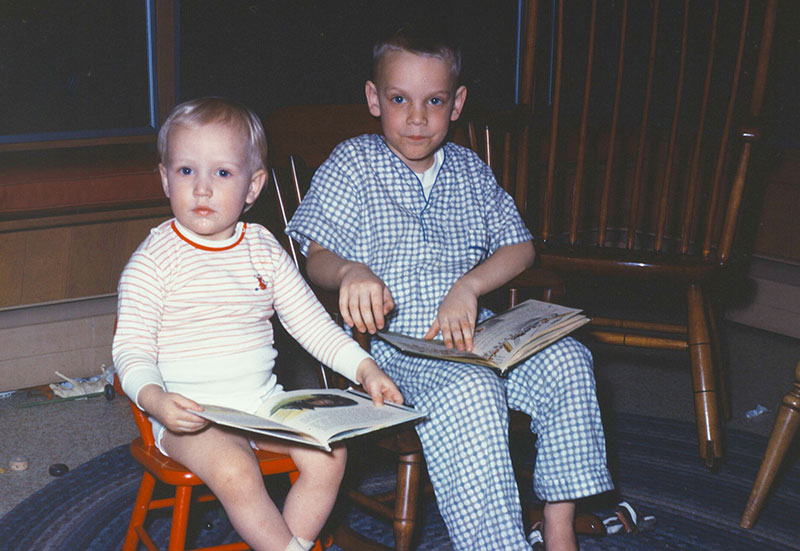
We both have books open on our laps.
We had the same parents, grew up in the same home but for some reason, I was a reader and Tim was not.
I went on to career in books and news and Tim went on to a be a very successful engineer.
As for the family gene pool, many of my brothers and sisters won the Math Award given to the best Math Student at Creston High School.
Me?
Someday I plan to get a book about Trigonometry and find out what that was all about.
I have worked in Bookstores and Libraries for a good part of my life.
Over those years I formed the opinion that about 10 to 15% of the American public could be classed as readers.
That matches up with where the ‘Scientific Data’ says we are now.
I had no scientific evidence to back that up, it was just a personal feeling I came up with over the years.
Still I am happy to report that a new bookstore opened up here the low country of South Carolina.
Newspaper coverage of the opening started with the line, “In the era of Amazon and e-books, who would have imagined that a brick-and-mortar, ink-on-paper bookstore would open on Hilton Head Island in summer 2025?”
Emily [the new owner/operater] said she was inspired by online discussions of third spaces, which means a place other than home or work and school that people can go to spend time such as cafes, libraries or community centers. “I also felt the need for, being someone who is in the younger generation living in the area, I felt that we had a lack of spaces to hang out or to socialize that’s not a restaurant or a bar or the beach,” Emily said.
Happy to say we were there yesterday and enjoyed the atmosphere and hope for their future.
Any reader knows the unique delight of settling down with a good book.
I can’t tell you when I started reading because I don’t remember a time when I wasn’t.
Something I attribute to my parents having books all over our house.
My Dad was a Dentist and he subscribed to all sorts of magazines for his office waiting room, and he would bring those magazines home for us to look at before they ended up being read by his nervous patients.
One the magazines he subscribed to was Reader’s Digest so all those Reader’s Digest digested books books were all over the house.
Along with the digested books, Reader’s Digest published anthologies like America’s Best Sports Stories and Reader’s Digest True Crime: Tales of Murder & Mayhem and those were laying around the house as well.
At some point in my young life, I took down Reader’s Digest True Crime: Tales of Murder & Mayhem, it had a big read thumb print on the cover and read through it.
There were stories titled, A killer is Loose and Life and Death of a Twisted Genius.
Just right for a 10 year old.
I read them all but it was a story titled, The Trial that Rocked the Nation that stuck with me.
It was a 10 page article the told the story of the Scopes Trial in Dayton, TN.
I remember asking my Dad about it and he said, “The Monkey Trial!”
With that my lifelong admiration for Clarence Darrow was born.
I wanted to learn more about Mr. Darrow and snuck into the grown up section of my local library and took home the book, Clarence Darrow for the Defense by Irving Stone.
Lots and lots of great Darrow stuff in that book (including the case he took that was heard in a Grand Rapids, Michigan courtroom – A courtroom I was in several times for wedding receptions when the building was turned into the local art museum).*
But the story that RESONATED with me was an story told about the time Mr. Darrow’s father, Amirus Darrow (A man who took young Clarence along for midnight wagon rides to bring people along the underground railroad in Ohio), visited his son in Chicago.
The narrative by Mr. Stone picks up with:
Amirus Darrow had decided to spend a week in Kinsman visiting old friends. Clarence had slipped several greenbacks into his father’s pocket, and Jessie put up a lunch for her father-in-law for the train. Amirus ieft early in the morning, riding the streetcar downtown from 4219 Vincennes Avenue. When he found that he had a half-hour before train time he descended a flight of stairs into a basement secondhand bookstore.
At ten o’clock that night the bell rang at the Darrow home. Clarence opened the door to find his father glaze-eyed, hugging a huge bundle under each arm. Amirus had found so many books for which he had always yearned that he had not emerged from the bookshop until twelve hours later, his railroad and vacation money spent. He had come home to read his precious literary treasures, all desire to visit Kinsman gone. Seeing his father standing before him on the porch, his eyes dreamy and withdrawn and beautiful, the son realized that the older man had always missed his train because he had found something more interesting in a book than would be waiting for him at the end of a journey.
Boy Howdy, Yessir!
Did I read that maybe at the wrong time in my life?
Or maybe not.
I have to say that as a guiding star in my life, I always felt that I might find something more interesting in a book than would be waiting for me at the end of a journey.
Any reader knows the unique delight of settling down with a good book.
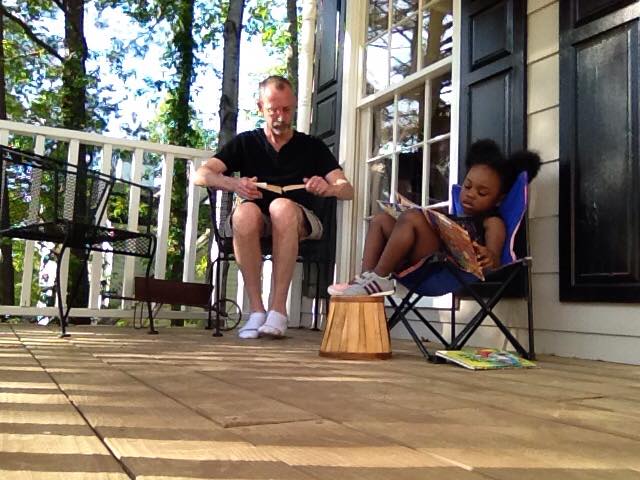
*(Gee whiz, but when will I get to the point … authors note)
the greatest moment
in sports history and I …
was there to see it
I am NOT the world’s biggest sports fan.
I know there are those who might argue that, and to those I respond that if anyone think’s that I am a big sports fan … has never met a big sports fan.
Sure I like Michigan sports but regular readers will know that its a family thing going back over 100 years so I come by it honestly.
Sure I have a lot of Michigan emblazoned stuff, but most of it was gifts so again, I come by it honestly.
Yes, I did just order myself a M Football Jersey for this year’s #42 but then this year, Michigan player wearing #42 happens to be named Jalen Hoffman so I can get a personalized jersey without ordering a personalized jersey so I come by it honestly.
The CEO of the company I used to work for was fond of saying, “33% of Americans love sports. 100% of American’s who love sports think EVERYONE loves sports.
I can agree with that.
I can also agree with the great sportswriter (and stepson of EB White) Roger Angell when he wrote …
“It is foolish and childish, on the face of it, to affiliate ourselves with anything so insignificant and patently contrived and commercially exploitative as a professional sports team, and the amused superiority and icy scorn that the non-fan directs at the sports nut (I know this look — I know it by heart) is understandable and almost unanswerable.
Almost.
What is left out of this calculation, it seems to me, is the business of caring — caring deeply and passionately, really caring — which is a capacity or an emotion that has almost gone out of our lives.
And so it seems possible that we have come to a time when it no longer matters so much what the caring is about, how frail or foolish is the object of that concern, as long as the feeling itself can be saved.
Naïveté — the infantile and ignoble joy that sends a grown man or woman to dancing and shouting with joy in the middle of the night over the haphazardous flight of a distant ball — seems a small price to pay for such a gift.
With that in mind, I have witnessed a couple of great moments in sports.
Along with my good friend, Doug, I witnessesed what was billed as a double header between The Chicago White Sox and the Detroit Tigers at Comiskey Park back in 1979.
The 2nd game of the double header was never played as between games a riot took place when 8,000 fans rushed the field to take part in what was called Disco Demolition.
It might not have been sports but it has gone down in history as the world’s WORST sports promotion of all time.
And I was there.
Also with Doug, I witnessed Anthony Carter score a touchdown to beat Indiana with no time on the clock in Michigan Stadium.
Also in Michigan Stadium, I saw Desmond Howard fly 20 yards horizontally over the field for a touchdown to beat Notre Dame and win the Heisman Trophy.
I saw Willie Horton hit a pinch hit home run to beat Texas and give Mark Fidrych another win in Tiger Stadium.
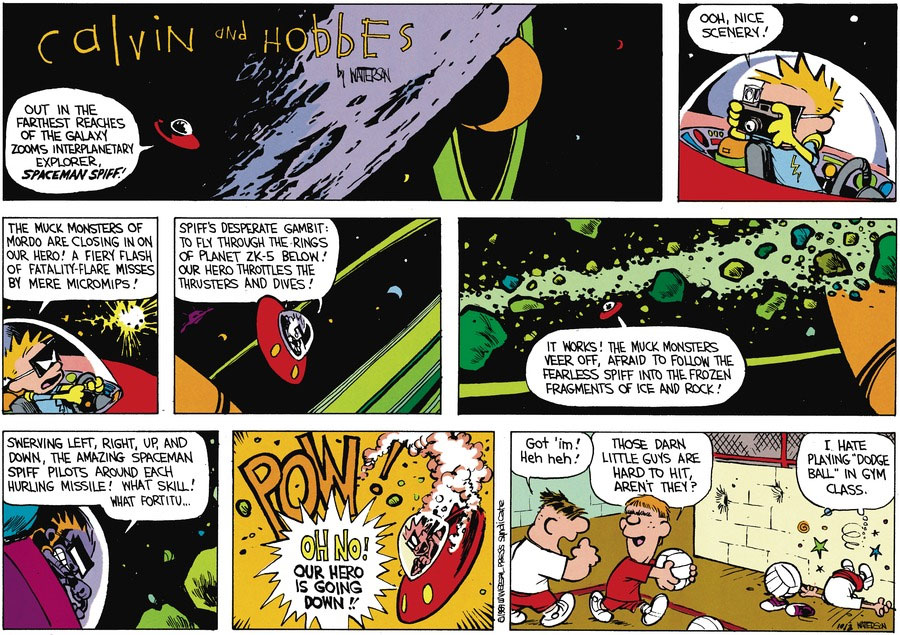
But the greatest moment in sports I ever saw happened in the gym at Crestview Elementary School in Grand Rapids, Michigan when I was in 4th grade.
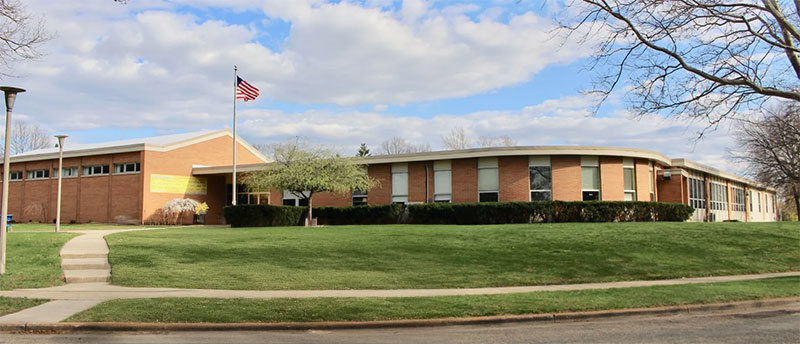
Back then, we didn’t have Phys Ed or a regular gym class but every other week or so, a Gym Teacher assigned to our school would show up and we would change into out gym shoes that hung on the back of our chairs, and file down to the gym for some directed physical activity.
(BTW to this day it is ingrained in me to ‘respect the hardwood’ and I cringe when I see people in street shoes out on a court but I digress.)
Aside from that, we would go the gym when our teacher needed a break or when she sensed we had a lot of pent up energy, like before Christmas when emotions ran high.
Without the Gym Teacher, it was up to our regular teacher to come up with something easy to do in the gym.
And the easiest thing to do in the gym was to get out a bunch of those big red rubber four square balls … and play dodge ball.
My 4th grade class met the usual demographics for 4th grade.
It was around 30 kids, half girls and half boys with some big kids and lots of little kids.
There were always a few kids who were born late in the year and started late and were ahead of the rest of us physically.
And then there was Cookie.
Cookie was the nicest kid, always had a big smile and a laugh.
He was just … big.
And he loved to play dodgeball.
When it came to dodgeball, he didn’t see the rest of us as kids but as targets.
Cookie didn’t just play dodgeball with us.
He played with us, playing dodgeball.
Ever see those videos of dogs herding sheep or maybe better, jackals circling a herd of water buffalo?
We would get to the gym and our teacher would go into the storage closet and toss out those rubber balls.
You remember those red rubber balls, don’t you?
The were red.
The were rubber.
And the surface was roughed up so you could get a grip on one.
The rough surface also had a way of grabbing onto you if thrown hard enough, and taking most of the skin off wherever it hit.
With the balls out on the gym floor, our teacher would get out of the way and Cookie would take over.
Cookie was such a master at this game that when word went out that the 4th grade and Cookie were playing dodgeball in the gym, other teachers realized they needed to go to the office for something and leave their classrooms to stand in the gym doorway and watch.
There would be a mad rush to start as we tried to survive.
The girls would usually pick up a ball and toss it at another girl to get out quickly.
I not too proud to admit, the boys would do the same thing.
But to get out quickly just delayed the inevitable since when who ever got you out, got out, you were back in.
The only way to the sidelines and safety was to let Cookie get you and get it over with.
Cookie playing dodgeball was art in motion.
He could throw and throw hard.
He could catch.
And he could dodge anything.
He once set his sites on me so I stood behind a friend of mine for safety.
Cookie flexed his fingers as he threw and that ball spun and curved in flight right around my friend and smacked me in the face.
Like I said, Cookie was the nicest kid.
He took it easy on the girls.
There was an unspoked agreement and the girls could run at Cookie and throw a ball at him which he would catch and the girl could go safely to the sidelines.
If I would stand up straight in the middle of the gym floor, Cookie would have mercy and finish me off with a nice easy throw that if it hit me on a bare arm, would leave a mark only for a day or two and I could walk off.
But show detemination?
Show courage?
Make an effort to get Cookie out?
And you were doomed.
Unless you had a plan.
For a long time, the third-baseman-playing-close-to-close-the-cone theory made popular by Graig Nettles of the New York Yankees stuck in my mind.
I thought about dodgeball late at night and I had figured that if I ran in close to Cookie and closed the cone, I would decrease the amount of time the ball had to pick up speed, and maybe I would have a reasonable chance to catch the ball and put Cookie out.
It might have worked for Graig Nettles but I doubt it and it didn’t work for me.
Let me tell you though, if Graig Nettles had been with us in that gym and been hit with a Cookie fastball, he would have given up on the idea, like I did.
All the time the game was going on, balls flying, kids flying, kids screaming, Cookie waded through the battle with his big smile on his and slowly but surely, knocked everyone in class out, every time we played.
Understand, Cookie played without malice but with a joy for the game and the fact that he played dodgeball so well.
Then came the day.
As I remember it for the sake of this story, it was a gray rainy Michigan day which meant no recess and our teacher went to the office to reserve the gym for our class.
When she came she announced no outside recess and to change into our gym shoes.
“Let’s play …”, and she paused, “dodgeball.”
The room took on the feeling of an NFL locker room for a team about to play the ’85 Chicago Bears.
We all changed into our gym shoes in silence while Cookie smiled his smile.
As always there were a couple of boys who were up for the game.
Walking down the hall to the Gym, Cal and Sylvester and Edward and some others would be trash talking Cookie.
“Today’s the day, Cookie!”
“You going down, Cook!” … and other such phrases.
Years later when people complained about the Fab Five Michigan Basketball team and their trash talking, I told folks, they hadn’t heard anything like my 4th grade class.
Tension and excitement built up down that long walk to the gym.
Once inside the gym, we scattered but there is no place to hide on a gym floor.
I can hear the sound those bouncing red rubber balls made when our Teacher tossed them out onto the gym floor.
She looked around, counted one … two … three and blew her whistle.
And the game was on.
Get Cookie early was the strategy, when the early melee was starting, filled with confusion.
But even if someone did get a chance to get a throw at Cookie, he would catch any ball like an all pro wide reviver.
Cookie was so quick and he got one of two of balls early and started picking us off, one by one.
Within five minutes, half the class was the sidelines.
As the sidelines crowd grew, so did the ohhhsssssss and ahhhhhs like what you hear at the 4th of July fireworks as one kid after another was blasted out of the game.
There would be an occasional burst of action when someone who had managed to get other kids out, got out themselves and those kids had to get back in the game.
Soon it was down to 6 kids then 5 then 4 and then all that was left was Cookie, Cal and little Stevie.
Stevie was one of those kids who always had a smile on his face no matter what.
Stevie was quiet but always gave 100% no matter what the class was doing and he was always up for any game in the gym.
Now Stevie and Cal faced off with Cookie
Luck was with them and they had all the rubber balls and Cal and Stevie were able to work Cookie into a corner.
Cal motioned to Stevie and they both approached Cookie at the same time along opposite walls with a ball ready to throw.
Great strategy!
I can still see Cal staring straight ahead at Cookie while he gestured to Stevie to move in along the other wall.
They got to within 20 feet when Cal nodded at Stevie and they both threw as hard as the could at Cookie at the same time.
Cookie jumped to one side and caught Cal’s throw one handed.
Cal was out.
Stevie’s throw missed.
Cookie stood up and smiled.
Stevie ran for the other two balls which he threw as he ran and Cookie dodged easily.
Now Cookie held one ball and all three other balls were behind him.
Stevie stood alone in the center of the gym.
And they stared at each other.
Then Cookie taunted Stevie and he rolled the other balls out, daring Stevie to make a move to get one.
Stevie didn’t move.
Cookie took a step or two closer and faked a throw.
Stevie didn’t flinch.
Then Cookie stared at Stevie, drew a bead, as they say, on him and fired off the single hardest throw in dodgeball history.
Faster than a bullet, it hit Stevie full in the chest with a loud red rubber ball WHUMP and knocked him off his feet into the air and back about 5 yards.
I want to say it knocked Stevie out of his shoes, into the air and he fell hard, flat on on his back and then slid about 20 feet on the polished hardwood.
No one made a sound.
Stevie laid there on the gym floor.
We first thought he was dead.
Little Stevie just laid there.
When the ball hit him, his whole body had kind of crumpled up, arms and legs, in a tangle and Stevie just laid there.
Stevie just laid there and there, against his chest, under his arms and legs … was the ball.
The gym was silent.
We looked and looked again.
Cookie looked and looked again and then looked down.
Yessir, Stevie had wrapped himself around the ball and landed on his back!
It had happened!
Little Stevie had caught the ball!
Cookie was out!
Cookie for a second stopped smiling then he nodded with appreciation at what had just happened and smiled.
Stevie got to his feet, his arms still wrapped around the ball like he was never going to let go and his face was one big smile.
The Gym exploded with that the infantile and ignoble joy that sends a grown man or woman to dancing and shouting with joy in the middle of the night over the haphazardous flight of a distant ball.
It was the greatest thing in Sports I had ever seen and will ever see.
I will never forget it.
bodgers, bag women,
badgers, fat boys, flashers, snobs
riddlers and slaggers
Britain, says James Fox, was once a place teeming with bodgers, badgers, ballers, bag women, bottom stainers, fat boys, flashers and flirters. That’s not forgetting the riddlers, slaggers and snobs. And before you say anything, these are all occupations that were once ubiquitous but are now vanishingly rare: a bodger makes chair legs; a badger is someone who etches glass; a fat boy is a greaser of axles in haulage systems, while a snob is a journeyman maker of boots and shoes.
From the book review, Craftland by James Fox review – on the trail of Britain’s vanishing skills by Kathryn Hughes.
Other cool jobs/crafts include:
Wood & Rural Crafts
Bodgers – itinerant wood-turners working in the woods, making chair legs on pole lathes.
Riddle / Riddlers – makers of riddles and sieves (mesh-framed tools for separating grain or soil).
Hurdle makers – weaving hazel into fences.
Coopers – barrel makers.
Shave horses & spoon carvers (not funny sounding, but linked to bodgers).
Metal & Industrial
Slaggers – workers dealing with slag by-products in metalwork.
Flashers – could be tin workers cutting “flash” (excess metal) off castings.
Snobs – in some dialects, shoemakers or cobblers.
Whitesmiths – tinsmiths, working in light metal rather than black iron.
Nailers – hand-making nails, often a whole family trade.
Leather, Cloth & Textiles
Badgers – cloth workers who bought cloth from weavers and sold it on (sometimes also itinerant traders in other goods).
Bag women – women going door-to-door selling haberdashery or collecting rags for paper-making.
Fustian cutters – cutting pile on heavy cloth.
Shoddy makers – reprocessing old wool cloth into new cheap fabric.
Crottlers – repairing stockings.
Whip-plaiters – making braided whips.
Stone, Earth & Miscellaneous
Puddlers – workers who kneaded clay to seal canals and dams.
Knockers (Cornish mining folklore) – but also used for mine surface workers.
Delvers – stone quarrymen.
Clod breakers – farm labouring role, breaking soil lumps.
 No Haiku For You