5.21.2025 – think God’s on your side

think God’s on your side
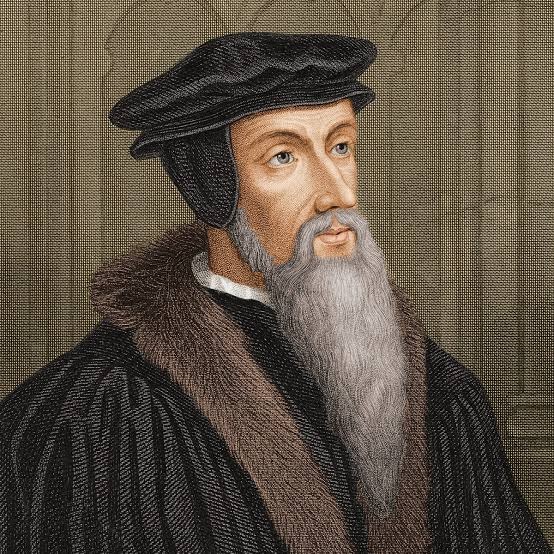
John Calvin’s under floorboards
during board meetings

He told me that I should note in my reading of journals, monographs, and texts how all the great predators were theocratic …

that if you were going to rape the land and people, whether it was the original Indians or the working class that followed …

it was important to think that God was thoroughly on your side.

“John Calvin is always under the floorboards during America s board meetings.

From True North by Jim Harrison (New York, Grove Press, 2004).

Probably quote from Mr. Harrison a lot more than I should and I admit it isn’t without some misgivings.

The passage I quote today, I feel it explains much of what makes the Evangelical Church of Trump work.

There is a lot of my West Michigan background in the background of Mr. Harrison, though his foreground can take in a lot of life I did not experience.

And I wonder, do other people get it?

Take the John Calvin reference.

I am sure that most folks might know who Mr. Calvin was, but in West Michigan, where I grew up, John Calvin wasn’t under the table, he had a seat at the table.

The local college was named, Calvin College.

My wife went to a grade school operated by the Christian Reformed Church name Calvin Christian.

Most folks I knew had copies of The Institutes of John Calvin on a shelf in their home.

But I was raised Baptist.

Mr. Calvin was there in our theology with his TULIP acronym*, but we also told the joke that Calvinism was the fear that someone, somewhere, was having a good time.

BUT I DIGRESS.

I make no apology for Mr. Harrison’s content.

It is what it is.

But his use of language and narration and view of life, lives and lifestyle is powerful.

I remember back in the day when I worked in a bookstore and this one customer, who by his dress and manner and overall appearance was probably from what we called, ‘Up North’ which took in the part of the State of Michigan that was north of Kent Country up to and including the Upper Peninsula of the state.

Boy Howdy, maybe just north of the Grand River all the way to Lake Superior.

Nothing wrong with guy understand, but going north, you entered a different world that often times might have been more comfortable had it been about 1952.

Close to the same feeling I get when I drive across the back country of the State of South Carolina.

This feller as I remember him would not have stood had he been in the band, ZZ Top, including the long beard and dark sunglasses.

He was buying a copy of Garrison Keillor’s latest book, though I can’t remember which one.

I chit chatted with him, told him I hoped he enjoyed the book as I read all the Keillor stuff and enjoyed it all myself.

He stopped and looked at me for a second.

I am getting it for my nephew”, he said, “he needs to read about life.”

Well says I, you should get something by Jim Harrison.

He stopped and looked at me for a second, looked away then back at me and said, “No, no way, this kid is not ready for Harrison …”

He looked off again, then said:

“Someday …”

And he caught my eye, nodded, a nod with a lot of understanding and kinship in it, and walked out.
*The acronym TULIP is used to represent the five core doctrines of Calvinism:
Total depravity,
Unconditional election,
Limited atonement,
Irresistible grace, and
Perseverance of the saints.
5.20.2025 – estimates by the

estimates by the
joint Taxation Committee
rich come out ahead

There are one million American households with incomes above $1 million a year. Based on estimates by the Joint Committee on Taxation, in 2027 they would pay a staggering $96 billion less in taxes. That’s a bigger gift than what the households making less than $100,000 a year would receive, combined, even though there are 127 million of them. That amounts to an average tax cut of $82,000 apiece for millionaires, compared with $750 for the working and middle classes. (That’s bigger as a percentage of income, too. However you slice it, the rich come out ahead.) And for millions of families, those tax savings would be dwarfed by the cost of losing their Medicaid as a result of the cuts in the bill.

From the New York Times Opinion piece, Behold the New Tax Plan: More Complicated, Less Fair, Totally Unaffordable, by Jason Furman.

Mr. Furman, a contributing Opinion writer, was the chairman of the White House Council of Economic Advisers from 2013 to 2017, kinda sums it up for me.

The rich, the one million millionaires who will come out ahead if the new Big Beautiful Bill is signed into law.

Mr. Furman ends his article that the only thing going for this bill is that, at the end of the day, it IS legislation that was created in the way we were taught in high school government class that tax bills were created, voted on, passed by Congress and signed by the person in office.

Aside from that ….

So I ask myself, why?

Why do these people fall all over themselves to applaud that feller in the Oval Office in the way minions applauded leaders like Saddam Hussein and Joseph Stalin with each person looking left and right to make sure they were not the first to stop applauding.

In another really good read, Brexit’s Failures Could Foreshadow Trump’s. Just Not in the Way You Might Think, by David Runciman, a professor of politics at Cambridge University and the author of “How Democracy Ends,” I found what think is the penultimate clue to understanding what is going.

Mr. Runciman writes, “Trump’s project is to restore the United States to its imagined past glories, to forge an America indifferent to the wider world, which makes Britain a hanger-on, hoping for a lucky break along with everyone else. Trump has little time for the ambitions of other countries when he is so wrapped up in self-centered fantasies of his own.

The toadies, for lack of a better and not sure there is a better word, are hoping for a lucky break along with everyone else.

If they support the guy, maybe, just maybe, the guy will smile benevolently on them and reward them in way only a multi-billionaire can.

It’s playing the lottery and hoping for a big payoff and like the lottery its possibilities outweigh any misgivings.

But playing the lottery only asks for you money.

Playing that guy asks for your integrity.

Playing that guy asks for your soul.

Choose wisely.

The rewards may be less and the price may be higher than you think.

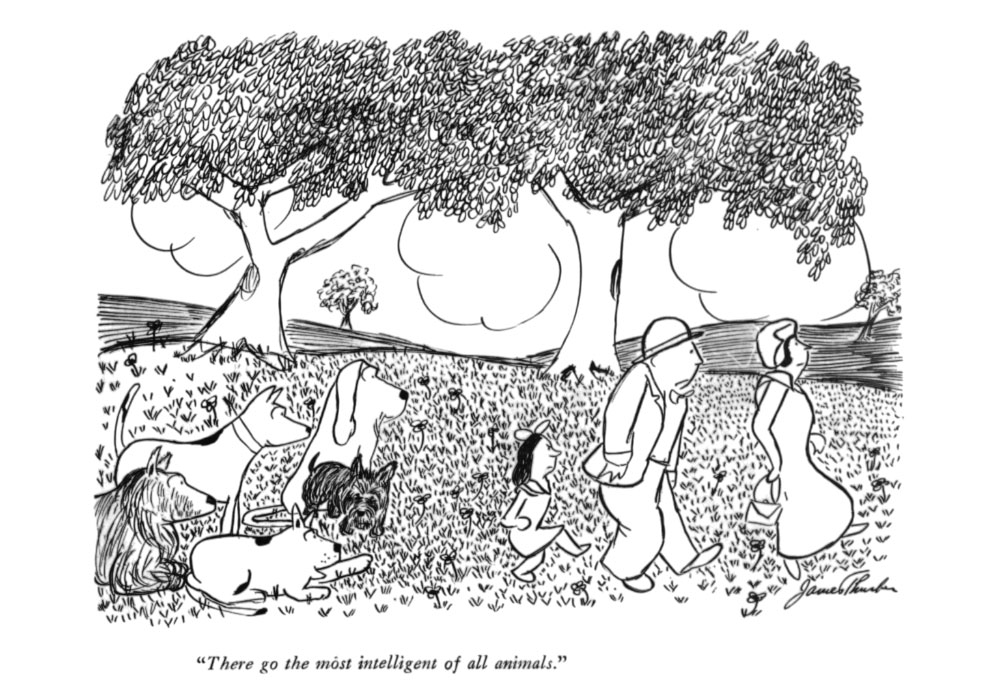
For more Thurber … Click here

5.19.2025 – more important to

more important to
make a good cup of coffee
and good piece of toast

Adapted from the line “It’s more important to make a very good cup of coffee and a very good piece of toast than it is to worry about Josef Stalin, because I can something about breakfast and I can’t do anything about Stalin, and I am sure he’s having a wonderful breakfast.” from WLT: A Radio Romance by Garrison Keillor (Viking Press, New York, 1991).

I have used this quote a lot but that is okay as I have written about my morning toast a lot.

Monday, like most Monday’s bring enough to start the day just being Monday without the rest of the things in life crawling out of the cupboard.

The coffee had made itself correctly and was sitting there waiting for me to pour a cup.

But what next?

I first went an opened the blinds to let in the morning but when I turned around the question of what next was still waiting to be answered.

I opened tablet to read my Bible and read, “But the wisdom that comes from heaven is first of all pure; then peace-loving, considerate, submissive, full of mercy and good fruit, impartial and sincere. Peacemakers who sow in peace reap a harvest of righteousness.” James 3:17-18 (New International Version).

And that made me smile which is a good way to start a day.

This was a day worth starting with toast.

I can’t do much about what is going on in this world and I certainly can’t do much about the current person in office but I know that feller is not worried about me though if he happened to read that verse, I would think he might have few things to worry about.

I am not even sure he is having a wonderful breakfast.

And I am going to make some very good toast.

I have a head start on the very good toast game as I am using bread I bake just for these moments.

Got out the bread board and my bread knife, picked a place on the loaf that I baked on Saturday (after getting home from the beach) about 1/4 inch wide and start cutting, letting the knife do the work and in seconds I have 2 perfect slices of bread.

Not your whimpy store bought plastic wrapped bread.

But bread with meaning and with heft to it and a thick crust.

Into the toaster and push down and the warm red light glows out the top of the toaster’s slots along with the wonderful smell of toasting bread.

My recipe for perfect toast is that I need to toast it twice.

Once it pops up, down it goes for another cycling of toasting.

The second time it pops up, the bread carries the heat so well, you can burn your fingers if you aren’t careful when you move to the plate.

Then I cover every surface part of the toast with butter.

Butter that melts quickly and sinks into the crust and the light brown, beautifully toasted surface.

Then I cut the slices into two halves, fill my coffee cup and start my day.

You have to respect toast made this way.

No jelly, no spreads.

Single bites and each bite chewed slowly, savoring the butter and the crunch.

Respect the toast.

Then coffee, then bite of toast, sit back and chew and think.

It is true.

It’s more important to make a very good cup of coffee and a very good piece of toast than it is to worry about Josef Stalin, because I can something about breakfast and I can’t do anything about Stalin, and I am sure he’s having a wonderful breakfast.

5.18.2025 – hydrothermal blasts

hydrothermal blasts
and dacitic magmatic
pumiceous ash

Adapted from THE 1980 ERUPTIONS OF MOUNT ST. HELENS, LOGICAL SURVEY PROFESSIONAL PAPER 1250: Early results of studies of volcanic events in 1980, geophysical monitoring of activity, and studies of volcanic deposits, effects, and potential hazards by UNITED STATES GEOLOGICAL SURVEY, Washington, DC, 1981.

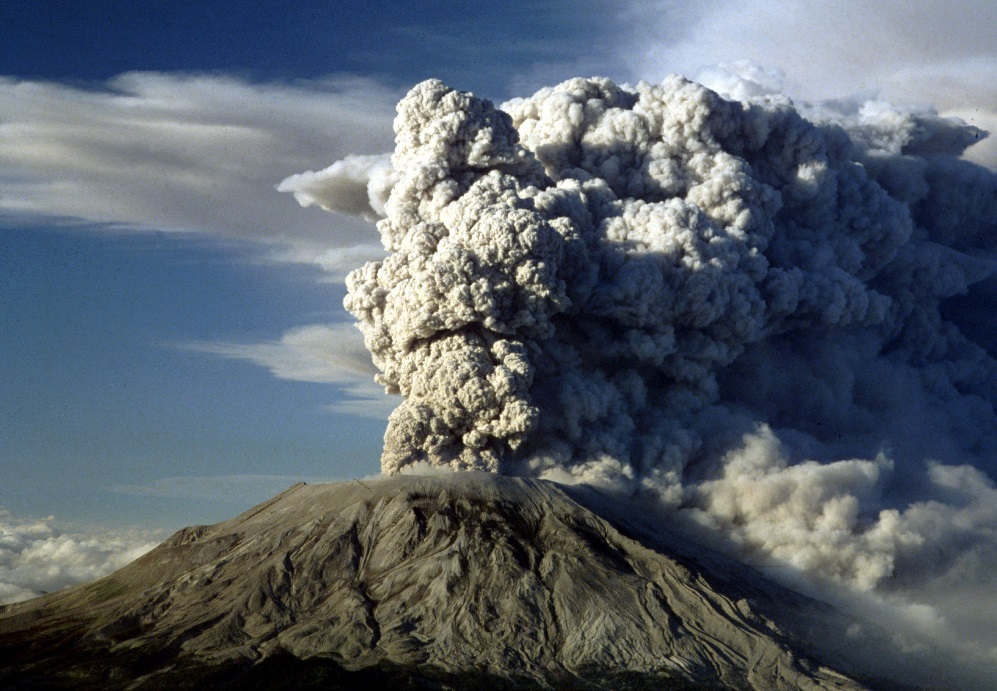
The climactic eruption began at 0832 PDT on May 18, probably triggered by an earthquake of magnitude 5 that caused failure of the bulging north flank as a 2.3-km3 rockslide avalanche. This failure rapidly unloaded the volcanic edifice, and probably caused the water in its hydrothermal system to flash to steam, initiating a series of northward-directed hydrothermal blasts that devastated an area of 600 km2. These events in turn triggered a 9-hr dacitic magmatic eruption that drove a Plinian column more than 20 km high, producing ash fallout for more than 1,500 km to the east as well as pumiceous ash flows on the volcano’s north flank. Catastrophic mudflows and floods were generated from rapid melting of snow and ice and water derived from the avalanche.

Smaller but significant magmatic eruptions occurred on May 25, June 12, July 22, and October 16-18; each lasted as long as several hours and produced eruption columns more than 10 km high, dacitic fallout, and pumiceous ash flows. A dacitic dome emplaced during or after the June eruption as partially reamed out in the pyroclastic eruption of July 22.

Geologists, like Meteorologists and food critics get to use some of the best words.

Volcanic edifice.

Hydrothermal system to flash.

Dacitic magmatic eruption.

Plinian column.

Pumiceous ash flows (which spell check throws out, always a plus in my book).

Dacitic dome.

Partially reamed out.

Pyroclastic eruption.

Also have to point out the use of ‘Plinian column’ which is a reference to Pliny the Younger’s description of Vesuvius when it erupted on August 24, 79, that states:

About one in the afternoon, my mother pointed out a cloud with an odd size and appearance that had just formed. From that distance it was not clear from which mountain the cloud was rising, although it was found afterwards to be Vesuvius. The cloud could best be described as more like an umbrella pine than any other tree, because it rose high up in a kind of trunk and then divided into branches. I imagine that this was because it was thrust up by the initial blast until its power weakened and it was left unsupported and spread out sideways under its own weight. Sometimes it looked light coloured, sometimes it looked mottled and dirty with the earth and ash it had carried up.

1 Thousand, Nine Hundred and One years later, the best description of a mountain top blowing up, even with all our science, hadn’t been improved.

As Mr. Churchill said, “Short words are best and old words when short are the best of all.”

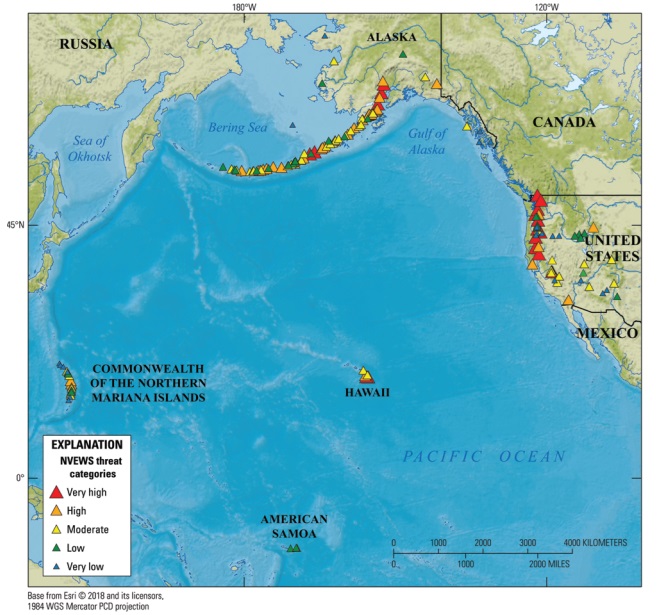
Just for fun, here is the USGS predictions for further volcanic activity in the Pacific Rim.

5.17.2025 – I understand that

I understand that
he’s been reading James Joyce and
T. S. Eliot

100 years ago today, May 17, 1925, in the New York Times, there was a story that “Princeton’s Literary Magazine Banned By Dr. Hibben, Who Calls May Issue Obscene. “

Dr. Hibben objected that the author of an article, “Sketches from a Madhouse” by William Mode Spackman of the class of 1927 and editor of the Nassau, the student Literary Magazine, was one of the most sacriregious and and obscene pieces of writing he had ever seen.

Inside that article in something called, Preface for the American Public, Dr. Hidden says that Spackman attacks what he calls COSMIC INANITIES as “all faculties, deans, directors, lictors, hangman, all Philadelphians, both Cabinet and society, all rules, regulations, totems, taboos, and mumbo-jumberies, all credos, standards, debarments, band and prohibitions.

Dr, Hidden tells the New York Times that “I understand that he has been reading a good deal of James Joyce’s ‘Ulysses’ and T. S. Eliiot and other of the modernists in literature. He has evidently been well soaked in this type of literature and has tried to go the writers one better.”

Such problems American Universities had back then doncha think?

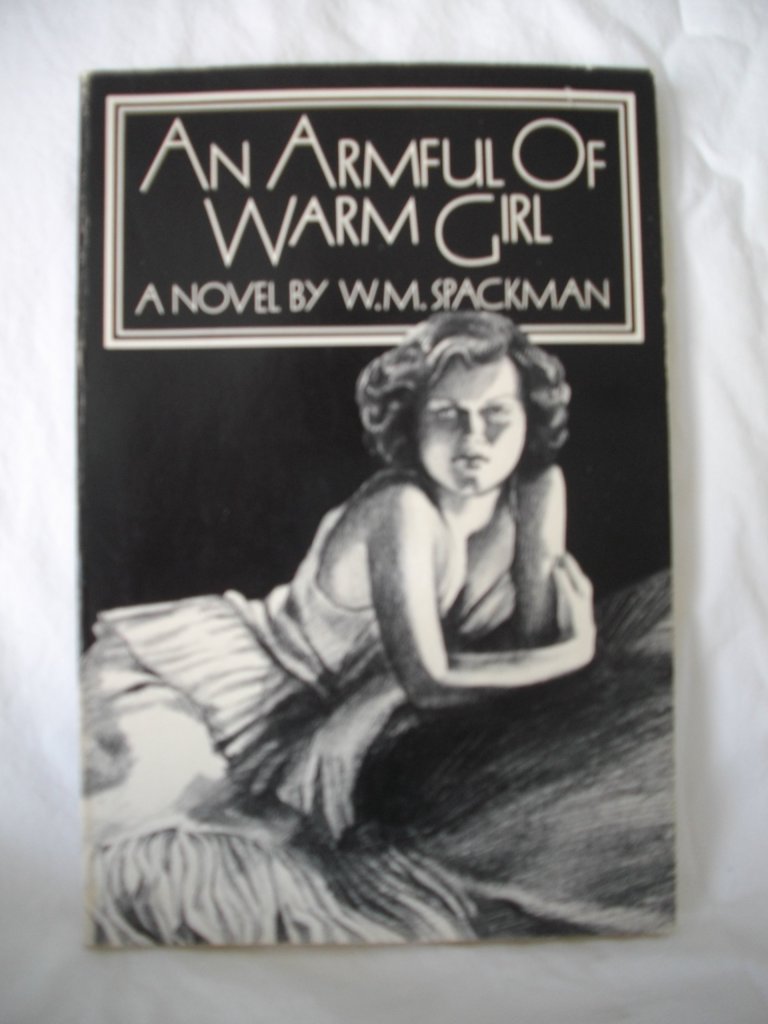
I had never heard of Mr. Spackman but wikipedia says:

William Mode Spackman (May 20, 1905 – August 3, 1990) was an American writer. He was born in Coatesville, Pennsylvania, the son of George Harvey Spackman and Alice Pennock Mode. A graduate of the Friends School of Wilmington, Delaware and in 1927 Princeton University (B.A.; later also an M.A.), he was also a Rhodes Scholar at Balliol College, Oxford. In 1929, he married Mary Ann Matthews (1902–1978); they had three children: Peter (1930–1995), Ann (1932–1961), and Harriet (born 1934). Spackman was awarded a Rockefeller Fellowship to study public opinion at Columbia University. Spackman also taught classics briefly at New York University and worked in radio.

Spackman’s literary success came relatively late in life. He wrote about romance from a realistic rather than a romantic perspective. Highly praised by critics like John Leonard, John Updike, and Stanley Elkin, he has been called a “Fabergé of novelists” and his works have been called “delicate comedies.” The characters in his novels are school friends, their associations, often in New York City, and the women with whom they spent time.

But when he died, it was this incident the NYT remembered, writing in Mr. Spackman’s OBIT on August 9, 1990:

The author, who was born in 1905 in Coatesville, Pa., was removed as editor of Princeton’s Nassau Literary Magazine while an undergraduate. The university president, John Grier Hibben, suppressed an issue that contained what he called the ”most sacrilegious and obscene articles” he had ever seen in print. About Mr. Spackman, he said: ”I understand that he has been reading a good deal of James Joyce’s ‘Ulysses’ and T. S. Eliiot and other of the modernists in literature. He has evidently been well soaked in this type of literature and has tried to go the writers one better.”

After graduation, Mr. Spackman became a Rhodes Scholar at Balliol College, Oxford. Later he worked as a Rockefeller Fellow in opinion research at Columbia University, as a radio writer, as a public relations executive and a literary critic. He also taught classics at New York University and the University of Colorado. His other novels are ”A Difference in Design,” and ”A Little Decorum.” ”On the Decay of Humanism” is a volume of essays.

The obit also said this:

Alice Quinn, poetry editor of The New Yorker magazine, who was his editor at Alfred A. Knopf, said yesterday, ”Mr. Spackman was a radiant human being and a radiant writer, a writer of great charm and high style, who took as his subject men and women who really liked and enjoyed each other.”

I had never heard of him.

I have now.

I will have to read his stuff and find out if he had been reading a good deal of James Joyce’s ‘Ulysses’ and T. S. Eliiot and other of the modernists in literature and if He had evidently been well soaked in this type of literature and has tried to go the writers one better.

Version 1.0.0