
hydrothermal blasts
and dacitic magmatic
pumiceous ash
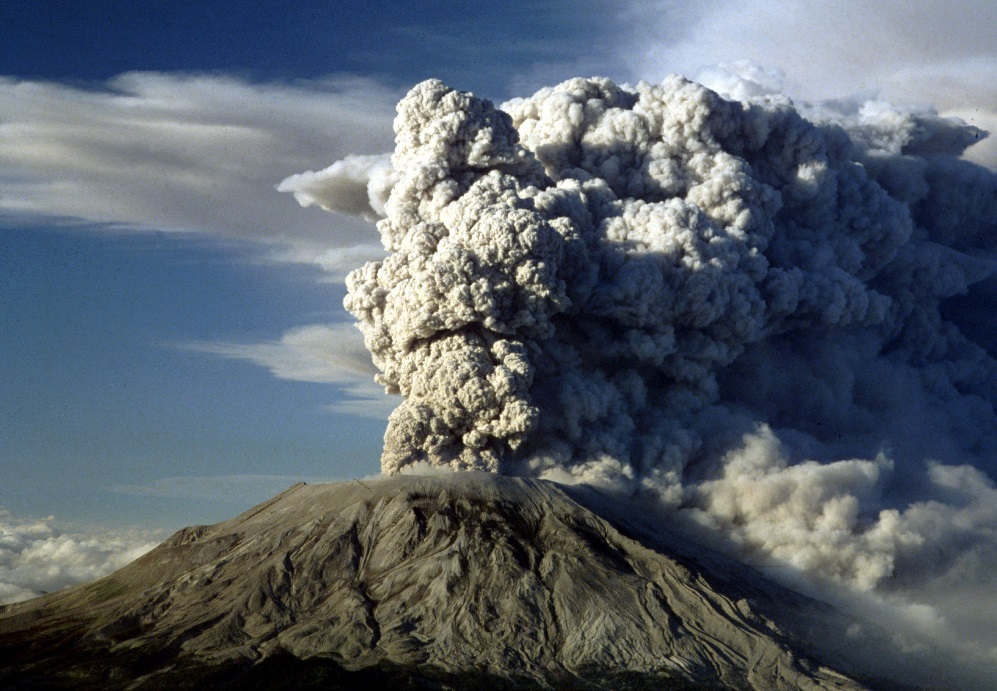
Adapted from THE 1980 ERUPTIONS OF MOUNT ST. HELENS, LOGICAL SURVEY PROFESSIONAL PAPER 1250: Early results of studies of volcanic events in 1980, geophysical monitoring of activity, and studies of volcanic deposits, effects, and potential hazards by UNITED STATES GEOLOGICAL SURVEY, Washington, DC, 1981.
The climactic eruption began at 0832 PDT on May 18, probably triggered by an earthquake of magnitude 5 that caused failure of the bulging north flank as a 2.3-km3 rockslide avalanche. This failure rapidly unloaded the volcanic edifice, and probably caused the water in its hydrothermal system to flash to steam, initiating a series of northward-directed hydrothermal blasts that devastated an area of 600 km2. These events in turn triggered a 9-hr dacitic magmatic eruption that drove a Plinian column more than 20 km high, producing ash fallout for more than 1,500 km to the east as well as pumiceous ash flows on the volcano’s north flank. Catastrophic mudflows and floods were generated from rapid melting of snow and ice and water derived from the avalanche.
Smaller but significant magmatic eruptions occurred on May 25, June 12, July 22, and October 16-18; each lasted as long as several hours and produced eruption columns more than 10 km high, dacitic fallout, and pumiceous ash flows. A dacitic dome emplaced during or after the June eruption as partially reamed out in the pyroclastic eruption of July 22.
Geologists, like Meteorologists and food critics get to use some of the best words.
Volcanic edifice.
Hydrothermal system to flash.
Dacitic magmatic eruption.
Plinian column.
Pumiceous ash flows (which spell check throws out, always a plus in my book).
Dacitic dome.
Partially reamed out.
Pyroclastic eruption.
Also have to point out the use of ‘Plinian column’ which is a reference to Pliny the Younger’s description of Vesuvius when it erupted on August 24, 79, that states:
About one in the afternoon, my mother pointed out a cloud with an odd size and appearance that had just formed. From that distance it was not clear from which mountain the cloud was rising, although it was found afterwards to be Vesuvius. The cloud could best be described as more like an umbrella pine than any other tree, because it rose high up in a kind of trunk and then divided into branches. I imagine that this was because it was thrust up by the initial blast until its power weakened and it was left unsupported and spread out sideways under its own weight. Sometimes it looked light coloured, sometimes it looked mottled and dirty with the earth and ash it had carried up.
1 Thousand, Nine Hundred and One years later, the best description of a mountain top blowing up, even with all our science, hadn’t been improved.
As Mr. Churchill said, “Short words are best and old words when short are the best of all.”
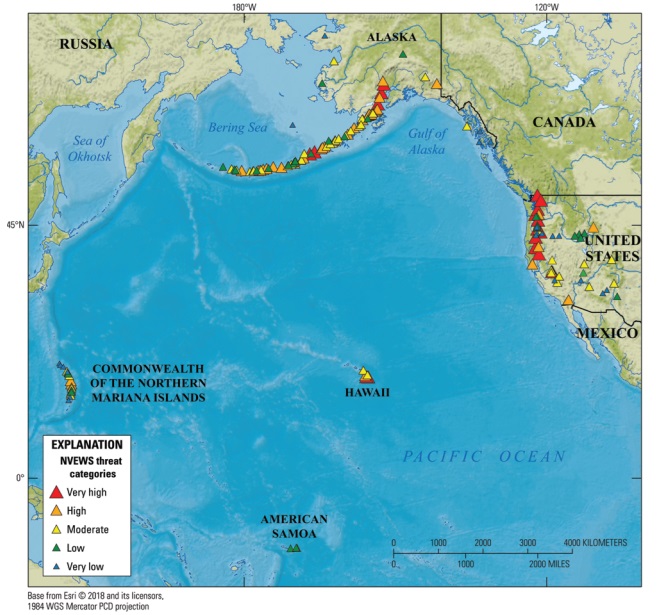
Just for fun, here is the USGS predictions for further volcanic activity in the Pacific Rim.
 No Haiku For You