
I understand that
he’s been reading James Joyce and
T. S. Eliot
100 years ago today, May 17, 1925, in the New York Times, there was a story that “Princeton’s Literary Magazine Banned By Dr. Hibben, Who Calls May Issue Obscene. “
Dr. Hibben objected that the author of an article, “Sketches from a Madhouse” by William Mode Spackman of the class of 1927 and editor of the Nassau, the student Literary Magazine, was one of the most sacriregious and and obscene pieces of writing he had ever seen.
Inside that article in something called, Preface for the American Public, Dr. Hidden says that Spackman attacks what he calls COSMIC INANITIES as “all faculties, deans, directors, lictors, hangman, all Philadelphians, both Cabinet and society, all rules, regulations, totems, taboos, and mumbo-jumberies, all credos, standards, debarments, band and prohibitions.
Dr, Hidden tells the New York Times that “I understand that he has been reading a good deal of James Joyce’s ‘Ulysses’ and T. S. Eliiot and other of the modernists in literature. He has evidently been well soaked in this type of literature and has tried to go the writers one better.”
Such problems American Universities had back then doncha think?
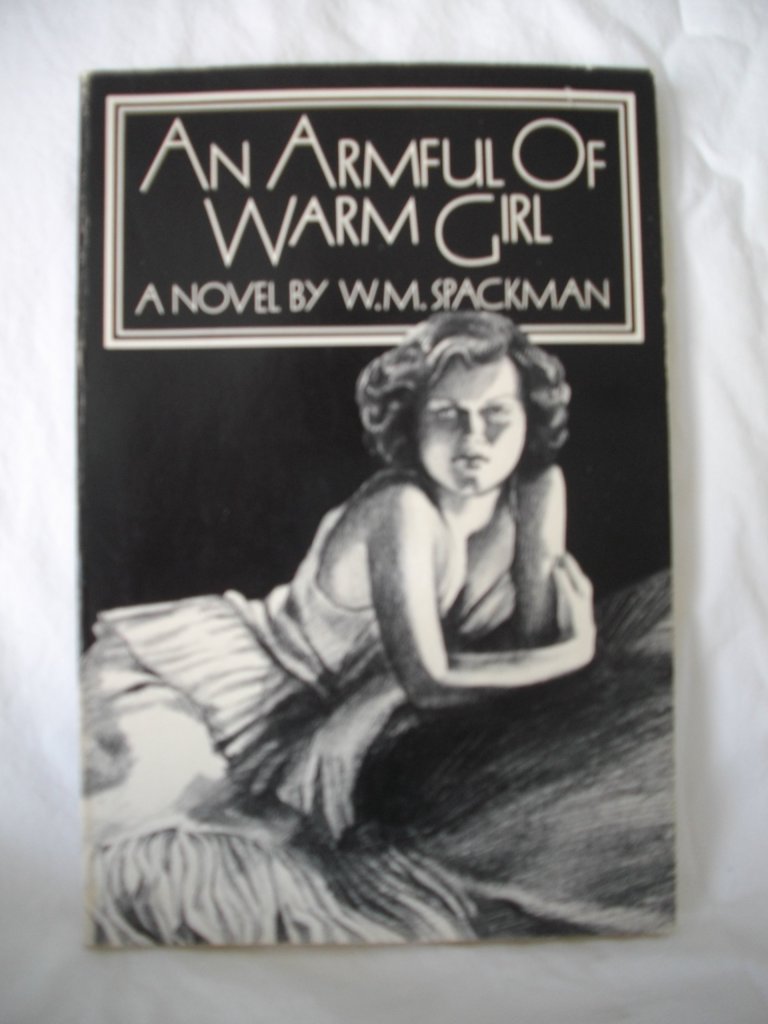
I had never heard of Mr. Spackman but wikipedia says:
William Mode Spackman (May 20, 1905 – August 3, 1990) was an American writer. He was born in Coatesville, Pennsylvania, the son of George Harvey Spackman and Alice Pennock Mode. A graduate of the Friends School of Wilmington, Delaware and in 1927 Princeton University (B.A.; later also an M.A.), he was also a Rhodes Scholar at Balliol College, Oxford. In 1929, he married Mary Ann Matthews (1902–1978); they had three children: Peter (1930–1995), Ann (1932–1961), and Harriet (born 1934). Spackman was awarded a Rockefeller Fellowship to study public opinion at Columbia University. Spackman also taught classics briefly at New York University and worked in radio.
Spackman’s literary success came relatively late in life. He wrote about romance from a realistic rather than a romantic perspective. Highly praised by critics like John Leonard, John Updike, and Stanley Elkin, he has been called a “Fabergé of novelists” and his works have been called “delicate comedies.” The characters in his novels are school friends, their associations, often in New York City, and the women with whom they spent time.
But when he died, it was this incident the NYT remembered, writing in Mr. Spackman’s OBIT on August 9, 1990:
The author, who was born in 1905 in Coatesville, Pa., was removed as editor of Princeton’s Nassau Literary Magazine while an undergraduate. The university president, John Grier Hibben, suppressed an issue that contained what he called the ”most sacrilegious and obscene articles” he had ever seen in print. About Mr. Spackman, he said: ”I understand that he has been reading a good deal of James Joyce’s ‘Ulysses’ and T. S. Eliiot and other of the modernists in literature. He has evidently been well soaked in this type of literature and has tried to go the writers one better.”
After graduation, Mr. Spackman became a Rhodes Scholar at Balliol College, Oxford. Later he worked as a Rockefeller Fellow in opinion research at Columbia University, as a radio writer, as a public relations executive and a literary critic. He also taught classics at New York University and the University of Colorado. His other novels are ”A Difference in Design,” and ”A Little Decorum.” ”On the Decay of Humanism” is a volume of essays.
The obit also said this:
Alice Quinn, poetry editor of The New Yorker magazine, who was his editor at Alfred A. Knopf, said yesterday, ”Mr. Spackman was a radiant human being and a radiant writer, a writer of great charm and high style, who took as his subject men and women who really liked and enjoyed each other.”
I had never heard of him.
I have now.
I will have to read his stuff and find out if he had been reading a good deal of James Joyce’s ‘Ulysses’ and T. S. Eliiot and other of the modernists in literature and if He had evidently been well soaked in this type of literature and has tried to go the writers one better.
 No Haiku For You