5.31.2025 – sharing few bathrooms

sharing few bathrooms
creates a suboptimal
situation … yup!

Adapted from the passage in the article in The Guardian, Are there billions more people on Earth than we thought? If so, it’s no bad thing by Jonathan Kennedy, where Mr. Kennedy writes:

“… as anyone who has crammed into one house with their extended family over Christmas knows, many people sharing few bathrooms creates a suboptimal situation.

You won’t be able to shower exactly when you want – and you’d better make it a short one. But this hardly amounts to the end of civilization.

In fact, compromise and sharing is probably closer to most people’s idea of a good life than having the freedom to do whatever you want, whenever you want.”

I will admit, right off the bat, I got nothing to complain about.

I grew up in a big family, 11 kids though 10 at time was the most who called home, home.

But I grew up in a big house.

There were seven kids when we moved into The Big House on Sligh Blvd. in Grand Rapids, Michigan, where I grew up, then I showed up and then my three little brothers.

That house was BIG.

It was a split level and there were three floors plus a huge basement so big, we played floor hockey down there.

It had six bedrooms but two and half bathrooms (not counting the now-a-days so called en suite bathroom off my parents bedroom.

For some reason, the upstairs bathroom had a tub and a shower, but for most of my life, Mom refused to put a shower curtain over the tub as that’s where so would throw us four little boys for our Saturday Night baths all at once and Mom would sit on the side of the tub and scrub our hair with soapy smelling Breck Shampoo.

There was a shower stall in the laundry room but never once did I ever see anyone use it.

By the time I could remember things, Mom had put a closet rod in there and hung up clean laundry that was waiting to be distributed to the bedrooms.

With 4 places where you could take care of things, even when 12 people in the house, I can’t complain.

My wife’s family had 12 kids, nine of them girls and for a good chunk of their lives together, made due with one bathroom.

We all managed quite nicely and then would come the holiday season.

As my older brothers and sister got married and moved out, they all came back at Christmas time and as their families grew, the big house would get filled up.

Sometimes other relatives would show up at the same time and we would be spread out on sofas and floors with blankets or sleeping bags.

I will repeat and agree with Mr. Kennedy when he states: “… anyone who has crammed into one house with their extended family over Christmas knows, many people sharing few bathrooms creates a suboptimal situation.”

It seems like it was my brother Paul, who almost every year made the drive at Christmas time from his home on east coast with his wife and four kids, who said that “It wasn’t difficult to take a shower with hot water. It was just a matter of timing.”

Needing the bathroom for bathroom business and bathing was one thing.

Growing up, my family brought the suboptimal situation to a whole other level as we always managed to come down with what we called “The Stomach Flu.”

Norovirus, The 24 Hour Bug or my favorite from Great Britain, Winter Vomiting, it all came down to the fact that at some point, when the house full to bursting, between Christmas and New Years, some one would announce, I GOT TO THROW UP.

Your first thought was anger at the person who got sick first and who we blamed for bringing the bug into the house and your second thought was, who will be next and your last thought was, when will it be my turn.

Because, at some point, it would be your turn.

Was it better to be first, get it over with despite having everyone mad at you?

Or to be last and worry that every twinge, every stomach growl was the beginning of something worse.

We had buckets and bowls and pans.

The first person who came down with the bug would get into bed along with an old revere-wear stainless steel double boiler pot that was indestructible and also known as the barf bowl.

I came home from school once to find Mom making brownies and melting chocolate squres in that double boiler and I would not eat any of those brownies.

Mom made lots of brownies but if I didn’t SEE her make them in that bowl, I was fine.

It is hard for me to imagine the production line of buckets and bowls and soiled bedding that Mom had to deal with during these outbreaks.

Not only was she in charge of housekeeping but chief nurse as well as dietician.

She would monitor all the sick ones as well as encourage the ones who had yet to fall sick and she comforted those on the comeback.

At some point you would be offered a milkshake (with a raw egg in it to help get ‘some weight back on’ that Mom added without telling us) and you knew the worst was over.

I remember one year giving in to the inevitable when I came down with it late at night.

Knowing I wouldn’t be sleeping, I made a log of all the times I barfed and later graphed it out.

It was then that I noticed that the times between barfing decreased – you threw up more and more often – until it didn’t and once you had a period of time longer between barfing than the previous time, the barfing peaked and you were over the worst and maybe had just one or two more times to go.

After learning this I tried to ‘game’ the stomach flu by trying to throw up fast and furious to get to that magic peak but I learned it had to happen when it had to happen.

For some reason, I never got my family interested in my research but when I became a parent I always kept an eye on things and could tell when one the kids had made the turn.

I was older and I had my own family but I still knew that many people sharing few bathrooms creates a suboptimal situation.

I might not be able to shower exactly when I want – and I’d better make it a short one. But this hardly amounts to the end of civilization.

In fact, compromise and sharing is probably closer to most people’s idea of a good life than having the freedom to do whatever you want, whenever you want.”

It certainly can get worse.

5.30.2025 – despairing, hopeless

despairing, hopeless
inevitability
deliciously so

Looking up the word hopeless in the Online Oxford Dictionary, it said:

ADJECTIVE 

1 Feeling or causing despair about something: 

Jessica looked at him in mute hopeless appeal his situation was obviously hopeless.

Or …

That delicious uncertainty has been replaced by despairing, hopeless inevitability.

2 Mainly British English Inadequate; incompetent:

When will governments learn they are hopeless at running businesses?

I really liked those examples.

5.29.2025 – unmistakable …

unmistakable …
all in rebuke to rudeness,
aggression, greed

Adapted from the article, In Canada, Charles pushed the boundaries of politics as king. So far, he has gotten away with it, by Martin Kettle, where Mr. Kettle writes: No monarch had bothered to make this trip for nearly 50 years. During that time, however, Canada has transformed itself into a major global power and has decisively slipped its old colonial bonds. Yet Trump’s threat to Canada is such that the country’s prime minister, Mark Carney, judged a summons to Buckingham Palace would send a useful newsworthy signal about its national sovereignty that would help bind the nation while sending a shot across the US president’s bows.

At least as significantly, when seen from Britain, King Charles was happy to oblige. Just as with the speech he delivers at Westminster at the start of a parliamentary session, Tuesday’s in Ottawa will have been scripted by the elected government. But the Ottawa speech had a far looser and more personal format than the Westminster version. This allowed the king to speak words that clearly mattered to him, and by which he will be judged.

Trump was not mentioned by name. Even so, he permeated the speech. The king endorsed Canadian national pride and said democracy, law, pluralism and global trade were on the line. He said Canada’s relationships with Europe would be strengthened and, speaking in French, he said Canada faces challenges unprecedented in the postwar era. He was proud that Canada was “an example to the world in her conduct and values, as a force for good”, and he ended, quoting from the Canadian national anthem, by saying “the true north is indeed strong and free”.

All this is an unmistakable rebuke to Trump’s rudeness, aggression and greed. The words are not neutral but committed. Whether the king sought approval from Keir Starmer for his visit and speech is not clear. His main adviser concerning the visit will have been Carney, who may have liaised with Downing Street. Starmer, committed to engaging with Trump, will have been content to keep his distance. The larger point, however, is that this was a willed act by the king. Charles did not have to travel and did not have to make the speech. But he did both, even while continuing to be treated for cancer.

On June 1, 1785, newly appointed ambassador to Great Britain, John Adams told King George III that he wished to restore “the old good nature and the old good humor between people who, though separated by an ocean and under different governments, have the same language, a similar religion, and kindred blood.”

The King seemed equally moved. “I was the last to consent to separation,’ he told his former subject. But, he added, ‘I have always said, as I say now, that I would be the first to meet the friendship of the United States as an independent power.”

That old good nature and that old good humor is in short supply these days on this side.

Instead the current Government offers rudeness, aggression and greed.

Words that clearly matter to some, and by which they will be judged.

5.28.2025 – Rule: help each other

Rule: help each other
when you can, but never harm —
never help the bear

Duff Cooper added: ‘I hope you will forgive me because your friendship, your comradeship and your advice are very, very precious to me.’ Churchill replied on November 22:

Thank you very much for your letter, which I was very glad to get. In the position in which our small band of friends now is, it is a great mistake ever to take points off one another. The only rule is: Help each other when you can, but never harm — Never help the Bear.

Excerpt From: Winston S. Churchill: The Prophet of Truth, 1922–1939 (Volume V) (Churchill Biography Book 5) by Martin Gilbert.

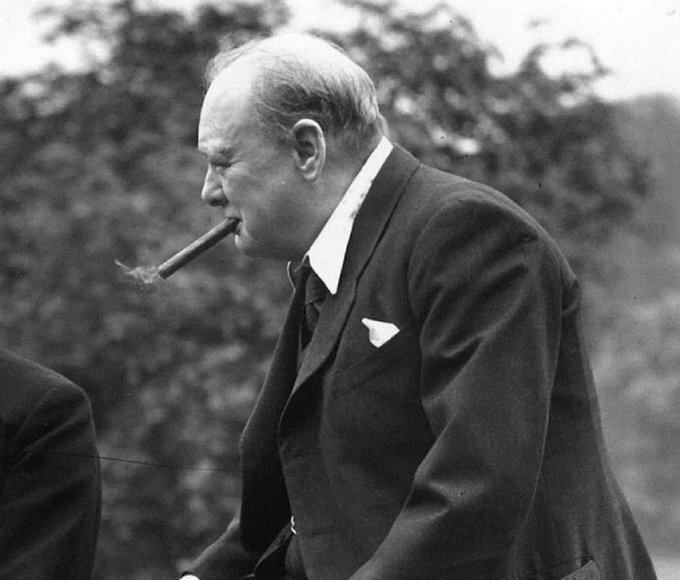
Mr. Churchill had quite the career.

Up – down – up again – down again – up – down.

Biographers like to tell the story how Franklin Roosevelt once said is supposed to have said along the lines that Winston has 100 ideas a day but only one will turn out to be good. Which is okay as he will have another 100 ideas tomorrow.

What is usually included with the quip is that Mr. Churchill heard the story and took umbrage and wanted to know when did he ever have a bad idea.

One idea that took with him was that Hitler was a problem without fixing by anything than removal.

While many sought out accommodation, Mr. Churchill maintained a wall of anti-end-Hitler words.

At one point after the Munich Crisis when the France and Great Britain took Czechoslovakia apart, Mr. Churchill called for a vote question the actions of His Majesties Government and he asked for just 50 members of the House of Commons to vote with him to record the fact that there were some folks who objected to such an action.

Mr. Churchill got 2.

Understand that when the House of Commons votes, the members vote by exiting the House chamber through the yes door or the no door and then the group together in the lobby to discuss the vote.

After this vote, Mr. Churchill stood in the lobby for two other men.

Kind of rubs it in.

Still, he kept at it.

This is the time of Mr. Churchill’s career called The Wilderness Years.

On the outside.

Out of step.

Down.

Has been.

About Mr. Churchill, Herman Wouk wrote:

Winston Churchill, today an idealized hero of history, was in his time variously considered a bombastic blunderer, an unstable politician, an intermittently inspired orator, a reckless self-dramatizer, a voluminous able writer in an old-fashioned vein, and a warmongering drunkard. Through most of his long life he cut an antic, brilliant, occasionally absurd figure in British affairs. He never won the trust of the people until 1940, when he was sixty-six years old, and before the war ended they dismissed him. But in his hour he grasped the nature of Hitler, and sensed the way to beat him: that is, by holding fast and pushing him to the assault of the whole world, the morbid German dream of rule or ruin, of dominion or Götterdämmerung. He read his man and he read the strategic situation, and with the words of his mouth he inspired the British people to share his vision. By keeping back the twenty-five squadrons from the lost Battle of France, he acted toughly, wisely, and ungallantly; and he turned the war to the course that ended five long years later, when Hitler killed himself and Nazi Germany fell apart. This deed put Winston Churchill in the company of the rare saviors of countries, and perhaps of civilizations.

I feel the wilderness is where a lot of Americans are today.

Out of it.

Down.

Take heart.

We need to read the man and the situation.

Anyone of us may be in position to be that rare savior of a country.

In the meantime, help each other when you can, but never harm —

And never help the bear.

Never ever, help that bear.

5.27.2025 – a crime to despair

a crime to despair
learn to draw from misfortune
means of future strength

“It is a crime to despair. We must learn to draw from misfortune the means of future strength. There must not be lacking in our leadership something of the spirit of that Austrian corporal who when all had fallen into ruins about him, and when Germany seemed to have sunk for ever into chaos, did not hesitate to march forth against the vast array of victorious nations, and has already turned the tables so decisively upon them.
It is the hour, not for despair, but for courage and re-building; and that is the spirit which should rule us in this hour.”

Excerpt From
Winston S. Churchill: The Prophet of Truth, 1922–1939 (Volume V) (Churchill Biography Book 5)
Martin Gilbert