2.8.2025 – candids, stills, portraits

candids, stills, portraits
showing way of life that is
treasured, fast fading

Adapted from the line, “Moutoussamy-Ashe’s series of monochrome images include candids of weddings, stills of a church gathering and everyday portraits of the island, showing a way of life that is treasured and fast fading.”
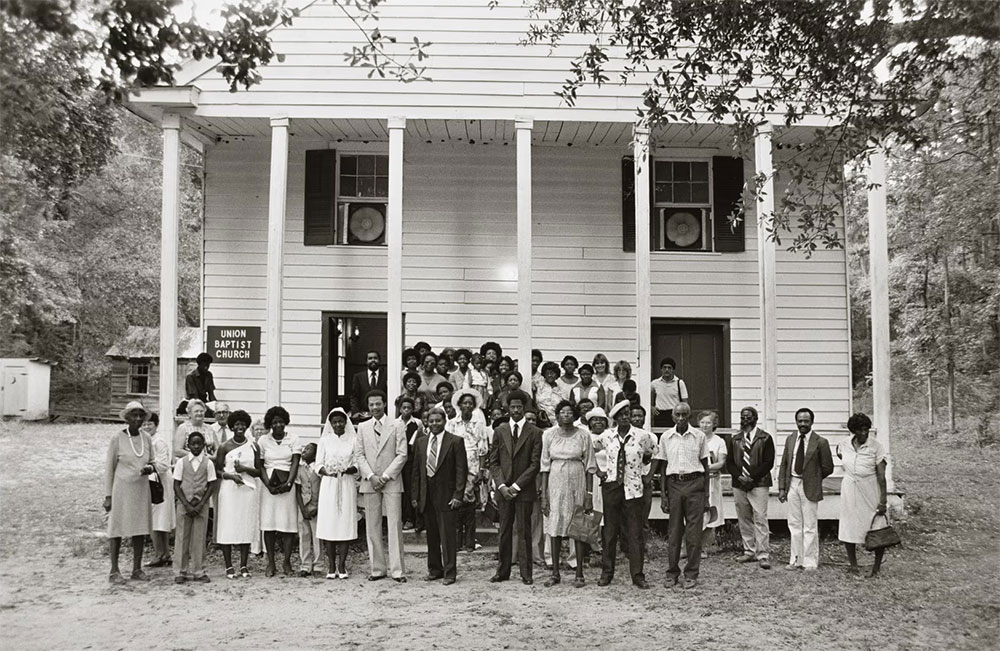
In the article, How an outsider captured the intimacy of Gullah Geechee life in 13 portraits by Gloria Oladipo in the Guardian.

As a resident of the low country I love this story and feel for the people who created the culture that who lived on land now in the gun sites of developers who, like Lex Luthor, have an affinity for ‘Beach Front Property.’

The Gullah culture of the low country is certainly “a way of life that is treasured and fast fading.”

As a citizen of the United States of America, I can say, I know how you feel.
2.7.2025 – show the figure of

show the figure of
a man standing with his back
to the open door

Adapted from the passage:

In darkness the three detectives collided with one another going through the doorway into the dark hall.

Spade reached the stairs first.

There was a clatter of footsteps below him, but nothing could be seen until he reached a bend in the stairs.

Then enough light came from the street through the open front door to show the dark figure of a man standing with his back to the open door.

In the book, They Can Only Hang You Once by Dashiell Hammett, P. F. Collier & Son, New York 1932.

If your back is to the open door, you are looking out to the street and not behind you.

As the great Satchel Paige advised, “Don’t look back. Something might be gaining on you.”

The scary part here is, of course, that something is already in front of us, all around.

There is no escape.

2.6.2025 – I have stood on the

I have stood on the
peaky mountain in rainbows
harp, sword in my hands

Adapted from this passage in Dust Tracks on a Road by Zora Neale Hurston (JB Lippincott Company Philadelphia, 1942), where Ms. Hurston writes:

Well, that is the way things stand up to now. I can look back and see sharp shadows, high lights, and smudgy in-betweens. I have been in Sorrow’s kitchen and licked out all the pots. Then I have stood on the peaky mountain wrappen in rainbows, with a harp and a sword in my hands.

My kinfolks, and my “skin-folks” are dearly loved. My own circumference of everyday life is there. But I see their same virtues and vices everywhere I look. So I give you all my right hand of fellowship and love, and hope for the same from you. In my eyesight, you lose nothing by not looking just like me. I will remember you all in my good thoughts, and I ask you kindly to do the same for me. Not only just me. You, who play the zig-zag lightning of power over the world, with the grumbling thunder in your wake, think kindly of those who walk in the dust. And you who walk in humble places, think kindly too, of others. There has been no proof in the world so far that you would be less arrogant if you held the lever of power in your hands. Let us all be kissing-friends. Consider that with tolerance and patience, we godly demons may breed a noble world in a few hundred generations or so. Maybe all of us who do not have the good fortune to meet, or meet again, in this world, will meet at a barbecue.

2.5.2025 – sovereigntism means

sovereigntism means
doing what it wants limited
by what it can do

Adapted from the passage in the opinion piece “Is This the End of Pax Americana” By Bret Stephens, where Mr. Stephens writes:

Sovereigntism means a country doing what it wants to do within only the limits of what it can do. It means the end of self-restraint within a framework of mutual restraint. It means an indifference to the behavior of other states, however cruel or dangerous, so long as it doesn’t impinge on us. It means a reversion to the notorious claim, uttered (according to Thucydides) by the Athenians before their sacking of the neutral city of Melos, that “the strong do what they can and the weak suffer what they must.”

Sovereigntism also means an end to something else: Pax Americana. Though it takes its name from the Pax Romana of the first and second centuries and the Pax Britannica of the 19th, Pax Americana was something different: The application of American power for the benefit of more than just Americans.

According to Google Search AI:

The Pax Romana began in 27 BCE when Augustus became the first Roman emperor.
The Pax Romana was a time of great expansion for the Roman Empire.
The Pax Romana was a time of relative peace, but there were still wars and revolts.
The Pax Romana ended with a period of instability and internal conflict.
The end of the Pax Romana led to civil wars, political conspiracies, and assassinations.
The end of the Pax Romana led to a period of inflation, foreign wars, and religious wars.

Glad so many people voted for it.