12.6.2024 – stood in the doorway

stood in the doorway
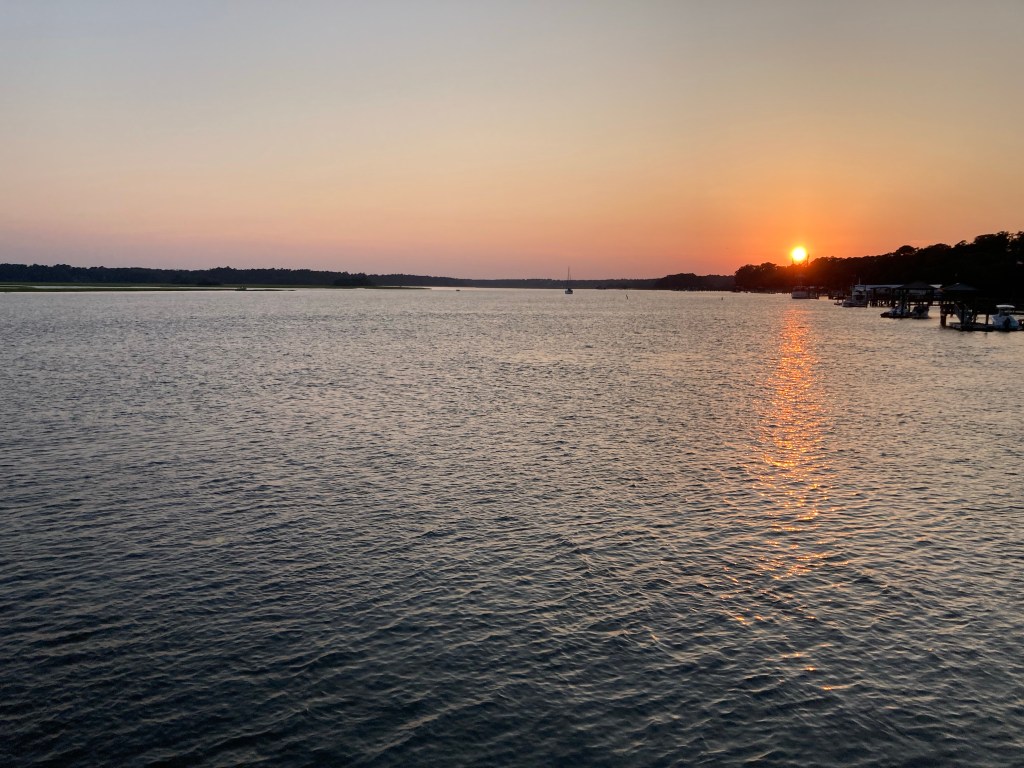
where the sun’s last rays faded
in brilliant display

At Sunset

I stood in the doorway at evening,
And I looked to the hills far away
Where the sun’s last rays seemed to linger,
Ere they faded in brilliant display.

Yes, lingered in beautiful splendor,
And the scene was rare to behold,
A pale blue sky was its back-ground,
With stretches of pink and gold.

What wonder that Nature’s rare beauty
So inspires the soul and thrills
Our beings with tender emotions,
As we look far away to the hills!

To the “hills” of which “David” has spoken,
“From whence comes my help,” said he,
And we have the same blest assurance,
As we gaze on their majesty.

And we think of the Power who formed them,
They seem like a tower of defence
To protect and to ward off the evil
Until we depart and go hence;

Where the sunlight fades not, but lingers,
And to-night my waiting soul thrills
As I stand in the doorway at sunset,
As I look far away to the hills.

At Sunset by Olivia Ward Bush-Banks published in the book, Driftwood by Olivia Ward Bush-Banks, (Atlantic Printing Co., Providence, R.I., 1914).

According to Wikipedia: Olivia Ward Bush-Banks (née Olivia Ward; February 27, 1869 – April 8, 1944) was an American author, poet and journalist of African-American and Montaukett Native American heritage. Ward celebrated both of her heritages in her poetry and writing. She was a regular contributor to the Colored American magazine and wrote a column for the New Rochelle, New York publication, the Westchester Record-Courier.

The Banks established and ran the Bush-Banks School of Expression in Chicago, which became a place for black artists to gather and nurture their art. Actors and musicians gave recitals and performances at the school. Ward continued her artistic endeavors, focusing on drama. She also worked teaching drama in the Chicago public school system.
12.5.2024 – New ways – live longer

New ways – live longer
but years added at the end
not in the middle

The news abounds with stories of how folks are living longer and as there are more and more people (hard to believe that the population of the United States has doubled since World War 2), more and more people are living longer.

Looks like getting off cigarettes and caffeinated coffee is working.

There is a catch.

Much like the people who go jogging for sixty minutes every day and claim it adds 15 years to their life.

Well, those years were spent … jogging.

Live to be 65 and not jog.

Or live to be 80 and spend 15 years jogging.

Almost sounds like a prison sentence.

Back to the point there are lots of actions we can take, things we can do and things we can avoid and add years to life.

But … those years are added at the end.

What if we can add years in the middle?

What if somehow the years between 30 and 50 could be doubled.

The years when I felt good or at least better.

The years when going to the beach where nothing but fun and not filled with anxieties not the least of which is how far will we end up from the restrooms.

That might be worth considering …

Add those 20 years to my life when I am 70 and live to 90?

Makes me appreciate the age I am and enjoy the years I have and not live with an eye on how what I am doing or eating may or may not add to my years.

It can become an obsession.

Consider what JRR Tolkien wrote in The Two Towers, the middle book of his The Lord of the Rings.

Death was ever present, because the Nmenoreans still, as they had in their old kingdom, and so lost it, hungered after endless life unchanging.

Kings made tombs more splendid than houses of the living, and counted old names in the rolls of their descent dearer than the names of sons.

Childless lords sat in aged halls musing on heraldry; in secret chambers withered men compounded strong elixirs, or in high cold towers asked questions of the stars.

And the last king of the line of Anarion had no heir.

Hungered after endless life unchanging.

Life changes.

As Jim Harrison once wrote (or words to this effect) “Eat that delicious fat with your Prime Rib. Then take a long walk to justify it.”

12.4.2024 – should I weep for this

should I weep for this
gull meets with his image on
the winter water

All day I have thought of her
There is nothing left of that year

(There is sere-grass
Salt colored)

We have annulled it with
Salt

We have galled it clean to the clay with that one autumn
The hedge-rows keep the rubbish and the leaves

There is nothing left of that year in our lives but the leaves of it
As though it had not been at all

As though the love the love and the life altered
Even ourselves are as strangers in these thoughts

Why should I weep for this?

What have I brought her?
Of sorrow of sorrow of sorrow her heart full

The gull
Meets with his image on the winter water.

Autumn as published in The Collected poems by Archibald MacLeish, Houghton Mifflin, Boston, 1917.

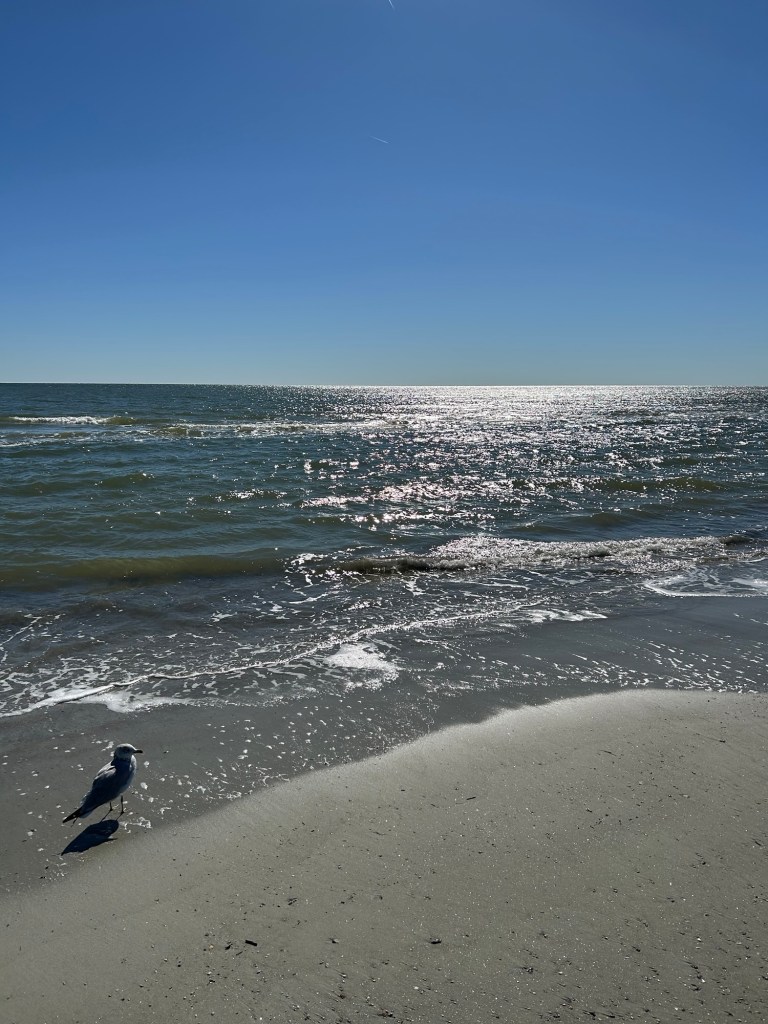
Still sunny.

Bright sunshine.

Still wet.

Splashing waves.

Still sandy.

Lots and lots of sand at the beach.

But cold.

But …

But the promise of summer, summer sunshine.

The gull meets his image on the winter water.

I can’t, I won’t weep for this.

12.3.2024 – not a clever guy …

not a clever guy …
they do my thinking – should have …
hired a conscience, too

… I’m not a clever guy. I never pretended I was long on brains. I have a publicity man and a gag man and a few writers. People like Hagenborn and Peck. They do my thinking for me.” [ said Tony ]

“You should have hired a conscience, too.” [ said Bill ]

From H as in Hunted by Lawrence Treat (Duell, Sloan and Pearce, New York, 1946).

When Lawrence Arthur Goldstone’s law firm broke up in 1928, shortly after he had begun to work there, he traveled to Paris. A friend living in Brittany provided him with free room and board, and Goldstone decided to settle down and teach himself to write. His knowledge of law led him to try his hand at crime writing. He sold his very first novel and returned to the United States to write full-time under the name Lawrence Treat according to Wikipedia.

Recently in article in the New York Times about old books worth reading, H is for Hunted was listed so I got a copy and am enjoying it.

I really want to stay off of politics but when our hero, Bill, tracks down Tony to ask about what happened when they were together during the war and why Tony let it sit for 3 years, Tony says that line above which I’ll quote again:

… I’m not a clever guy. I never pretended I was long on brains. I have a publicity man and a gag man and a few writers. People like Hagenborn and Peck. They do my thinking for me.

They do my thinking for me.

Sure reminds me of the bunch of folks lining up to take jobs where there will be running the Executive Branch of our government.

They aren’t clever (well, maybe they are.)

They hire publicity men, gag men, a few writers.

They do their thinking for them.

To paraphrase what Bill said, I wish they had hired a conscience, too!

Still working on the use of the ellipsis in haiku.

But it’s my blog, my rules.

So there you are.

12.2.2024 – for the eye sees not

for the eye sees not
itself, but by reflection,
by some other things

Adapted from Julius Caesar ACT I – SCENE II where Brutus says:

No, Cassius, for the eye sees not itself
But by reflection, by some other thing.

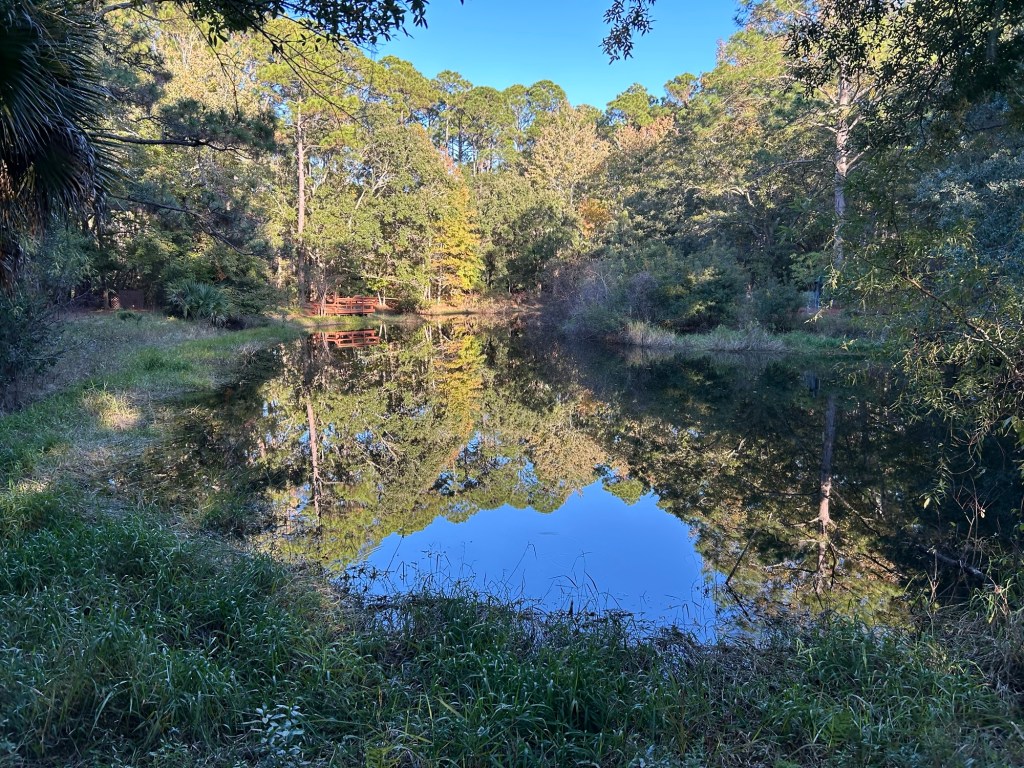
I snapped this image of the pond at the Audubon Newhall Preserve on Hilton Head Island, South Carolina and was struck by the reflection.

The eye sees not by itself.

But by reflection.

But by some other things.