4.25.2024 – mornings … cannot see

mornings … cannot see
too many sunrises – dawn …
creeps in stealthily

I had myself called with the four o’clock watch, mornings, for one cannot see too many summer sunrises on the Mississippi.

They are enchanting.

First, there is the eloquence of silence; for a deep hush broods everywhere.

Next, there is the haunting sense of loneliness, isolation, remoteness from the worry and bustle of the world.

The dawn creeps in stealthily; the solid walls of black forest soften to gray, and vast stretches of the river open up and reveal themselves; the water is glass-smooth, gives off spectral little wreaths of white mist, there is not the faintest breath of wind, nor stir of leaf; the tranquility is profound and infinitely satisfying.

Then a bird pipes up, another follows, and soon the pipings develop into a jubilant riot of music.

You see none of the birds; you simply move through an atmosphere of song which seems to sing itself.

When the light has become a little stronger, you have one of the fairest and softest pictures imaginable.
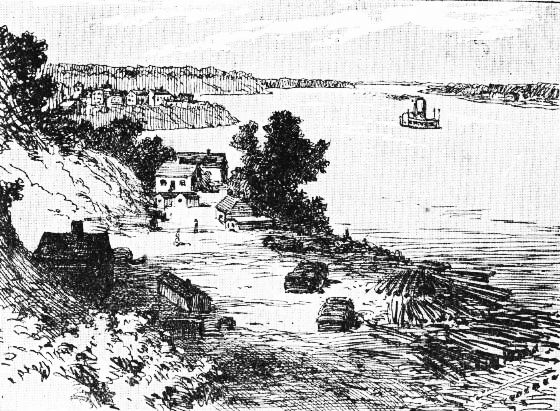
From Life on the Mississippi by Mark Twain (James R. Osgood and Company, Boston, 1883).

Driving over the Cross Island Parkway bridge this morning I looked to the east and got a glimpse of the sunrise over the Atlantic Ocean.

I says to myself, get you phone out and take a picture.

Then I says to myself, oh not again, how many of these sunrise pictures do you need?

I remembered Mr. Twain writing one cannot see too many summer sunrises and I grabbed up my phone, lowered my window and snapped away.

Looking at the picture, I have to agree with Mr. Twain.

The eloquence of silence.

Even while listening to a book on tape.

The haunting sense of loneliness, isolation, remoteness from the worry and bustle of the world if even for just that moment as I drive, surrounded by other drivers.

Feeling more than seeing that the dawn creeps in stealthily.

If nothing else, I feel the fresh start of the day.

And I am reminded that  to not worry about tomorrow, for tomorrow will worry about itself. Each day has enough trouble of its own.

So what to do with all the worries that I carry into the start of the day?

 Seeing the sunrise how cannot I not be reminded, once again, to seek first his kingdom.

And embrace the haunting sense of loneliness, isolation, remoteness from the worry and bustle of the world.

If just for a moment.

4.24.2024 – the mind uses all

the mind uses all
its senses to obtain, apply
some new idea

The inquiring mind uses all its senses to obtain some new idea, and to apply it to some useful purpose;

it is this spirit of research that has led to all the great results in Art and in the mechanical and chemical sciences, which we now enjoy and admire;

but it is only by very slow degrees, and by great perseverance, that such results are obtained, although the accumulation of a few years makes an enormous aggregate.

Look back a generation or two — where was then the steam-engine, where the tall stalks which indicate the sites of complicated and ingenious manufactures?

From the Introduction to The Boy’s Book of Industrial Information by Elisha Noyce, Illustrated by The Brothers Dalziel, Ward & Lock, London, 1858.

I can embrace that The inquiring mind uses all its senses to obtain some new idea.

It is the to apply it to some useful purpose that I worry about.

Isn’t it more that all the senses are used to obtain some new idea and then come up with the reason that this new idea, this new thing, is all the rage necessary not for fun, better life or anything good, but just so one isn’t left behind.

I sit in a room filled with computers that indicate the sites of complicated and ingenious manufactures.

4.23.2024 – injustice is not

injustice is not
comparative – wrong is deep, clear
in each private fate

Injustice in this world is not something comparative; the wrong is deep, clear, and absolute in each private fate.

A bruised child wailing in the street, his small world for the moment utterly black and cruel before him, does not fetch his unhappiness from sophisticated comparisons or irrational envy; nor can any compensations and celestial harmonies supervening later ever expunge or justify that moment’s bitterness.

The pain may be whistled away and forgotten; the mind may be rendered by it only a little harder, a little coarser, a little more secretive and sullen and familiar with unrightable wrong.

But ignoring that pain will not prevent its having existed; it must remain for ever to trouble God’s omniscience and be a part of that hell which the creation too truly involves.

From The Life of Reason: The Phases of Human Progress, published in five volumes from 1905 to 1906, by Spanish-born American philosopher George Santayana.

According to Wikipedia, the work consists of Reason in Common Sense, Reason in Society, Reason in Religion, Reason in Art, and Reason in Science.

4.22.2024 – soul ever tuned

soul ever tuned
toward God, soul prays sometimes
not know that it prays

That soul that is accustomed to direct herself to God upon every occasion; that, as a flower at sun-rising, conceives a sense of God in every beam of his, and spreads and dilates itself towards him in a thankfulness, in every small blessing that he sheds upon her; that soul, that as a flower at the sun’s declining, contracts and gathers in and shuts up herself as though she had received a blow, whensoever she hears her Saviour wounded by an oath or blasphemy or execration; that soul, who, whatsoever string be strucken in her, base or treble, her high or her low estate, is ever tuned toward God — that soul prays sometimes when it does not know that it prays.

John Donne, Eighty Sermons

4.21.2024 – contemporary

contemporary
methodological and
theoretical

Such great words and use of multi syllable words!

I picked up a copy of ReFocus: The Films of Lawrence Kasdan by Brett Davis (Edinburgh University Press, Edinburgh, 2024).

The blurb on the book says that the ReFocus make up a series of contemporary methodological and theoretical approaches to the interdisciplinary analyses and interpretations of neglected American directors, from the once-famous to the ignored, in direct relationship to American culture — its myths, values, and historical precepts.

Read that out loud.

A series of contemporary methodological and theoretical approaches to the interdisciplinary analyses and interpretations of neglected American directors, from the once-famous to the ignored, in direct relationship to American culture — its myths, values, and historical precepts.

I read a sentence like that and I want to stand up and cheer.

So I did.