
it did not strike
eye quite as quickly but a
certain grandeur, too
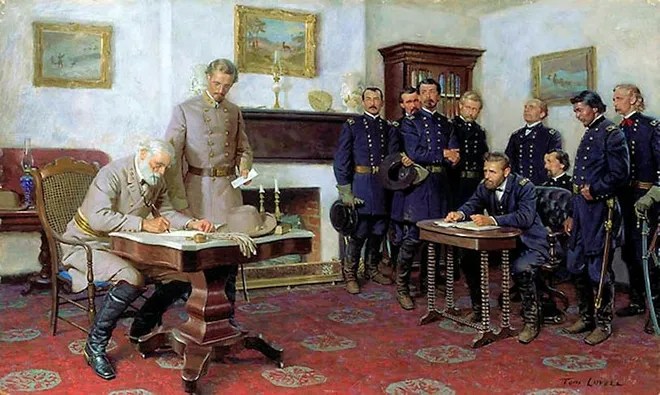
And he wrote into the terms of surrender one of the great sentences in American history. Officers and men were to sign paroles, and then they were to go home, “‘not to be disturbed by the United States authority so long as they observe their paroles and the laws in force where they reside.” ‘
Grant looked at the beaten army and he saw his own fellow Americans, who had made their fight and lost and now wanted to go back and rebuild. But the war had aroused much hatred and bitterness, especially among those who had done no fighting, and Grant knew very well that powerful men in Washington were talking angrily of treason and of traitors, and wanting to draw up proscription lists, so that leading Confederates could be jailed or hanged.
The sentence Grant had written would make that impossible. They could proceed against Robert E. Lee, for instance, only by violating the pledged word of U. S. Grant, who had both the will and the power to see his word kept inviolate. If they could not hang Lee they could hardly hang anybody. There would be no hangings. Grant had ruled them out.
It did not strike the eye quite as quickly, but U. S. Grant had a certain grandeur about him, too.
From U.S. Grant and the American Military Tradition by Bruce Catton, Little, Brown and Company, 1954.
 No Haiku For You