punishment that brought us peace was on him, by his wounds, we are healed
But he was pierced for our transgressions,
he was crushed for our iniquities;
the punishment that brought us peace was on him, and by his wounds we are healed.
We all,
like sheep,
have gone astray,
each of us has turned to our own way;
and the Lord has laid on him the iniquity of us all.
Isaiah 53:5-6 (New International Version)
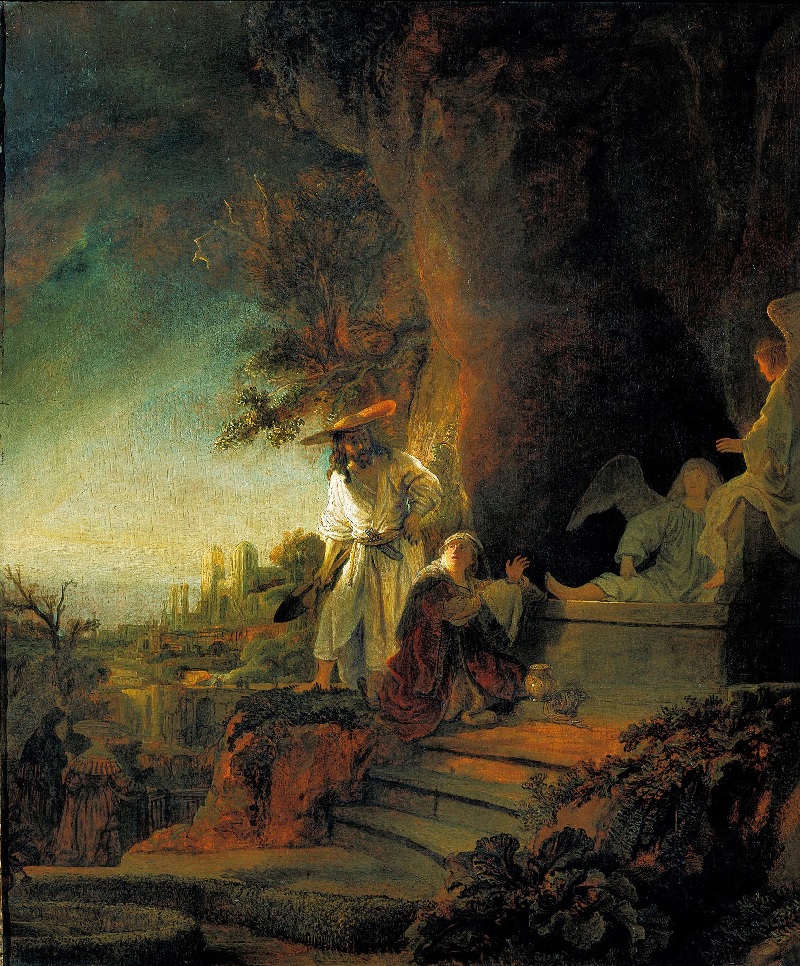
The painting, is in the Royal Collection now owned by Charles III though the web page I found it on still credits his Mother.
The blurb on the page from The Royal Collection states: The day after the Crucifixion, Mary Magdalene found Christ’s tomb empty. Two angels spoke to her as she wept, and when she turned she saw a man she thought was a gardener. Rembrandt sticks closely to the passage in the Gospel of John, which poses the question of the risen Christ’s appearance, because Mary Magdalene recognizes neither his face nor his voice. The figure of Christ eludes understanding, and the rising sun symbolizes the dawn of a new era for mankind.
Jesus as a gardener, ready to go work as the sun rises.
time to time a twinge unacknowledged wish to be a better person
Once a year at least, we all enjoy Dickens’ happy absurdity of taking a tough, malicious, shrewd businessman and making him over, overnight, into a genial, gregarious, almost saintly old man.
No matter how much A Christmas Carol may be dismissed as a rollicking good story but a deeply sentimental one, I believe it has stayed alive for a hundred and sixty years because in even the most cynical, rational, irreligious human, there is from time to time a twinge, even an unacknowledged wish, to be a better person.
From Ringing the Changes 4 January, 2002 in Letter from America. Vol 2, by Cooke, Alistair, London, Penguin, 2007.
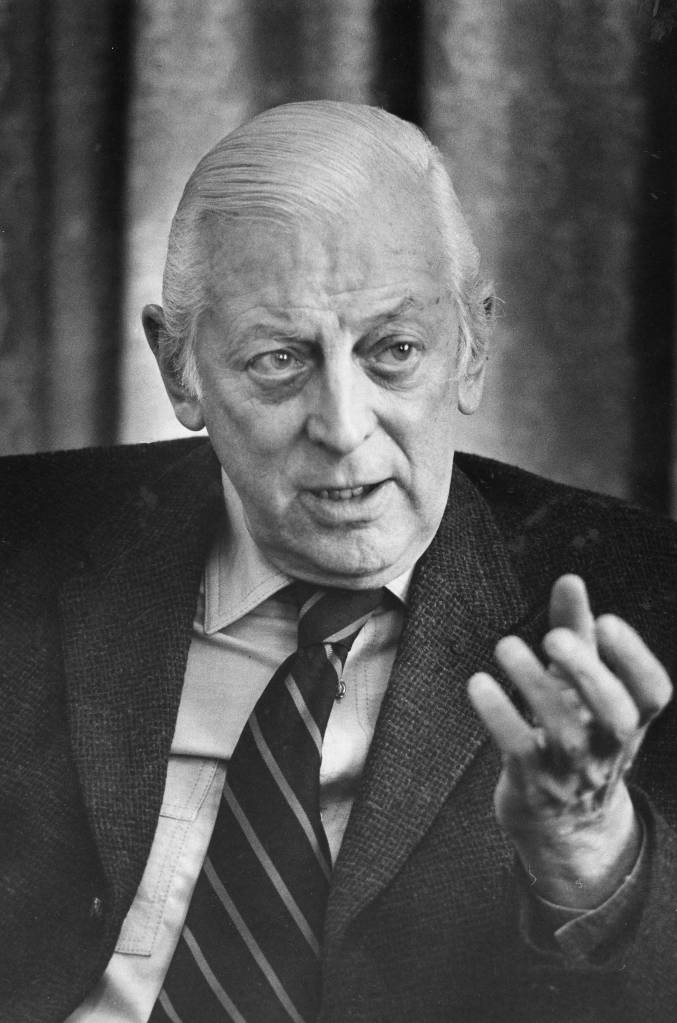
Mr. Cooke, for me, is something of a pair with Orson Welles, as someone always being there at the beginning of so much of the American past.
Just less well remembered.
Mr. Cooke died today back in 2004.
I would not have known that but that I had been searching out something about Thomas Hardy for another post in FINDAGAVE and on that website it announced that Mr. Cooke had died on this day in 2004.
It brought to mind what I knew of his burial.
If you know anything about Mr. Cooke and his television program America, or his hosting of Masterpiece Theater or his weekly audio Letter From America for the BBC, you might have picked up on the fact that for a good part of his life he lived in an apartment that overlooked Central Park.
Central Park was such a reoccurring theme in all of his writers and appearances that when he died, his children felt that it would be appropriate to have his ashes scattered in Central Park.
Then those ugly rules, regulations and permissions raised their ugly head.
Rather than fight this triumvirate, the family just went around them.
On the morning of the funeral, the children met at the apartment.
One of them stopped at Starbucks and grabbed a stack of large, okay, vente or grande, I still don’t know, cups.
The ashes of Mr. Cooke where then poured into the cups and the family strolled through the park , leaving the remains of Mr. Cooke behind.
Not a bad way for a man who wrote that in even the most cynical, rational, irreligious human, there is from time to time a twinge, even an unacknowledged wish, to be a better person.
gives himself again with all his gifts, door opens this is judgment day
Adapted from the Stations of the Cross: I Jesus is condemned to death, which is found in the book Sounding the Seasons by Malcolm Guite and are intended to be read on Good Friday.
I am reminded of the legends told about Pilate.
One that he was sent to Switzerland after his term in Judea and while up in the alps, would walk down to nearby stream and daily, wash his hands.
Another myth is that the ghost of Pilate comes out on Good Friday to wash hands.
If you look up the idea of symbolically washing your hands of guilt, there are a few other instances of such a thing be mentioned in the old books but with the access of search provided by the google, you have to think that this was not all that common.
The word painting of that moment in the Gospels leave no doubt of its impact on that moment and over the centuries.
Jesus is condemned to death
The very air that Pilate breathes, the voice With which he speaks in judgment, all his powers Of perception and discrimination, choice, Decision, all his years, his days and hours, His consciousness of self, his every sense, Are given by this prisoner, freely given. The man who stands there making no defence, Is God. His hands are tied, His heart is open. And he bears Pilate’s heart in his and feels That crushing weight of wasted life. He lifts It up in silent love. He lifts and heals. He gives himself again with all his gifts Into our hands. As Pilate turns away A door swings open. This is judgment day.
Christ Presented to the People, also known as Ostentatio Christi or Ecce Homo by Rembrandt van Rijn
bellum omnium contra omnes, the war of all against all
From the Praefatio of De Cive or The Philosophicall Rudiments Concerning Government and Society. Or, A Dissertation Concerning Man in his severall habitudes and respects, as the Member of a Society, first Secular, and then Sacred. Containing The Elements of Civill Politie in the Agreement which it hath both with Naturall and Divine Lawes. In which is demonstrated, Both what the Origine of Justice is, and wherein the Essence of Christian Religion doth consist. Together with The Nature, Limits and Qualifications both of Regiment and Subjection By Thomas Hobbes (1642).
… ostendo primo conditionem hominum extra societatem civilem, quam conditionem appellare liceat statum naturae, aliam non esse quam bellum omnium contra omnes; atque in eo bello jus esse omnibus in omnia.
Or in english* …
… I demonstrate, in the first place, that the state of men without civil society (which state we may properly call the state of nature) is nothing else but a mere war of all against all; and in that war all men have equal right unto all things.
The state of men without civil society (which state we may properly call the state of nature) is nothing else but a mere war of all against all.
And in that war all men have equal right unto all things.
A state of nature were all have equal rights to all.
A mere war against all against all.
Mr. Hobbs wrote that in 1642.
Today we all got a gun.
Someone better say a prayer for our democracy.
*BTW it is recorded in History that Judge Augustus Woodward wrote the Territorial Constitution of the Territory of Michigan in Latin and when folks complained he reissued it with two columns. Latin on the left and English on the right with the sub heading, ‘For the lesser Educated.’ Judge Woodward (as in Woodward Avenue in Detroit) went on to found what became the University of Michigan.
imagination and sentiment delimit the novelist’s realm
Imagination and sentiment, which quite properly delimit the dimensions of the novelist’s realm, are a dangerous medium, however, through which to approach the subject of battle.
Historians, traditionally and rightly, are expected to ride their feelings on a tighter rein than the man of letters can allow himself.
From The Face of Battle by John Keegan, Pimlico, 2004.
Historians, traditionally and rightly, are expected to ride their feelings on a tighter rein than the man of letters can allow himself.
Hmmmmmmm.
Imagination and sentiment, which quite properly delimit the dimensions of the novelist’s realm, are a dangerous medium, however, through which to approach the subject of battle.
Hmmmmmmmm.
It happened so with a group of Sheridan’s scouts, who captured a Captain Stump, famous as a Rebel raider, a man they had long been seeking. He had been wounded, and when he was caught they took his weapons away and brought him to Major Young, who commanded the scouts, and Major Young had a certain respect for this daring guerilla, so he told him:
“I suppose you know we will kill you. But we will not serve you as you have served our men—cut your throat or hang you. We will give you a chance for your life. We will give you ten rods’ start on your own horse, with your spurs on. If you get away, all right… . But remember, my men are dead shots.”
Captain Stump was bloody and he had been hurt, but he was all man. He smiled, and nodded, and rode a few feet out in front of the rank of his captors—skinny young men, 130 pounds or less, unmarried, the pick of the Yankee cavalry. Major Young looked down the rank, and called out: “Go!”
A cavalryman wrote about it afterward:
“We allowed him about ten rods’ start, then our pistols cracked: and he fell forward, dead.”
From A Stillness at Appomattox by Bruce Catton.
According to Wikipedia, Oliver Jensen, who succeeded Catton as editor of American Heritage, wrote that “No one ever wrote American history with more easy grace, beauty and emotional power, or greater understanding of its meaning, than Bruce Catton… There is a near-magic power of imagination in Catton’s work [that] almost seemed to project him physically onto the battlefields, along the dusty roads and to the campfires of another age.”
There is a near-magic power of imagination in Catton’s work that while it traditionally and rightly, is expected to ride their feelings on a tighter rein than the man of letters can allow himself, imagination and sentiment, seems to project him physically onto the battlefields, along the dusty roads and to the campfires of another age.


 No Haiku For You