you have been my friend he said, that in itself is a tremendous thing
“Why did you do all this for me?” he asked. “I don’t deserve it. I’ve never done anything for you.”
“You have been my friend,” replied Charlotte. “That in itself is a tremendous thing.
I wove my webs for you because I liked you. After all, what’s a life, anyway? We’re born, we live a little while, we die. A spider’s life can’t help being something of a mess, with all this trapping and eating flies. By helping you, perhaps I was trying to lift up my life a trifle. Heaven knows anyone’s life can stand a little of that.”
From Charlotte’s Web by Elwyn Brooks White, Harper and Row, New York, 1952.
As Mr. White put it, “No pig ever had truer friends, and he realized that friendship is one of the most satisfying things in the world.”
The next to last line of Charlotte’s Web reads:
It is not often that someone comes along who is a true friend.
lift toward greatness the visionary, without narrow jealousy
He had in him all the lift toward greatness of the visionary, without any of the visionary’s fanaticism or egotism, without any of the visionary’s narrow jealousy of the practical man and inability to strive in practical fashion for the realization of an ideal.
No more practical man ever lived than this homely backwoods idealist
but he had nothing in common with those practical men
whose consciences are warped until they fail to distinguish between good and evil,
fail to understand that strength, ability, shrewdness,
whether in the world of business or of politics,
only serve to make their possessor a more noxious, a more evil member of the community,
if they are not guided and controlled by a fine and high moral sense.
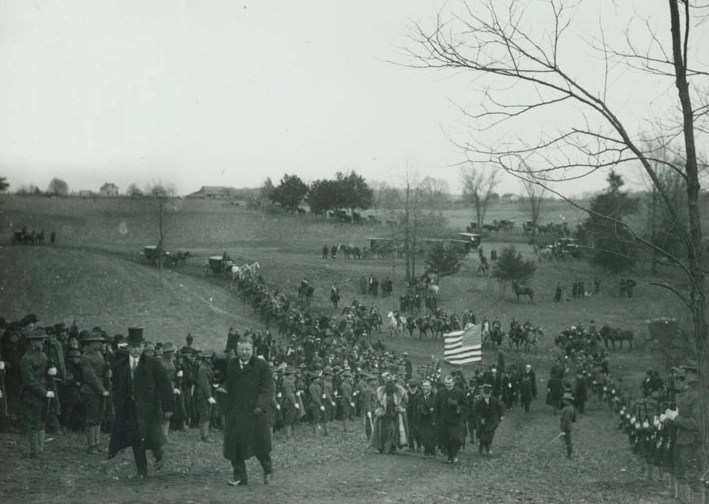
President Theodore Roosevelt on President Abraham Lincoln from remarks made at the cornerstone laying of the Abraham Lincoln Birthplace Memorial, February 12, 1909.
Teddy could pick a photographer out of a crowd at 500 yards …
quizzical sense earth far more fascinating place than allowed it to be
In my reading I often come across a short collection of words by an author and I say to myself. that might work as a haiku if I could connect it with something.
In my adventures, I often come across a scene and take a photo and I say to myself that might work with a haiku if I connect it with something.
We had taken a walk today along what is called Fish Haul beach on the north end of of Hilton Head Island.
This is the location of the one of the first successes the Union Army and Navy had back in 1861 in the Civil War.
You can look out over the waters where Port Royal Sound and the Atlantic Ocean come together and I said to my wife that take away the few cottages you could see, and this is what it looked like back then except there were 40 warships under sail, moving a circle as they fired some 4000 shells at Confederate forts on the Phillips Island to the north and Hilton Head island to the south.
The shelling lasted about 4 hours and all the Confederates ran away.
“And nothing has changed,” I said again.
It was an extremely low tide and we were able to walk further back along the salt marshes behind the beach front.
We came to a pond that we have looked at for years but never from this side before.
There were dead trees and reeds and marsh grass and sea shells.
It was place and a view new to us.
And I thought …
In a few hours, the tide will come and rearrange all this.
Nothing in front of us will stay the same.
This view, what we are seeing, will never been seen in this way again.
And I thought of this passage from True North by Jim Harrison.
“ … [the] quizzical sense that the earth was a far more fascinating place than I had allowed it to be.
I was not inclined at the moment to blame anyone else for the number of ways I had been single minded in the wrong direction.”
I told my wife I wanted to stay at the point until the tide turned and wait as long as possible amd leave just before the tide cut us off.
I wanted to see it.
My wife stared at my and shook her head and walked back the path out of the marsh.
I have this quizzical sense that the earth is a far more fascinating place than I had allow it to be.
I am not inclined at the moment to blame anyone else for the number of ways I had been single minded in the wrong direction.
Mr. Hubert was commenting how today’s software is so full of ‘bloat’ due to the quick and easy way to make webpages and computer software by focusing on making the software work and not caring how it managed to work, whether it called in software outside your program or not.
Mr. Hubert wrote that this outside software and this desire to make things work and not care how if worked used an unbelievable amount of code as well as created an unbelievable amount of security risks.
Mr. Hubert quoted a paper from 1995 (!) where a Mr. Niklaus Wirth said, “To some, complexity equals power. Increasingly, people seem to misinterpret complexity as sophistication, which is baffling — the incomprehensible should cause suspicion rather than admiration.”
I started making webpages back in 1995.
I can still type out code as fast as I can think it when I have to, but that isn’t so much in demand anymore due to web page building programs and tools that any one can use.
I decided to test the hypothesis that these tools use too much unnecessary code and I made two simple web pages.
Off the top of my head I wrote the code for a page that said, “HELLO WORLD” and uploaded it to a server.
Then, using WordPress, I made a page that said, “HELLO WORLD.”
I used 6 lines of code.
WordPress used 537 lines of code.
OVERBROAD strokes paint this picture I know.
Still …
I read the phrase out load again.
To some, complexity equals power. Increasingly, people seem to misinterpret complexity as sophistication, which is baffling — the incomprehensible should cause suspicion rather than admiration.
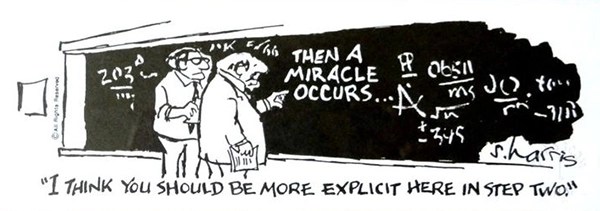
Admiring this grand sweep and combination of words, I thought of today’s political news cycle.
Keep that in mind and read this again.
To some, complexity equals power.
Increasingly, people seem to misinterpret complexity as sophistication, which is baffling —
The incomprehensible should cause suspicion rather than admiration.
“There is nothing in the world like a persuasive speech to fuddle the mental apparatus and upset the convictions and debauch the emotions of an audience not practised in the tricks and delusions of oratory.“
Mr. Twain’s story was published in Harper’s Magazine back in December 1899.
Increasingly, people seem to misinterpret complexity as sophistication, which is baffling —
The incomprehensible should cause suspicion rather than admiration.
Am I missing something from the news cycle today?
I don’t think so.
It is just as Frank Lloyd Wright might have said with a smile and a wave of the backhand.





 No Haiku For You