
wave-sculpted ripples
oscillating flows pick up
sand grains, set them down
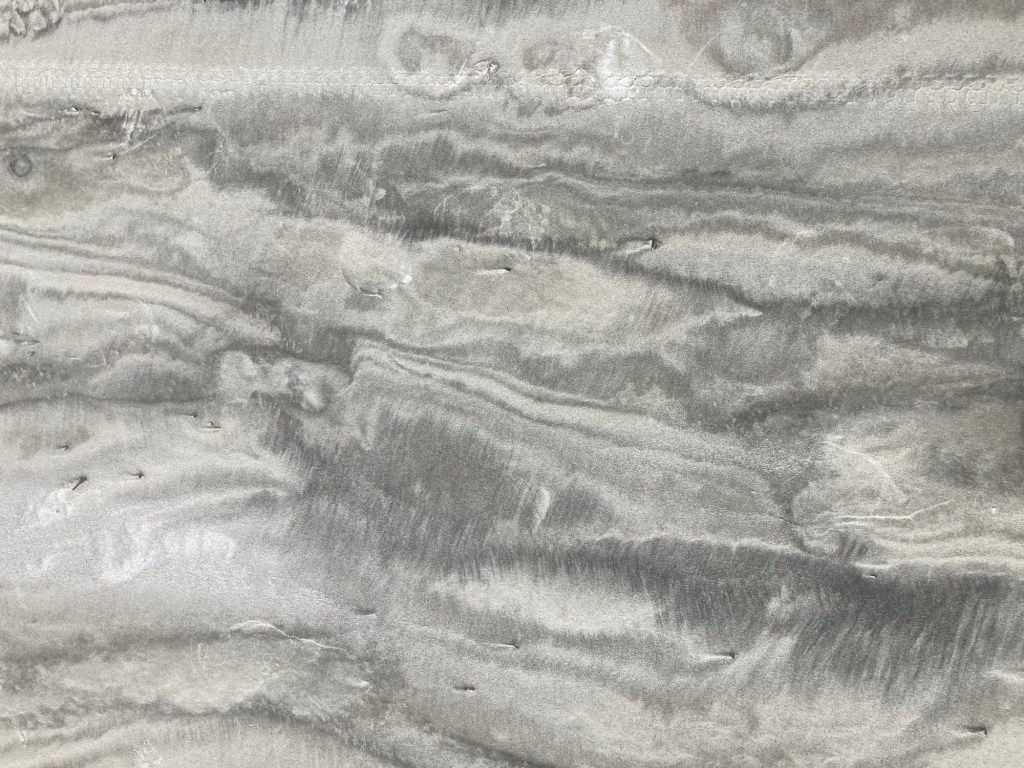
When a coastal tide rolls out, it can reveal beautiful ripples in the temporarily exposed sand. These same undulating patterns can also be seen in ancient, petrified seabeds that have been exposed in various parts of the world and preserved for millions or even billions of years.
Wave-sculpted ripples form as waves travel across the surface of a body of liquid. These waves cause water beneath the surface to circle around and around, generating oscillating flows that pick up sand grains and set them down in a process that eventually carves out troughs and grooves throughout the sandbed.
From Beach sand ripples can be fingerprints for ancient weather conditions by Jennifer Chu in the MIT News.
 No Haiku For You