
cotidal lines that
circulate counterclockwise
amphidromic points
In the North Atlantic, because the cotidal lines circulate counterclockwise around the amphidromic point, the high tide passes New York Harbor approximately an hour ahead of Norfolk Harbor. South of Cape Hatteras the tidal forces are more complex, and cannot be predicted reliably based on the North Atlantic cotidal lines.
From ancient times, tidal observation and discussion has increased in sophistication, first marking the daily recurrence, then tides’ relationship to the Sun and moon. Pytheas travelled to the British Isles about 325 BC and seems to be the first to have related spring tides to the phase of the moon.
Isaac Newton’s theory of gravitation first enabled an explanation of why there were generally two tides a day, not one, and offered hope for a detailed understanding of tidal forces and behavior. Although it may seem that tides could be predicted via a sufficiently detailed knowledge of instantaneous astronomical forcings, the actual tide at a given location is determined by astronomical forces accumulated by the body of water over many days. In addition, accurate results would require detailed knowledge of the shape of all the ocean basins—their bathymetry, and coastline shape.
(Wikipedia)
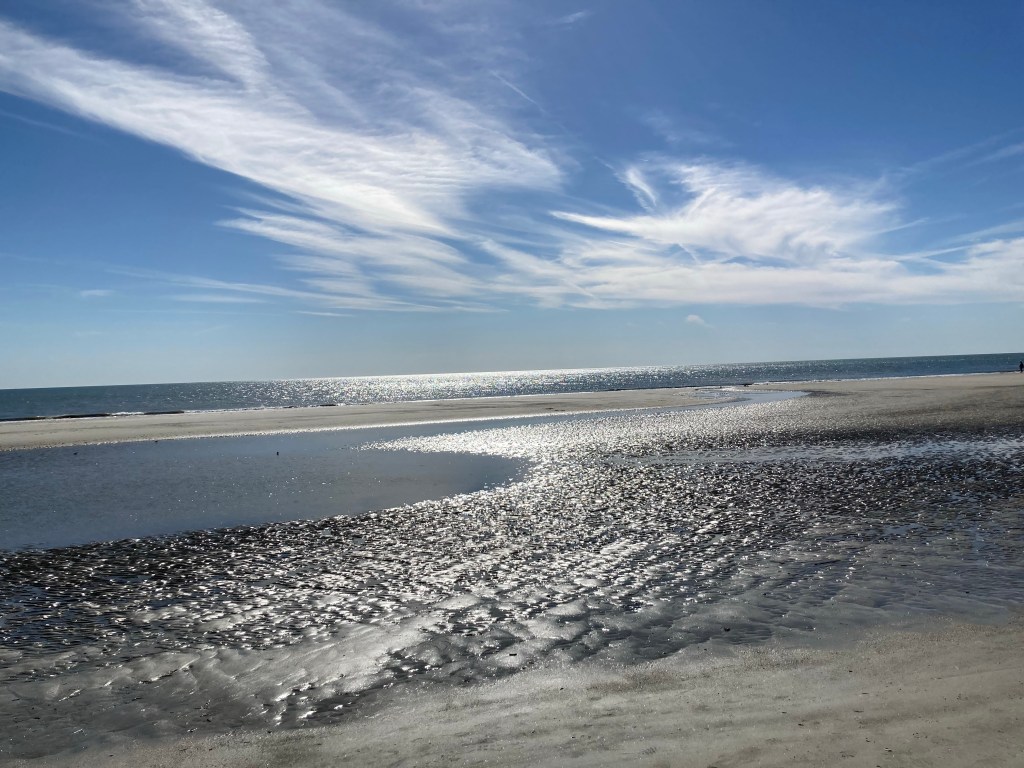
Time and tide wait for no man but when you move to an area with an average 8 foot tide you learn to check the tide tables early and often.
I am not sure why it didn’t sink in but an 8 foot tide is not horizontal.
The water does not move back and forth.
An 8 foot tide is veritical.
It moves up and down.
In doing so, the water moves back and forth across the beach but it is the depth that is changing.
I am just at six feet tall.
If I stood at low tide along the ocean’s age and didn’t move, but the time high tide was at its peak, my head would be 2 feet under water.
Those cotidal lines that circulate counterclockwise around the amphidromic points can really mess up your day and use some really wonderful words to do it.
 No Haiku For You