the term for morning grogginess grouchiness is sleep inertia
Grogginess.
Grouchiness.
That’s me.
I have never ever been a morning person.
I can’t say I am an anytime of the day person to be honest.
But waking up?
Forget about it.
Of late, I have been noticing how much longer it takes for the caffeine to make a difference.
I am on a ‘hybrid’ schedule and I work from home and I work in the office on different days so getting into a daily rhythm is proving to be a bit difficult.
As I think about how long it takes to wake it seems to make it all the harder to wake up.
Ms. Pearson writes: Even if you are a naturally early riser, you may not wake up ready to start the day — or even in a particularly good mood. The clinical term for the grogginess and grouchiness many of us experience after waking up is “sleep inertia.” It tends to last 30 to 60 minutes, though the length and intensity depend on the person and circumstances.
I like that.
Inertia.
Sleep Inertia.
Isaac Newton’s first law of motion states that, “a body at rest remains at rest“.
Mr. Newton’s first law is also known as the law of ‘Intertia.’
A body at rest stays at rest.
Yup, that’s it all right!
Ms. Pearson writes: Simply acknowledging that reality can help bring a feeling of peace and acceptance to the morning, she said. Find ways to protect that quiet time: Maybe sit in bed and take a few deep breaths. Couple it with a strategy known to increase wakefulness, such as soaking up some sunlight (or bright artificial light) or moving your body …
So if your goal is to wake up earlier — or to mitigate early morning grouchiness — it is essential to build in immediate rewards … Consider what would feel good in the moments after you wake up. Maybe it’s a delicious breakfast, she said, or cranking up some music that you love.
Be patient with yourself. “Habits are very persistent, and you shouldn’t expect them to change immediately … If you set in place ways to reduce friction, and ways to increase rewards, you’re more likely to be able to change.”
I like it.
I will have to work on other essential, immediate rewards.
But my first choice for a reward is to crawl back under the covers.
And over come a general reluctance to face my day.
On the other hand maybe I will embrace grogginess and grouchiness.
It is who I am and I am what I am.
Though I will feel some empathy with those other drivers out there who have to share the road with me.
It’s not the five failed prime ministers since 2016 and their incompetent sidekicks.
It’s Us.
We tolerate a sclerotic, antiquated democratic system allowing people you wouldn’t trust with your wallet or to babysit your children to rise through deceit and thrive through failure.
British politicians lied occasionally in the past; now lying was frequent and shameless. Nothing worked.
The “bad eggs” used to resign; now they were promoted.
They created problems but rarely solved them.
I was watching some on-air discussion about the House the other night and the question was asked, doesn’t this bother the men and women in the House?
The answer was, for the most part, the men and women who have brought about the current State of Affairs had no interest in governing.
They wanted exposure.
They wanted media time.
They wanted money.
For THEMSELVES!
Service to their country?
Don’t waste their time.
I was struck when one commentator said the Republican’s don’t like the leadership role where they have to produce, they would rather be the ones who get to just complain.
I don’t know what to say but we are putting up with this.
As Obi-Wan said, “Who’s the more foolish; the fool, or the fool who follows him?”
a living standard so sparse, removed, be consigned to history books
“Destitute” is a term that conjures up the Victorian era – a living standard so sparse, so removed from modern civilisation, that by all rights it should be consigned to the history books. You only have to read through the aching interviews in the JRF study to see what destitution in modern Britain looks like: children wearing their parents’ clothes because that’s all there is in the wardrobe; eating a banana as a single daytime meal; taking the one permitted toilet roll a week from the local church donation. Gone are the workhouses. Nowadays, we send the poor to sift through charity bins.
As the two men said to Mr. Scrooge, “… it is more than usually desirable that we should make some slight provision for the poor and destitute, who suffer greatly at the present time. Many thousands are in want of common necessaries; hundreds of thousands are in want of common comforts …”
A Christmas Carol was written in December, 1845.
So much progress has been made in the last 180 years.
Then one day you read a statistic that somehow feels both shocking and wearily unsurprising: about 3.8 million people experienced destitution in the UK last year. That’s the equivalent of almost half the population of London being unable to meet their most basic needs to stay warm, dry, clean and fed.
Congress? You expect baseline dysfunction but this is something special …
The joke used to be that if PRO is the opposite of CON, what is the opposite of progress?
Now Congress is the joke.
I have tried and I have wanted to keep politics out of these essays as it wasn’t what I wanted to do but the words in the Opinion Piece, The People Who Broke the House by Michelle Cottle, a domestic correspondent for Opinion and a host of “Matter of Opinion” were to good to pass up.
Ms. Cottle wrote: When it comes to Congress, Americans have come to expect a certain baseline of dysfunction. But I think most of us can agree that the current House Republican majority is something special.
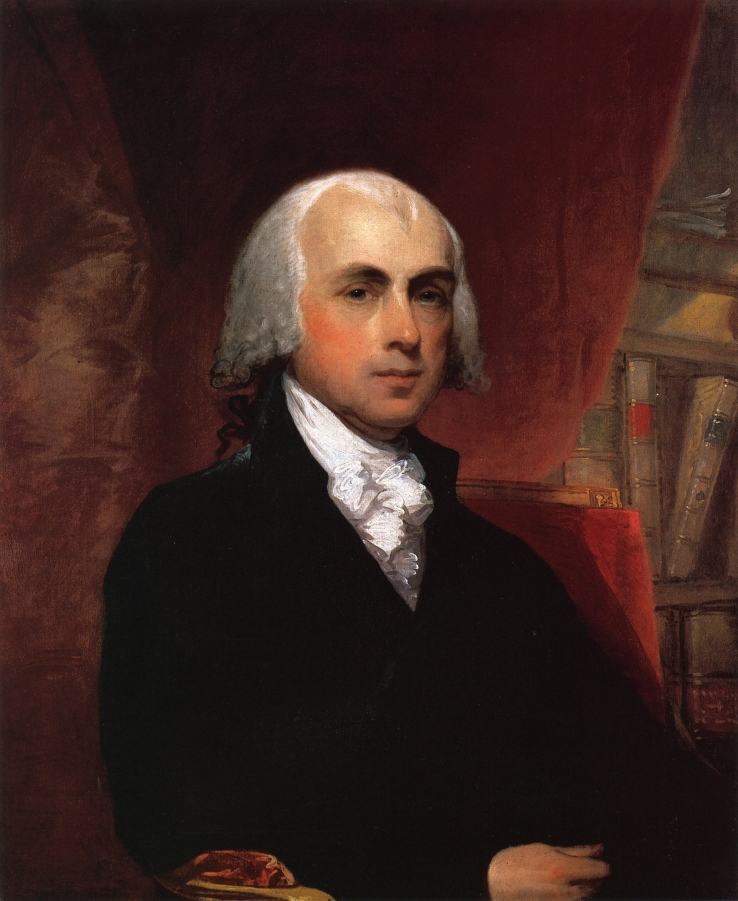
If alive today, I can hear the authors of the Federalist Papers talking back and forth and Alexander Hamilton saying to John Jay and James Madison saying, “What do you think of the House of Representatives?”
Mr. Madison would answer, “I think it’s a good idea. We should get one!“
On the other hand, if they wanted a Government that was representative of the Country, they did a great job setting the current one up.
booksellers about as uncommercial breed of people possible
In a world gone crazy, when I am grasping at anything that points the compass in a positive direction, I found the recent article in the New York Times, Barnes & Noble Sets Itself Free ByMaureen O’Connor to be something of a word of hope.
To quote Big Bill or better to quote Portia in the Merchant of Venice, So shines a good deed in a naughty world.
Or maybe best to quote Willy Wonka and say, “So shines a good deed in a weary world.”
At least, for a moment, this story about how Barnes and Noble is pushing the chain to act more like the indie stores it was once notorious for displacing under the direction of a new CEO, James Daunt.
“The curious trick has been that if you actually let the local book-selling teams do what they think is best, you suddenly get much better bookstores,” Mr. Daunt said. Then he quickly added a caveat: “About a quarter of them become dramatically better, and a quarter become dramatically worse — but it is much easier to focus on that quarter and improve them.”
The change goes along with his strategy of embracing the mind-set of his typical employee. “Booksellers are about as uncommercial a breed of people as it’s possible to come across,” Mr. Daunt said. “The irony is that the less concerned we are with the commercial, the better it works commercially.
“You need to love books, and you need to know how our customers shop for books,” says a long term Barnes and Noble employee.
I read and I believe it, but only because I want to believe it.
I spent 12 years working for a chain bookstore.
For many employee’s it was a job.
For me and many employee’s and many of my good good friends that I worked with, it was a calling.
And it was a fight against those who went into it as business and tried to make it business while we tried to keep the faith.
So to read, “The curious trick has been that if you actually let the local book-selling teams do what they think is best, you suddenly get much better bookstores.” almost makes me want to cry.
I worked for Waldenbooks.
But I lived in Michigan.
If you loved books and you lived in the State of Michigan, at some point in your life you ended up at Border’s Book Store, a stand alone, independent love-affair with books in Ann Arbor, Michigan.
If you went down that path, you also at some point ended up at John King Used Books in Detroit but that’s another story.
Among booksellers in the State of Michigan, Border’s was the gold standard.
It had sofa’s and chairs and probably some sort of cafe before Starbucks.
They had a service desk set up and staffed by three people, in the pre computer era, who did nothing but researched hard to find titles so a customer could order the book.
They had floor upon floor of books.
The had an art print / map section and I still have prints on my office wall that I purchased there, using my grocery money instead of using my grocery money for groceries.
When I started with at my bookstore in a mall, I saw how it could embrace some of what Border’s was.
I fought for chairs in the store.
I fought for more and more copies of different books rather than 100 copies of the same bestseller.
We worked to create displays of content that meant something.
I started as a bookseller then assistant Manager and finally, Manager.
Though I used label tape and put the title, GUY IN CHARGE on my name tag.
One of the many, many things I did that got me trouble.
My battles can be kind of summed up when I made a display of books for Valentine’s Day.
Regardless of the topic or author, I took over a wall and made a display of every red book we had in the store.
My District Manager came in, took one look at Car Repair manuals next to Novels next to books on Knitting but ALL WITH RED COVERS surrounded by cardboard hearts and he ran back out to his car to get his camera.
“That’s the type of thinking we want to see Mike!,” he told me.
I banged a big red American Heritage dictionary against my head.
“This is Walden’s, Mike”, he would say, “Not Border’s.“
The really funny part of this story is that after I was asked to leave the employ of company, another long story, Walden’s relocated it’s headquarters from Stamford, CT to ANN ARBOR and then bought out Border’s and in an effort to change the brand, changed the name of the Company TO Border’s Books!
In the end I guess I won.
To read Booksellers are about as uncommercial a breed of people as it’s possible to come across is a tonic to my soul.
Some where I have a book, I think it’s an autographed copy of Lake Wobegone by Garrison Keillor.
It was picked up for me by a Waldenbooks Regional Vice President.
Her office was in Ann Arbor and I got to know her when I worked at the Walden’s in Ann Arbor when I was in College.
I was allowed to switch back and forth between Grand Rapids, where I lived and Ann Arbor.
I would have long talks with this VP on bookselling as a calling and she would explain bookselling as a business.
She knew I liked Keillor and arranged to get an autographed copy when he made an appearance at some other Walden’s.
Inscribed above the author’s autograph was this sentiment.
“To the most un-corporate person I know.”
And she signed it.
When James Thurber’s dog Mugg’s (The Dog that Bit People) died, he writes, “Mother wanted to bury him in the family lot under a marble stone with some such inscription as “Flights of angels sing thee to thy rest” but we persuaded her it was against the law. In the end we just put up a smooth board above his grave along a lonely road. On the board I wrote with an indelible pencil “Cave Canem.” Mother was quite pleased with the simple classic dignity of the old Latin epitaph.“
To the most un-corporate person I know.
Should I have a tombstone someday, I would be quite pleased with the simple classic dignity of that sentiment.


 No Haiku For You