
cooking is something
that we human beings are
uniquely good at
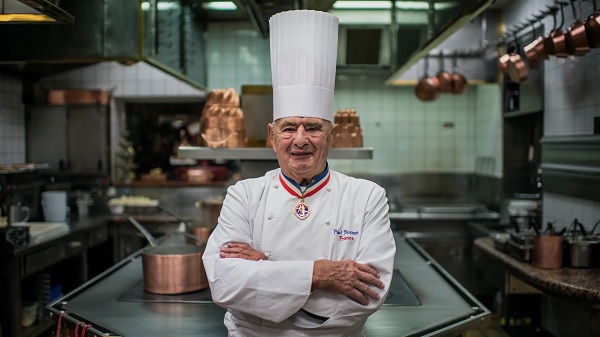
I was refreshed to read the article, ‘AI cannot taste the way a chef can’: are chatbots a threat to fine dining? in the Guardian on Aug 16, 2023.
The article quotes tech entrepreneur Nikhil Abraham as saying, “AI will always be playing catch-up with human creativity, and the humans who are at the edge of creativity will always outsmart AI and have experiences that are more valuable.”
I don’t worry so much about AI so long as I can unplug my computer.
I hold that at least once a week you should unplug you computer and wave the end of the cord in front of your monitor.
To enlarge the scale on this theme, I bring up the story of the small town in North Carolina that lost power for several days when some nut put a bullet through some piece of equipment at a substation.
I hope AI remembers this story.
Maybe it does.
Maybe it does and someday it will design its own computer housing to be indestructible.
There is this story from back in the ’60s when some University Professors toured the at-that-time leader in computers for public use, Texas Instruments.
The Professors were looking for computers for their schools and they were shown the latest developments in machines that most likely had about 5000 bytes (5k) of memory and were cutting edge for their time.
According to the story, one of the Professors noticed this giant stainless steal box in a corner and asked what that was for?
The company tour guide said that was the computer housing they were developing for the Navy.
It had to be able to survive a missile attack the tour guide pointed out.
The Professors looked at the steel box then said, “That’s what we want!”
The tour guide looked at them and asked if they were expecting a missile attack?
“No”, said the Professors, “… grad students!”
And so was born the idea that any computer housing had to have at least 17 screws in it until Apple came along with their twist-and-pull to open box around 2005.
The point here is the human competent.
Those darn grad students wanted to get in there to see how the darn thing worked.
Those darn humans who, at the edge of creativity, will always outsmart AI and have experiences that are more valuable.
And cooking is where AI will lose.
As the article says:
“… robots and software can’t replicate what a chef does, even if you can codify a recipe. Like, an eggplant is smaller or larger than before, the fire is a smidge hotter than the last time I cooked.” When chefs create and execute a dish, they’re using all their senses, plus intuition. And as of now, AI doesn’t have senses of its own.“
I guess I could be worried about that … as of now … but, as of now, I am not.
The article ends with this line.
AI cannot taste in the way a chef can.
Even if you’re repeatedly using the same ingredient, let’s say a piece of fruit, AI cannot account for ripeness, sweetness, texture.“
Thinking of the human competent and the role of the chef in the statement AI cannot taste in the way a chef can, I though to that wonderful George Orwell book, Down and Out in Paris and London.
Mr. Orwell, needing employment, worked in the kitchens of Hotel X though tradition has it that he worked at Maxim’s, a landmark restaurant to THIS DAY in Paris..
Back in 1933, Mr. Orwell wrote this about Chefs and dining in a restaurant.
It is not a figure of speech, it is a mere statement of fact to say that a French cook will spit in the soup — that is, if he is not going to drink it himself.
He is an artist, but his art is not cleanliness.
To a certain extent he is even dirty because he is an artist, for food, to look smart, needs dirty treatment.
When a steak, for instance, is brought up for the head cook’s inspection, he does not handle it with a fork.
He picks it up in his fingers and slaps it down, runs his thumb round the dish and licks it to taste the gravy, runs it round and licks it again, then steps back and contemplates the piece of meat like an artist judging a picture, then presses it lovingly into place with his fat, pink fingers, every one of which he has licked a hundred times that morning.
When he is satisfied, he takes a cloth and wipes his fingerprints from the dish, and hands it to the waiter.
And the waiter, of course, dips his fingers into the gravy — his nasty, greasy fingers which he is for ever running through his brilliantined hair.
Whenever one pays more than, say, ten francs for a dish of meat in Paris, one may be certain that it has been fingered in this manner.
In very cheap restaurants it is different; there, the same trouble is not taken over the food, and it is just forked out of the pan and flung onto a plate, without handling.
Roughly speaking, the more one pays for food, the more sweat and spittle one is obliged to eat with it.
Hmmmmmmmmmmmmmmm.
Maybe this AI in the kitchen deserves a second look.
Post Script: Pictured above is Chef Paul Bocuse, named tje best chef of the Century in the 1900s, renowned for recipes like Poularde de Bresse au riz sauce supréme or Rable de liévre a la créme and Oeufs durs aux oignons dits a la tripe. I ran across an interview with him on YouTube where he was asked when was the best time to be a chef?
“1946 – 1947!” he answered, “Right after the war …. People ate everything!“
 No Haiku For You