
sand is a substance
beautiful mysterious
each grain on a beach
… the materials of the beach are themselves steeped in antiquity. Sand is a substance that is beautiful, mysterious, and infinitely variable; each grain on a beach is the result of processes that go back into the shadowy beginnings of life, or of the earth itself.
The bulk of seashore sand is derived from the weathering and decay of rocks, transported from their place of origin to the sea by the rains and the rivers. In the unhurried processes of erosion, in the freighting seaward, in the interruptions and resumptions of that journey, the minerals have suffered various fates—some have been dropped, some have worn out and vanished. In the mountains the slow decay and disintegration of the rocks proceed, and the stream of sediments grows—suddenly and dramatically by rockslides—slowly, inexorably, by the wearing of rock by water. All begin their passage toward the sea. Some disappear through the solvent action of water or by grinding attrition in the rapids of a river’s bed. Some are dropped on the riverbank by flood waters, there to lie for a hundred, a thousand years, to become locked in the sediments of the plain and wait another million years or so, during which, perhaps, the sea comes in and then returns to its basin. Then at last they are released by the persistent work of erosion’s tools—wind, rain, and frost—to resume the journey to the sea. Once brought to salt water, a fresh rearranging, sorting, and transport begin. Light minerals, like flakes of mica, are carried away almost at once; heavy ones like the black sands of ilmenite and rutile are picked up by the violence of storm waves and thrown on the upper beach.
No individual sand grain remains long in any one place. The smaller it is, the more it is subject to long transport—the larger grains by water, the smaller by wind. An average grain of sand is only two and one half times the weight of an equal volume of water, but more than two thousand times as heavy as air, so only the smaller grains are available for transport by wind. But despite the constant working over of the sands by wind and water, a beach shows little visible change from day to day, for as one grain is carried away, another is usually brought to take its place
From The Rim of Sand in the book, The Edge of the Sea by Rachel Carson (Boston, Houghton, Mifflin, 1955).
Ms. Carson may be better known for the book, Silent Spring, but I like the Edge of the Sea better.
Maybe because that it is where I work.
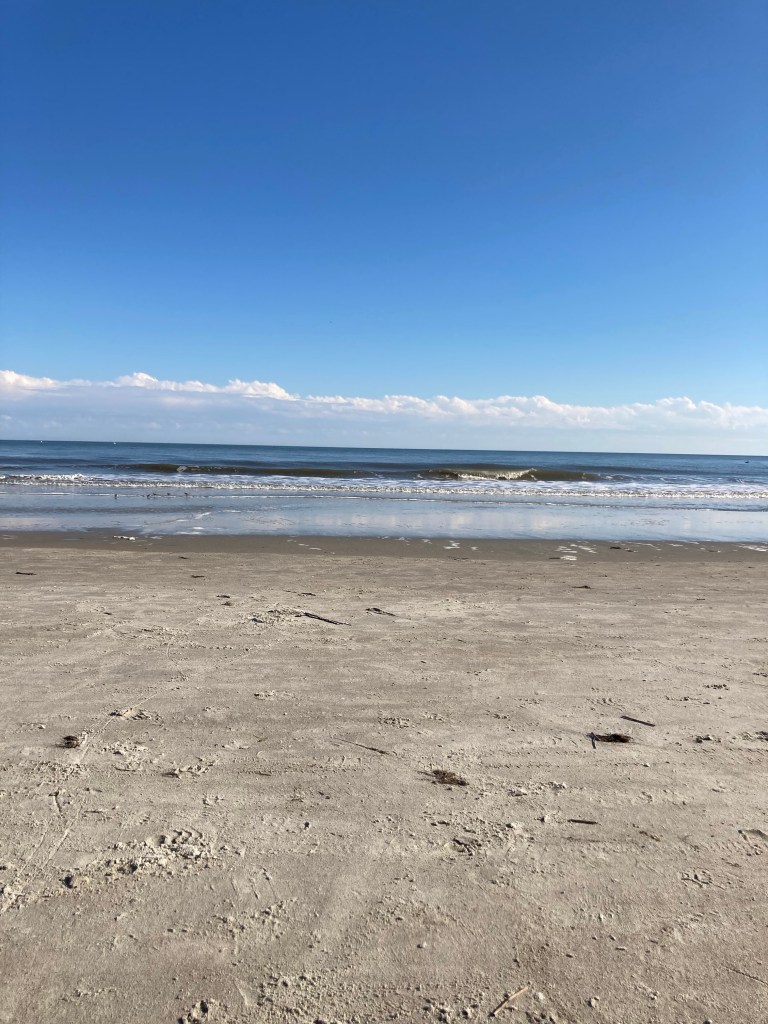
I can leave my office at lunch time and in 5 minutes stand with my feet in the water and Mr. Thoreau said of Cape Code, “A man may stand there and put all America behind him.“
 No Haiku For You