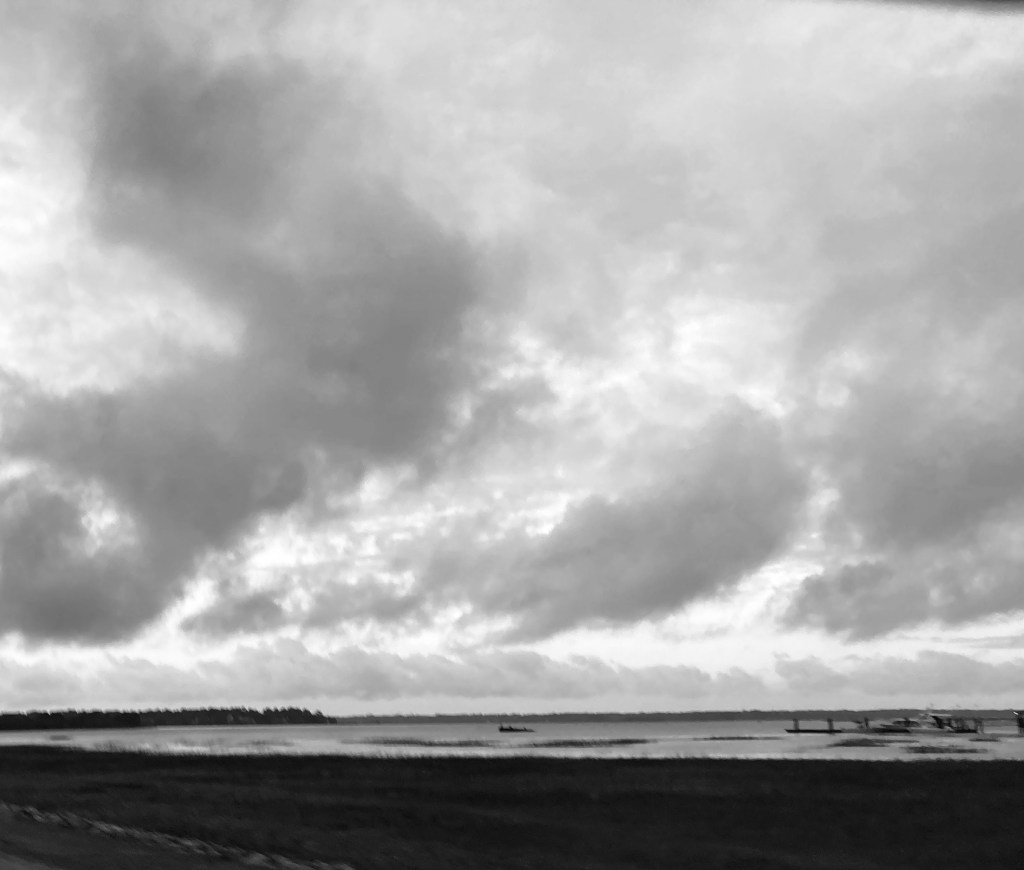
5.21.2023 – what is the good of

what is the good of
putting stone reading ‘Here lies
Nobody Nowhere’

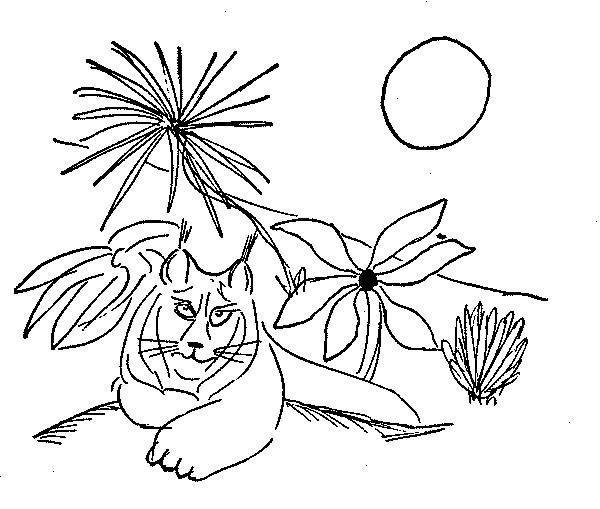
The Cat in the Lifeboat

A feline named William got a job as copy cat on a daily paper and was surprised to learn that every other cat on the paper was named Tom, Dick, or Harry. He soon found out that he was the only cat named William in town. The fact of his singularity went to his head, and he began confusing it with distinction. It got so that whenever he saw or heard the name William, he thought it referred to him. His fantasies grew wilder and wilder, and he came to believe that he was the Will of Last Will and Testament, and the Willy of Willy Nilly, and the cat who put the cat in catnip. He finally became convinced that Cadillacs were Catillacs because of him.

William became so lost in his daydreams that he no longer heard the editor of the paper when he shouted, “Copy cat!” and he became not only a ne’er-do-well, but a ne’er-do-anything. “You’re fired,” the editor told him one morning when he showed up for dreams.

“God will provide,” said William jauntily.

“God has his eye on the sparrow,” said the editor.

“So’ve I,” said William smugly.

William went to live with a cat-crazy woman who had nineteen other cats, but they could not stand William’s egotism or the tall tales of his mythical exploits, honors, blue ribbons, silver cups, and medals, and so they all left the woman’s house and went to live happily in huts and hovels. The cat-crazy woman changed her will and made William her sole heir, which seemed only natural to him, since he believed that all wills were drawn in his favor. “I am eight feet tall,” William told her one day, and she smiled and said, “I should say you are, and I am going to take you on a trip around the world and show you off to everybody.”

William and his mistress sailed one bitter March day on the S.S. Forlorna, which ran into heavy weather, high seas, and hurricane. At midnight the cargo shifted in the towering seas, the ship listed menacingly, SOS calls were frantically sent out, rockets were fired into the sky, and the officers began running up and down companionways and corridors shouting, “Abandon ship!” And then another shout arose, which seemed only natural to the egotistical cat. It was, his vain ears told him, the loud repetition of “William and children first!” Since William figured no lifeboat would be launched until he was safe and sound, he dressed leisurely, putting on white tie and tails, and then sauntered out on deck. He leaped lightly into a lifeboat that was being lowered, and found himself in the company of a little boy named Johnny Green and another little boy named Tommy Trout, and their mothers, and other children and their mothers. “Toss that cat overboard!” cried the sailor in charge of the lifeboat, and Johnny Green threw him overboard, but Tommy Trout pulled him back in.

“Let me have that tomcat,” said the sailor, and he took William in his big right hand and threw him, like a long incompleted forward pass, about forty yards from the tossing lifeboat.

When William came to in the icy water, he had gone down for the twenty-fourth time, and had thus lost eight of his lives, so he only had one left. With his remaining life and strength he swam and swam until at last he reached the sullen shore of a sombre island inhabited by surly tigers, lions, and other great cats. As William lay drenched and panting on the shore, a jaguar and a lynx walked up to him and asked him who he was and where he came from. Alas, William’s dreadful experience in the lifeboat and the sea had produced traumatic amnesia, and he could not remember who he was or where he came from.

“We’ll call him Nobody,” said the jaguar.

“Nobody from Nowhere,” said the lynx.

And so William lived among the great cats on the island until he lost his ninth life in a barroom brawl with a young panther who had asked him what his name was and where he came from and got what he considered an uncivil answer.

The great cats buried William in an unmarked grave because, as the jaguar said, “What’s the good of putting up a stone reading ‘Here lies Nobody from Nowhere’?”

MORAL: O why should the spirit of mortal be proud, in this little voyage from swaddle to shroud?
From Further Fables for Our Time by James Thurber, Hamish Hamilton, Ltd. 90 Great Russell Street, London, W.C.1

5.20.2023 – we read to have a

we read to have a
good time, not an easy time
necessarily

Martin Louis Amis (25 August 1949 – 19 May 2023) 

Back in 2020, the NY Times By The Book Review asked Martin Amis, How have your reading tastes changed over the years?

Mr. Amis said:

I find myself increasingly committed to the pleasure principle — first formulated by John Dryden in 1668.

We read for “delight and instruction,” while bearing in mind that literature “only instructs as it delights.”

In plainer terms, we read literature to have a good time.

Not an easy time, necessarily, but not a hard time and not a bad time.

So I like fiction that makes me welcome, and I’m quickly exasperated by the freakish, the introverted and above all the compulsively obscure.

For months now I’ve been trying to penetrate the bristling bastion of William Faulkner.

He is like Joyce — all genius and no talent; he just isn’t interested in pushing the narrative forward.

Well, I suppose his readers have enough to do anyway, trying to establish who is who and what (if anything) is going on.

5.18.2023 – misty gray morning

misty gray morning
shadows through glass and darkly
glasses need cleaning

I have been wearing glasses since about 1969.

I do not expect my glasses to provide perfect vision.

Though I am always shocked and a little sad when I look at things like my hand or read without my glass (with a kindle 3 inches from my nose) at how CLEAR everything is.

Today I have what is known as ‘progressive’ bifocal glasses.

What that means is when I put my glasses on, I have to change the angle of my head to my reading surface until I have a level of focus that allows me to recognize text at a point that I can read it.

I find that this angle changes through out the day if not by the hour or even by the minute.

It is like my vision is in a constant state of flux to reach optimum angle and distance for reading comfort.

This has been going on so long that I no longer even notice that I am doing this.

It is all by second nature.

Then there are those mornings.

Gray mornings.

Misty gray mornings.

The world is a dark, murky place of shadows.

And I take my glasses off and look at them to find that both inside and outside surfaces of the lenses are coated with crud.

Sure this has been going on forever as well but moving to the Atlantic Coast has raised the level of the crud.

I have no hard data to back this up but it seems to me that the salt air or the salt in the air adds a layer of sticky, slimy greasiness to the crud.

Not only is this salty slime part of the problem but it is also a dust magnet that makes it all that much worse.

Diabolically this salty slime is also ‘wiping resistant’.

The traditional ‘breathing on the glass’ and wiping with a cotton shirt tail only manages to smear the crud around leaving gucky finger prints and rainbows of prismatic crud.

Using sprays and fancy wipes don’t seem to help much.

The tried and true soaping under running water and then drying with a clean cloth is about the best but it is a lot of work.

Once clean, I am still along the coast and the salt air goes right back to work.

It isn’t long until once again, it is a gray misty morning and I am seeing shadows through a glass and darkly.

5.17.2023 – eight years spent longing

eight years spent longing
for Hollywood’s realism
and sincerity

Lawyer, Actor and Politician Fred Thompson described his thoughts on who he might include in his autobiography.

Mr. Thompson wrote:

There were the early days when I was a federal prosecutor.

Then there would be a part about my role as counsel for the Watergate committee, and my part in revealing the taping system in the Nixon White House.

Then, of course, I would relate some of my experiences in the movie business as well as on the TV show Law & Order.

And there would be the eight years I spent in the U.S. Senate (which made me long for the realism and sincerity of Hollywood).

The U.S. Senate made me long for the realism and sincerity of Hollywood.

I am reminded of something I heard Jim Harrison say in an interview that the only way he, Mr. Harrison, could stand being in Hollywood was the knowledge that, due to air travel, he could be back where he lived in Michigan’s Upper Peninsula in just a matter of hours.

Mr. Thompson’s time in the US Senate made him long for Hollywood.

Mr. Harrison’s time in Hollywood made him long for Michigan’s Upper Peninsula.

Have you have been to the U.P.?

I’ll let you draw any conclusions but often I think it is not a question of whether or not this Republic WILL survive, but HOW did we make it this far?

*From Teaching the Pig to Dance: A Memoir of Growing Up and Second Chances by Fred Thompson, Crown, 2010.