
but they were young yet
there remained for them many
life’s uncut pages
Adapted from Jack London’s short story, Dutch Courage.
Back in the day, I worked at a publishing house.
They had an entire department devoted to creating the printing pages layout of a the books published by the publishing house.
Then, and maybe still, when a book is printed, the pages are not printed one at a time, like pages out of a copy machine and then bound together.
No Sir!
A book is printed out on sheets of paper, four feet wide and five feet long.
It seems to me that either 32 or 64 pages of a book were printed on one piece of paper.
Pages are printed on BOTH sides of this giant piece of paper.
A machine then folded and folded and folded this sheet of paper, origami style, so that when it was all over, what you had was a block of folded paper, with all the pages lined up in order.
Page 33 might be on the back of page 32, but when it was laid out on the paper, page 33 might be in the center of side 1, so page 32 had to be place in the correct corresponding place on side 2.
Layout was like a giant sudoku game.
A couple of things resulted from this process.
One was that sometimes, the page counted didn’t match up.
Did you ever wonder why you got a book and it had a couple of blank pages before the forward and after the end of the book?
And it is these blocks of 32 or 64 pages that make up the sections of pages that you can see in a book that has bound pages that have uncut edges.
Working in bookstores and libraries, I was taught that having an uncut edge was not a sign of sloppiness but instead the rough edged pages were a sign to those who knew, that the book had a sewn instead of a glued binding
But that was just the outer edge.
Of course, the inner edges of the book had to be cut, if for no other reason to remove the folded edges.
If those weren’t removed, the pages couldn’t be opened and the book couldn’t be read.
And there is the story of life’s uncut pages.
Some book collectors wanting a first edition, who also wanted it kept in mint condition could hardly be expected to want to read any book in question, the true collector just needed the book to complete their collection.
So the true collector bought first editions that were left UNCUT!
Early in their marriage, Young Eleanor perused the books in Franklin Roosevelt’s library and was dismayed to find so many books with uncut pages.
She had to tear open a couple pages just to see what the books were about.
“YOU DID WHAT?” asked Frank at lunch when she reported what she had done.
SO books with uncut pages at not uncommon.
Books with their stories wrapped up inside.
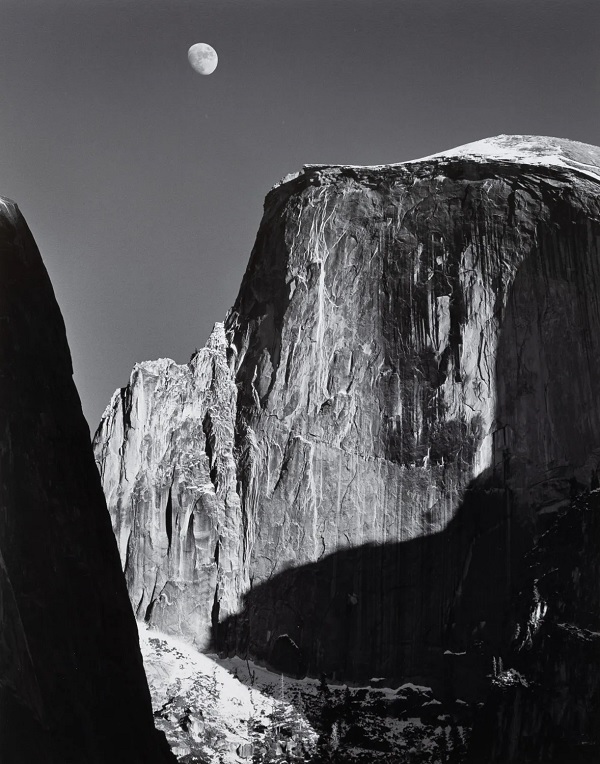
Mr. London, writing about two young men about to try and climb the famous Half Dome in Yosemite wrote this:
“What’s that for?” Gus asked, pointing to a leather-shielded flask which Hazard was securely fastening in his shirt pocket.
“Dutch courage, of course,” was the reply. “We’ll need all our nerve in this undertaking, and a little bit more, and,” he tapped the flask significantly, “here’s the little bit more.”
“Good idea,” Gus commented.
How they had ever come possessed of this erroneous idea, it would be hard to discover; but they were young yet, and there remained for them many uncut pages of life.
So many erroneous ideas.
But they were young yet, and there remained for them many uncut pages of life.
Pages that are waiting to be torn open.
Cut open.
Carefully.
Maybe not so carefully.
Only way to get at the story.
 No Haiku For You