10.31.2022 – instead, approached with

instead, approached with
clarity, subjects project
their own poetry

In an article titled, Let there be light: England’s Anglican cathedrals at dawn, about the late Magnum photographer Peter Marlow, Martin Barnes writes:

In 1971, on a trip to Boston during his first year at university as a student of psychology, Marlow visited the Museum of Fine Arts and saw an exhibition of photographs by Walker Evans (1903–1975), curated by John Szarkowski.

Alongside his famous portraits of the rural poor during the Great Depression, Evans’s characteristically precise and intelligent photographic sensibility was often applied to depicting the modern American vernacular: farmhouse interiors, factories, shop signs, roadside warehouses, housing and churches.

Evans avoided the overt stylistic gestures of authorship prevalent in fine-art photography of the time.

Instead, approached with steady and factual clarity, his subjects are allowed to project their own poetry.

Inspired by this encounter with Evans, Marlow purchased a Graflex Speed Graphic camera on his return home, and his career in photography began.

I am not sure, but still pretty sure, that, considering all the writing and interpretation of the photography of Walker Evans, Mr. Barnes summed up Evan’s life and work in one wonderful sentence.
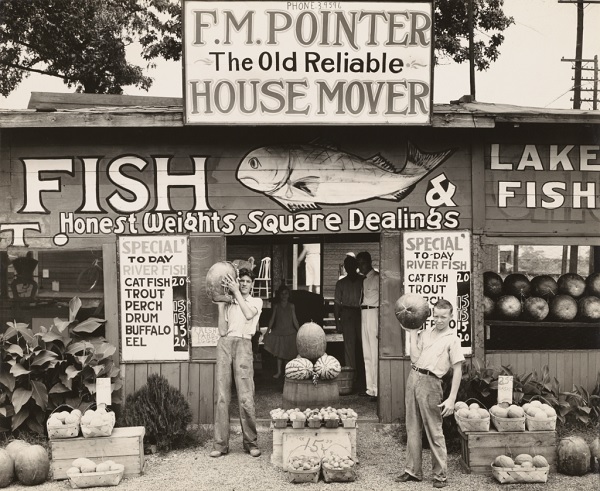
See https://www.metmuseum.org/toah/hd/evan/hd_evan.htm

10.30.2022 – He literally

He literally
willed what was in his mind to
be reality

He felt that victory required belief.

As a boy, friends recall, “he was always repeating” the salesman’s credo that “You’ve got to believe in what you’re selling”; decades later, in his retirement, he would say: “What convinces is conviction. You simply have to believe in the argument you are advancing; if you don’t, you’re as good as dead.

The other person will sense that something isn’t there.”

And Lyndon Johnson could make himself believe in an argument even if that argument did not accord with the facts, even if it was clearly in conflict with reality.

He “would quickly come to believe what he was saying even if it was clearly not true,” his aide Joseph Califano would write.

“It was not an act,” George Reedy would say.

“He had a fantastic capacity to persuade himself that the ‘truth’ which was convenient for the present was the truth and anything that conflicted with it was the prevarication of enemies.

He literally willed what was in his mind to become reality.”

He would refuse to hear any facts which conflicted with that “reality,” to listen to anyone who disagreed with him.

(Robert A. Caro. The Passage of Power (2012). Knopf. Kindle Edition.)

Is there something in the water at the White House?

Or in Washington, DC, overall?

The author Jim Harrison once wrote something along the lines of asking that when you consider the buildings and such in Washington, DC, how could elected officials NOT become pompous?

Mr. Harrison recommended turning the Capitol into a museum and setting Congress up in a pole barn in Anacostia and then watch how long it took for the Government to make things happen.

I second the notion with the added stipulation of no air conditioning.

.

10.29.2022 – I wear the chain I

I wear the chain I
forged in life – I made it link
by link yard by yard

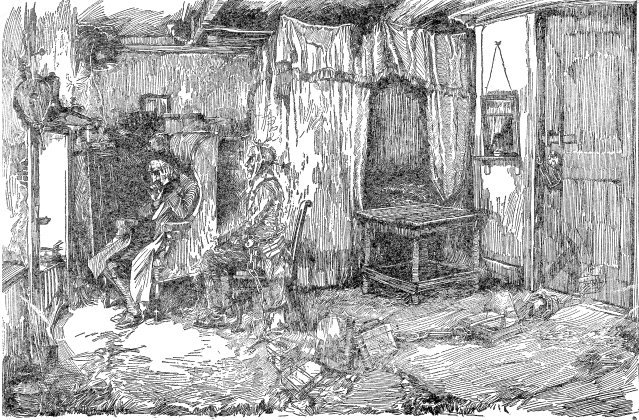
“It is required of every man,” the Ghost returned, “that the spirit within him should walk abroad among his fellow-men, and travel far and wide; and, if that spirit goes not forth in life, it is condemned to do so after death. It is doomed to wander through the world—oh, woe is me!—and witness what it cannot share, but might have shared on earth, and turned to happiness!”

Again the spectre raised a cry, and shook its chain and wrung its shadowy hands.

“You are fettered,” said Scrooge, trembling. “Tell me why?”

“I wear the chain I forged in life,” replied the Ghost. “I made it link by link, and yard by yard; I girded it on of my own free-will, and of my own free-will I wore it. Is its pattern strange to you?”

Scrooge trembled more and more.

“Or would you know,” pursued the Ghost, “the weight and length of the strong coil you bear yourself? It was full as heavy and as long as this, seven Christmas-eves ago. You have laboured on it since. It is a ponderous chain!”

To sit staring at those fixed glazed eyes in silence, for a moment, would play, Scrooge felt, the very deuce with him.

From A Christmas Carol by Charles Dickens, New York The Platt & Peck Co. Copyright, 1905, by The Baker & Taylor Company

We, all of us, today, are paying the price for decisions made long ago.

10.27.2022 – there’s a collective

there’s a collective
that whole machine all making
each other’s money

In the article, Deranged diners, inflation and staff shortages: American restaurants are struggling, by Rachel Sugar, Ms. Sugar writes:

“It really does change the way the restaurant works,” says Sophie, 30, a longtime server at a casual fine-dining restaurant in Lower Manhattan, who estimates that about a third of people working front of house are new since the pandemic.

(To speak freely, she asked to be identified by her first name only.) “It changes the culture.” It is perhaps less united that it used to be, divided by default into an old guard and a new guard, “which is kind of the opposite of what I would want in a restaurant culture, which would be solidarity and inclusivity”, she says.

Jones, a classical cellist by training, likens restaurants to orchestras. “There’s all these components, but there’s a collective as well,” he says. “That whole machine is what is able to accomplish things. No one part is more important.”

Or as Sophie, whose restaurant pools tips, puts it, less romantically: “We’re all making each other’s money.

10.26.2022 – sound of time ticking

sound of time ticking
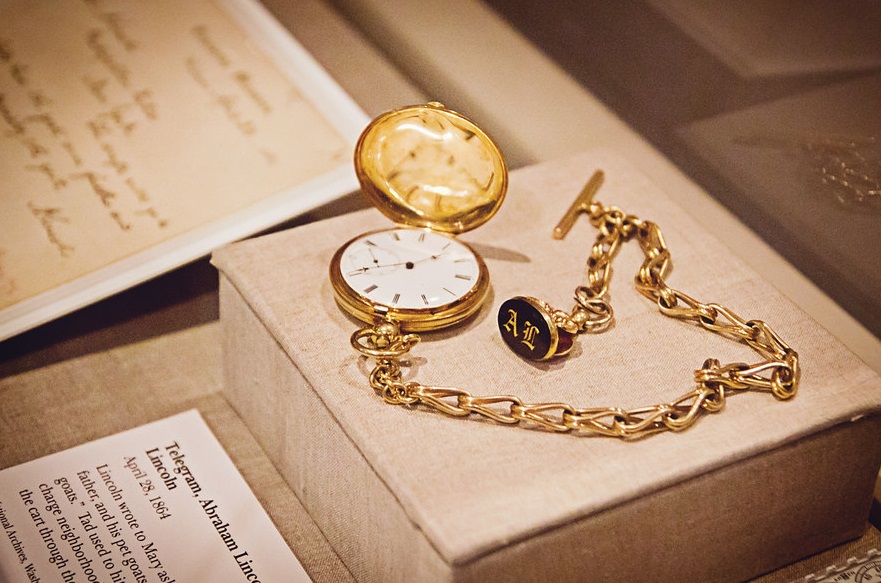
Mr. Lincoln’s pocket watch
echoes across ages

It has been 10 years since the movie Lincoln came out.

I am not sure what made me think of it but, if you remember, they made a big deal about trying to get ‘sounds’ that Lincoln heard.

They went so far as to search out Mr. Lincoln’s watches and found that two were available in museums that experts agreed were part of Mr. Lincoln’s daily routine.

One watch was in the Smithsonian and the other was in the care of the Kentucky Historical Society.

The Kentucky people allowed sound technicians to wind the watch and record the ticking.

The ticking is heard in the movie for about 3 seconds.

Like I said, I got to thinking and after thinking about it, I got to work.

I messed around and downloaded a video file of the movie.

I found the scene and removed the audio.

I tried to clean out any other sounds from the background music.

There is an occasional loud clock tick-tock but I let that stay as I learned it was recorded from a clock that had been in the White House with the Lincolns.

But the tic-tic-ticking is there.

The 3 seconds of the sound of time that echoes across ages.

I then copied the clip over and over until I had 70 seconds of ticking.

It was kind of creepy.

It was kind of cool.

Hear it for yourself by clicking here.