9.20.2022 – occupational

occupational
citizenship behaviors
leaving work on time

In an article about the quiet quitting concept, Mr. James Tapper wrote:

Rather than working late on a Friday evening, organising the annual team-building trip to Slough or volunteering to supervise the boss’s teenager on work experience, the quiet quitters are avoiding the above and beyond, the hustle culture mentality, or what psychologists call “occupational citizenship behaviours”.

Instead, they are doing just enough in the office to keep up, then leaving work on time and muting Slack. Then posting about it on social media.

Occupational citizenship behaviours.

These, I think used to be called ‘Conventions‘ as in, “The conventions demand it.

In the movie Revenge (which is based on a Jim Harrison short story but achieved more fame when Kevin Costner told the story that he was signed up to do the movie ‘Revenge’ and the script went into re-write and Costner asked how long it would take as if there was enough time, he was going to go do this baseball movie in Iowa), the killer anti-hero says out loud something along the lines of , ‘I have to do this. The conventions demand it … I don’t even know what means.’

Occupational citizenship behaviours.

I do know what that means and while I am back in the office only two days a week so far, I just don’t want to have to follow through with them anymore.

Suffice it say, leaving work on time used to go against the conventions.

9.19.2022 – ameliorations

ameliorations,
all of the human lot, these
strivings towards light

Adapted from Victoria of England by Edith Sitwell, 1936, BY FABER AND FABER LIMITED, 24 RUSSELL SQUARE, LONDON.

Dame Sitwell wrote in the final paragraphs, “Hers had been such a long life, and it had seen the beginning of a new era. On the day of the Diamond Jubilee, by means of touching an electric button, her message had been sent to her people of the Dominions. Hers had not been the same world as that which was known by her father and her uncles. She had used a telephone, travelled in a train, her voice had been recorded on a gramophone, her photograph was familiar to those over whom she ruled. The whole of the hospital system had been reformed, the use of chloroform, which had so astonished Mr Greville, was now general; the sanitary system was now in good working order, so that the country was no longer swept by appalling plagues of typhus and cholera. The penal system, too, had been changed, and the horrors of transportation and of public executions were abolished. No longer were the work-houses the People’s Bastille, nor did the terrible Debtors’ Prison exist. The state of the workers was much ameliorated, their wages were put on a better scale; the divorce laws were less cruel, and there was some attempt to ease the hard lives of children born out of wedlock.

All these ameliorations of the human lot, these strivings towards the light, had been brought about in her lifetime. But now the Queen of England was tired, and she wanted rest. The trees were silent because of the secret of the coming spring that they held within them, and as the carriage drove beneath the violet boughs the shadows seemed to grow longer.” 

Victoria was Queen of the United Kingdom of Great Britain and Ireland from 20 June 1837 until her death in 1901. Her reign of 63 years and seven months was longer than that of any previous British monarch and is known as the Victorian era.

It was the record for almost over 100 years.

9.17.2022 – I always had a

I always had a
motto – I make the number
number don’t make me

Reading the article, Julio Jones primed for a revival with Buccaneers after strong start as Tom Brady target, I enjoyed a bit of writing and a quote from Mr. Jones.

Jarrett Bell of USA TODAY wrote that:

“Julio can play,” Bucs coach Todd Bowles trumpeted on Sunday night, echoing the tone he expressed during training camp. “We keep saying it all along. He got in shape. He got healthy. He’s a warrior. He’s one of those guys that’s going to come out every week and compete.”

He’s also a guy with a new ID.

Jones is wearing No. 6 for the Bucs. It’s nothing sentimental, nothing superstitious.

“It’s just a number, man,” he said. “I didn’t want to take nobody out of their number. It was, ‘Whatever’s available, I’m going to take it.’ No significance.”

Brady’s backup, Blaine Gabbert, wears No. 11 for the Bucs. Third-string quarterback Kyle Trask is No. 2, the jersey number Jones had last year with the Tennessee Titans.

“I always had a motto, man: I make the number, the number don’t make me,” Jones declared. “That’s how I go about it

I liked that.

I always had a motto, man: I make the number, the number don’t make me.

I am reminded of being back in High School at Grand Rapids Creston in the late 1970’s.

This was in the OLD GYM Creston before they built the new gym and way before the decision was made to close the school.

The OLD GYM was so small that in winter months gym class took turns between the boys and girls and who got to use the gym and who had an alternative class.

Alternative meant a movie or maybe a Gym Teacher led lecture class on some topic.

One teacher I had like to give a quiz on sports rules to see what we didn’t know about sports.

He would call on individual students one at a time.

One time, I got this this question.

What are the limits on numbers on basketball uniforms and why?

I did not understand the question.

The teacher rephrased it as what numbers can you have on a basketball uniform and why?

That didn’t help.

The teacher, Don Edwards, who really was pretty cool but thought I was one of the oddest people he had ever had in class, stared at me and said, “Come on Hoffman.”

I felt out of place in gym class often but rarely did I feel stupid and at that moment I felt really dumb.

I stared right back and said, “Okay, I give up. What numbers CAN you have in basketball and why.”

Coach Edwards shook his head and said, “Oh come on. You can only have combinations of 1 thru 5.”

That was the dumbest thing I had ever heard.

“You know, 11, 12, 13, 14, 15 or 51, 52, 53, 54, 55 … 31,32, 33, 34, 35 … only combinations of 1 through 5.”

My eyes must have glazed over as I listened but I did manage to say, “Why?”

“So the ref can signal the scorer with the number of any player with two hands.”

Coach Edwards them demonstrated, “Foul on number 15.”

And he held up 1 finger on the left hand and 5 fingers on the right.

“Basket by number 33” and he help up three and three.

At once I was struck by the meaning and the simple magic in it.

Basketball numbers had limits.

Limits created by the five fingers on our hands.

I understood.

That made 33 THE number to have.

Think of the great 33’s (starting the list with Cazzie Russell)

I understood.

And in that moment I suddenly understood the magic involved in the silent protest and statement of using an illegal number.

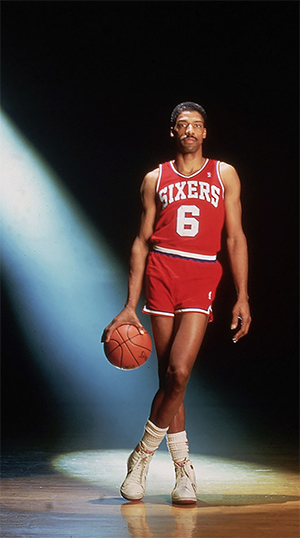
DR J and number 6.

Big Bob Lanier wearing number 16.

I understood.

I make the number, the number don’t make me.

9.16.2022 – but the truth that

but the truth that
nobody knows does nothing
to settle debate

In an article about the US and World economy, Mr. Paul Krugman used some very interesting words when discussing the ecomony.

Mr. Krugman, according to his short bio, joined The New York Times in 2000 as an Op-Ed columnist. He is distinguished professor in the Graduate Center Economics Ph.D. program and distinguished scholar at the Luxembourg Income Study Center at the City University of New York. In addition, he is professor emeritus at the Princeton School of Public and International Affairs.

He is, all at the same time, a distinguished professor and a distinguished scholar as well as a professor emeritus which should be good enough for anyone.

Mr. Krugman’s latest observations appear in the NYT Opinion piece, Who’s Afraid of the Consumer Price Index?

Like any good opinion piece on economics, Mr. Krugman uses all the standard terms like inflation expectations, Bureau of Labor Statistics, consumer prices, alternative formulation, immaculate disinflation, significant cooling off, job vacancies, higher unemployment and the ever popular, temporary phenomenon.

Entirely appropriate and expected use of language.

But unexpectedly Mr. Krugman also uses the terms If you still believed, I guess and But the truth is.

If you still believed.

I guess

But the truth is.

NOW that is a gutty enconomist.

Mr. Krugman wraps up his piece with this paragraph:

But the truth is that nobody knows for sure, and the fact that a hot economy is still producing heated inflation does nothing to settle the debate.

Mr. Krugman wraps up his piece with these paragraphs:

The good news, sort of, is that the Fed seems to know what it doesn’t know. It’s talking tough on inflation, as it must to retain credibility, but it’s also talking about looking at the “totality of the incoming data,” which means that it’s prepared to ease off if and when inflation is clearly coming down.

My guess is that this moment will come sooner than many think. But we’ll just have to wait and see.

But we’ll just have to wait and see.

But we’ll just have to wait and see?

I would like to refer Mr. Krugman to Chance the Gardener in the old movie, Being There.

Mr. Gardener said: As long as the roots are not severed, all is well. And all will be well in the garden. In the garden, growth has it seasons. First comes spring and summer, but then we have fall and winter. And then we get spring and summer again.”

In the movie, the President listens to this and says, “I admire your good, solid sense. That’s precisely what we lack on Capitol Hill.”

BTW, the movie Being There was released in 1979.

We’ll just have to wait and see.