8.31.2022 – miss above all things

miss above all things
is the kindness of half a
century ago

Adapted from a passage in the book, Past imperfect by Julian Fellowes (2009) New York : St. Martin’s Press.

Mr. Fellowes wrote, again in 2009, that:

There’s danger in it, obviously, but I no longer fight the sad realisation that the setting for my growing years seems sweeter to me than the one I now inhabit. Today’s young, in righteous, understandable defence of their own time, generally reject our reminiscences about a golden age when the customer was always right, when AA men saluted the badge on your car and policemen touched their helmet in greeting. Thank heaven for the end of deference, they say, but deference is part of an ordered, certain world and, in retrospect at least, that can feel warming and even kind. I suppose what I miss above all things is the kindness of the England of half a century ago. But then again, is it the kindness I regret, or my own youth?

I suppose what I miss above all things is the kindness of half a century ago.

But then again, is it the kindness I regret, or my own youth?

I am not sure.

I don’t think the world was so scared, so edgy, so chip-on-the-shoulder.

Maybe that was deference.

Maybe it was respect.

Maybe it was courtesy.

Maybe it was caring.

Whatever it was, it doesn’t seem to be around today.

And I miss it.

My youth?

Truly I am kind of glad I was a kid back when I was a kid.

And I feel sorry for my kids and my grandkids.

They might have more technology but I bet I had more fun.

If you aren’t familiar with Julian Fellowes I am happy to tell you that you are.

Much I what I feel I know about the British Aristocracy is from TV shows like Downton Abby and Monarch of the Glen or movies like Gosford Park and books like Snobs.

Watch all and you get to know certain themes about the Brits that become part of your collective conscious and as many of those themes are repeated in different shows and movies and books that I just named, well then, they must be accurate.

Then you find out there were all written by the same guy, Julian Alexander Kitchener-Fellowes, Baron Fellowes of West Stafford.

8.30.2022 – habit of weighing

habit of weighing
past against social moral
trends of the present

The End of History was supposed to have happened back in 1989, the year the Berlin Wall fell and Francis Fukuyama announced the conclusive triumph of liberal democracy. We know how that thesis worked out. But what happens when the other kind of History — academic, not Hegelian — starts to collapse?

That’s a question that James H. Sweet, a professor of history at the University of Wisconsin, Madison, and the president of the American Historical Association, tried to raise earlier this month in a column titled “Is History History?” for the organization’s newsmagazine. It didn’t go well.

Sweet’s core concern in the piece, which was subtitled “Identity Politics and Teleologies of the Present,” was about the “trend toward presentism” — the habit of weighing the past against the social concerns and moral categories of the present.

“This new history,” he wrote, “often ignores the values and mores of people in their own times, as well as change over time, neutralizing the expertise that separates historians from those in other disciplines.”

Adapted from This Is the Other Way That History Ends, an opinion piece in the New York Times by BRET STEPHENS.

Way back when I was studying history at the University of Michigan my Professors stressed three things.

  1. YOU ARE THE EXPERT – Take you readers by the hand as they don’t know what you know and they certainly don’t know where you are going.
  2. COMPASSION – Don’t be so quick to judge until you get ALL your facts.
  3. AT ALL COSTS, AVOID PRESENT MINDEDNESS – You cannot make assumptions, conclusions or judgements based on today’s values against yesterday.

Somehow I think I was lucky to have been in school back then and not today.

8.29.2022 – hopelessness is the

hopelessness is the
enemy of justice – is
a constant struggle

I was born on July 17, 1960.

One month later, unknown to me and unrelated to this event, 11 kids went wading in the Atlantic Ocean at the public beach on Tybee Island on the east coast near Savannah, Georgia.

All 11 kids were arrested.

They were officially charged with Public Disrobing.

The real reason is that the public beaches in Georgia in 1960 were segregated.

And these 11 kids were not ‘allowed’ to use the public beach because they were not white.

1960.

Stars of the show, from left, Edna Jackson, Evalena Hoskins, and Mary Gray, who participated as high-school students in the historic 1960’s wade-ins. Ben Goggins / For Savannah Morning News

Three of these students, Edna Jackson, Evalena Hoskins, and Mary Gray, were there that day in 1960 and were back on the same beach, the same beach I have been with my children and grand children.

I now know about that day because the State of Georgia just dedicated a historical marker to remember that day and what those 11 kids did.

At the dedication ceremony, Tybee Island Historical Association Vice-President Allen Lewis said, “These students were ordinary people who did extraordinary things.

These students were ordinary people.

Ordinary people who did extraordinary things.

They went for a swim on an August day at the beach.

Extraordinary things.

Mr. Lewis also said, “They put their beliefs to the test on Savannah Beach. That God has the divine power, and that the U.S. Constitution was on their side as they fought injustice and evil.”

Faced with racial terror, the students responded to hate with love. To violence, with forgiveness. We remember these students for their hope. Hopelessness is the enemy of justice. Their courage. Because peace requires bravery. Their persistence. Because justice is a constant struggle. And their faith.”

They went for a swim on an August day at the beach.

Arlo Guthrie once said something along the lines that in a world where everything is going great, you would have to do an awful lot of good to standout, but in a world that sucks, you don’t have to do much to accomplish something good.

They went for a swim on an August day at the beach.

Ordinary people doing extraordinary things.

Respond to hate with love.

To violence, with forgiveness.

Because peace requires bravery.

Because justice is a constant struggle.

8.28.2022 – old enough – no more

old enough – no more
annoyance boredom pursuit
of a longer life

Somewhere in the canon of Jim Harrison, the one time sage of Michigan’s Upper Peninsula wrote something along the lines of go ahead and eat the fat and take a walk afterward.

This is the same guy who advised taking a long walk before a meal to build up an a proper appetite.

How long is a long life?

Dr. Henry (Indiana) Jones said that it’s not the years, it’s the mileage.

To write this out, I have to admit that I clicked on the article titled, “Fab abs, Nicole Kidman. But this frantic effort to look half your age is frankly demeaning” by Yvonne Roberts in the Guardian.

Ms. Roberts takes the point of the view that we should act and look and embrace our age.

As this is an opinion I espouse, I enjoyed the article very much.

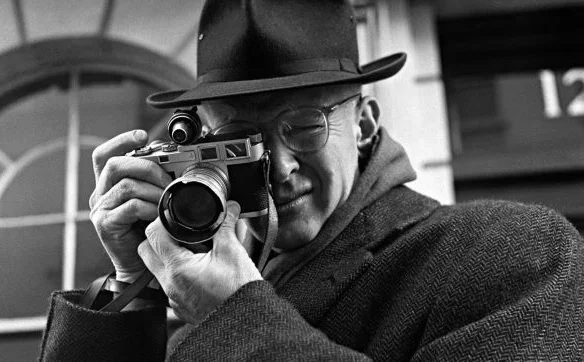
Back in high school in a class called ‘Advanced Photo and Filmmaking’ (We practised black and white darkroom technique and used Kodak Super 8mm cameras – you know, cutting edge technology) we watched a documentary (16mm movie) on the life of photographer Henri Cartier-Bresson.

“The photograph itself doesn’t interest me. I want only to capture a minute part of reality.” Cartier-Bresson

Unlike Ansel Adams who felt exposing an image was just the start to what would happen in the darkroom, Mr. Cartier-Bresson felt that once you clicked that shutter, the decisive moment, your work was done. The rest was up to technicians.

In the film, Mr. Cartier-Bresson told the story of photographing a very old Grand-Dame of society for Vogue, who asked him to, please, not make her look old in his pictures.

The film then cycled slowly through several black and white images of a beautiful, dignified, evidently charming tho still, very old woman.

The narration had gone silent and then on the last image, the lady, white haired with stunning eyes and a beautiful smile entirely wreathed with wrinkles, Mr. Cartier-Bresson said something along the lines of ‘I think … when you get old, you get the face you deserve.’

That line has stayed with me and has pretty much summed up my thought on growing old and my role in it.

I gave Ms. Robert’s article a fast read but I really liked that last paragraph.

Relentless introspection (as opposed to the insurrection required to challenge life’s inequalities) and an obsession with what has been lost, instead of contemplating the gains that come with age, stops us feeling at ease with the process of becoming ourselves, however flawed and creased. In Natural Causes: Life, Death and the Illusion of Control, the author and activist Barbara Ehrenreich refreshingly writes: “Once I realised I was old enough to die, I decided that I was also old enough not to incur any more suffering, annoyance or boredom in the pursuit of a longer life.

I will go to the beach and I will sit in the sun and read.

If I feel like I may bring along a cigar.

I may or may not go for a walk.

I may or may not go for a swim (with the sharks.)

I will contemplate the gains that come with age.

I will be at at ease with the process of becoming myself, however flawed and creased.

I am old enough to die.

I am also old enough not to incur any more suffering, annoyance or boredom in the pursuit of a longer life.

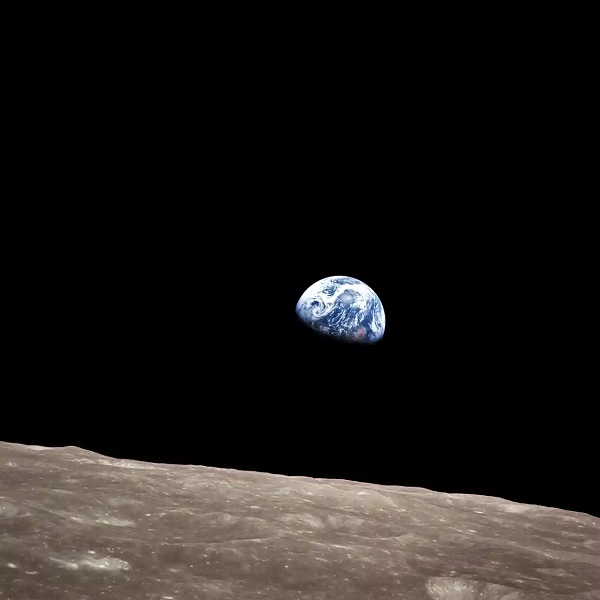
8.27.2022 – what strikes you from space

what strikes you from space
is Earth is like no other
planet we have seen

Adapted from the line, “What strikes you from space is that Earth is like no other planet we’ve seen. Even from hundreds of thousands of miles away you just know: there is a planet teeming with life. Against that vast black backdrop, it’s so beautiful and fragile.”

From the article, “‘Look closely and there’s a tear in Armstrong’s eye’: the Apollo space missions as you’ve never seen them before.

Apollo 8, 24 December 1968 Earthrise, taken by William Anders on the first crewed mission to go ‘round the moon and back’, as Nasa put it. Photograph: Nasa/JSC/ASU/Andy Saunders