5.6.2022 – your freedom to read

your freedom to read
to determine what you read
independently

Where to start?

A journey of a thousand miles begins with a single step but where to begin?

Mr. Rodgers and Mr. Hammerstein said that we should, “Start at the Very Beginning, a Very Good Place to Start.”

The Bible says, “In the beginning was the Word, and the Word was with God, and the Word was God.” (John 1:1 NIV)

That’s where it starts.

In the beginning was the word.

The word comes to us in a book.

That is where is starts.

A Book.

Books are there from the beginning.

Books are at the core.

For me, books are the answer.

For some, books are the problem.

And that shakes me to the core.

Book burning and it’s little brother, book banning, are for me, black and white, wrong vs. right.

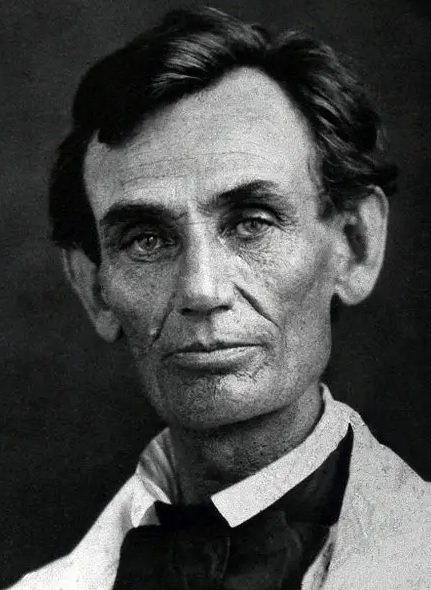
Mr. Lincoln’s “eternal struggle between right and wrong” would embody books in my book.

The Nashville Public Library is working to raise awareness of recent book banning efforts by issuing a library card that proclaims, “I READ BANNED BOOKS.”
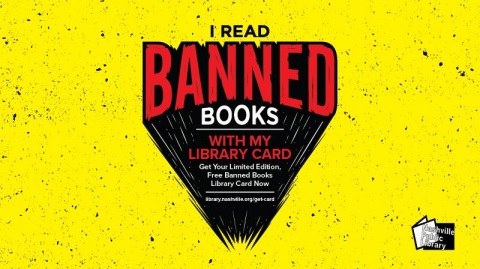
The press release from the NPL quotes Director Kent Oliver, saying, “I want Nashvillians to know: Nashville Public Library will always respect your Freedom to Read – to independently determine what you read, and don’t read, and to exercise your role in determining what your children read.

While I would have been happier had Mr. Kent not split an infinitive ( and I think to determine, independently, is more effective), I am very happy that the NPL is taking a stand and I would be happy to get the bright yellow card.

But the press release that the NPL was also one of the scariest and saddest statements that I have read recently.

Making the point for public support against book banning, the Nashville Public Library pointed out that:

Since the American Library Association began tracking challenges against books in the 1980s, the organization has recorded thousands of challenges made in cities across the U.S.

In contrast, 71% of readers oppose efforts to remove books from their local public libraries, according to an ALA survey of 1,000 voters and 472 parents of public-school children.

In contrast, 71% of readers oppose efforts to remove books from their local public libraries.

71% of readers oppose efforts to remove books from their local public libraries.

29% of readers did not express that they were opposed to efforts to remove books from their local public libraries.

I am reminded of the book, Fahrenheit 451 by Ray Bradbury.

The title is based on the thought that 451 degress (F) is the temperature at which book paper catches fire, and burns.

If you are not familiar with the book, it describes society where ‘fireman’ search out and burn books.

And why?

It was felt that books and learning in general created inequality and unhappiness, and so books were banned and burned.

In the book, in a speech about why firemen burn books, Bradbury reveals that it was the people that originally decided that the books should be removed.

Who needed the problems caused by books?

For myself, that 29% of people who identify themselves as readers in a poll, did not express that they were opposed to efforts to remove books from their local public libraries … well … beyond the words that I have available to me.
5.5.2022 – tiresome for children

tiresome for children
always, forever, have to
explain to grown ups

Les grandes personnes ne comprennent jamais rien toutes seules, et c’est fatigant, pour les enfants, de toujours et toujours leur donner des explications.

Antoine de Saint-Exupèry in the ‘Le Petit Prince’ (1943).

In English:

Grown-ups never understand anything for themselves, and it is tiresome for children to be always and forever explaining things to them.

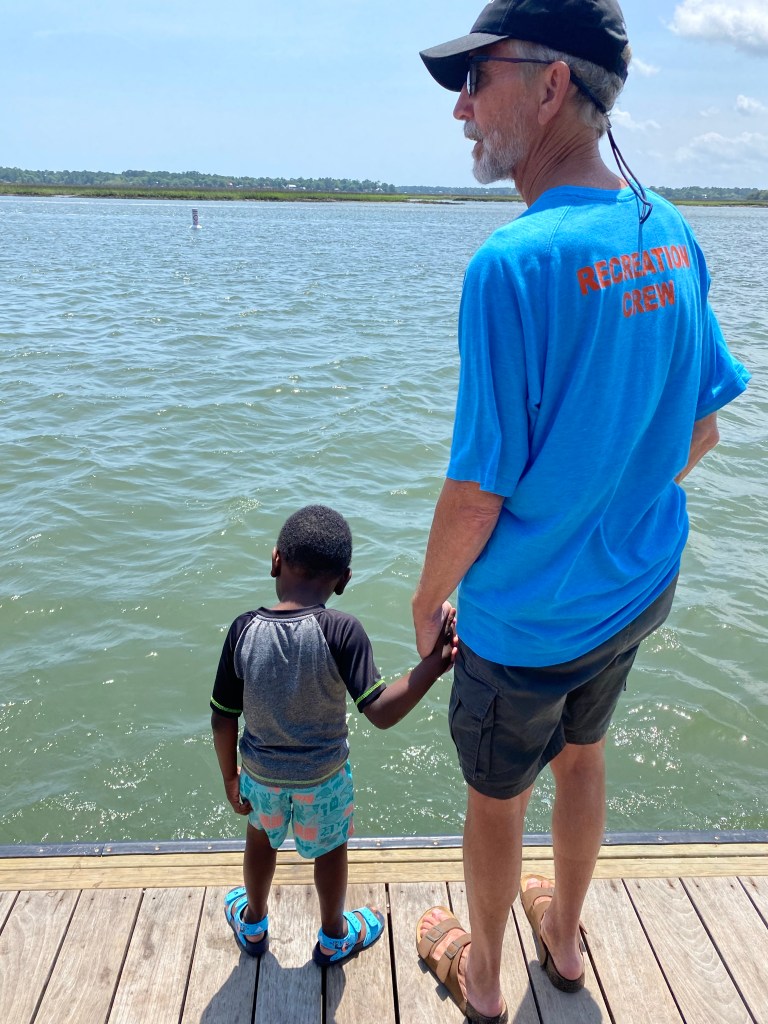
Jaxon was not happy that I could not understand that if he, Jaxon, could handle the waves of the Atlantic Ocean, he could easily handle the May River.

Geeeeeeeeeeeeeeeeeeeeeeeeee whiz.

5.4.2022 – enhanced use of force

enhanced use of force
deescalation training
so who but the Lord

Deadly force “is always the last resort” and that philosophy, as well as de-escalation training, needs to be ingrained into the department’s policies, Grand Rapids Police Chief Eric Winstrom told The Detroit News Tuesday.

So starts an article in the Detroit News with the headline, “Grand Rapids police need enhanced use of force, de-escalation training, chief says” by Leonard N. Fleming.

The words, enhanced use of force, de-escalation training, strung together in a line, the syllables clicking in a row like the sound of the wheels of a train over gaps in the tracks, grabbed and held my attention.

The article details the efforts of the Police Chief of Grand Rapids, Michigan (where I grew up) to address publicly the death of Patrick Lyoya, 26, who was shot in the back of the head by officer Christopher Schurr on April 4 following a tussle on the ground … after a traffic stop.

Mr. Fleming quotes the Chief as saying, “From what I’m hearing from the community, a real vocal part of the community is there’s no rebuilding trust. You’ve got to build it because it was never there.

Chief Winstrom said that on April 26th, 2022.

In 1947, in the magazine, Poetry, Langston Hughes published this poem.

I looked and I saw
That man they call the Law.
He was coming
Down the street at me!
I had visions in my head
Of being laid out cold and dead,
Or else murdered
By the third degree.

I said, O, Lord, if you can,
Save me from that man!
Don’t let him make a pulp out of me!
But the Lord he was not quick.
The Law raised up his stick
And beat the living hell
Out of me!

Now, I do not understand
Why God don’t protect a man
From police brutality.
Being poor and black,
I’ve no weapon to strike back
So who but the Lord
Can protect me?

We’ll see.

The title of the poem is ‘Who but the Lord?

A footnote in the “The collected poems of Langston Hughes” (Knopf, 1994) says that the last line was added when the poem was reprinted in the book, The Panther and the Lash.

That was in 1967.

That last line again?

We’ll see.

I gots no real standing as a social critic so I will take refuge (hide) under the cover of saying I am only a social commentator.

I just hold up the mirror and you can see what you want to see.

The Rev. Al once said something along the lines of, “You can use a mirror to reflect yourself or you can use a mirror to correct yourself.”

You’ve got to build trust because it was never there.

We’ll see.

5.3.2022 – sustaining the change

sustaining the change
not tax on the many poor
but the wealthy few

In a letter written from Vandalia (Illinois) dated, March 2, 1839 to a Mr. William S. Wait, Abraham Lincoln, then 30 years old, wrote about proposed legislation in the State that:

That proposition is little less than self-evident. The only question is as to sustaining the change before the people. I believe it can be sustained, because it does not increase the tax upon the “ many poor ” but upon the “wealthy few” by taxing the land that is worth $50 or $100 per acre, in proportion to its value, instead of, as heretofore, no more than that which was worth but $5 per acre. This valuable land, as is well known, belongs, not to the poor, but to the wealthy citizen.

I am not surprised and I AM pleased that Mr. Lincoln saw taxes that way.

I am not surprised either that in a speech two years earlier on the same subject of state finances, Mr. Lincoln said:

. . . this movement is exclusively the work of politicians; a set of men who have interests aside from the interests of the people, and who, to say the most of them, are, taken as a mass, at least one long step removed from honest men. I say this with the greater freedom because, being a politician myself, none can regard it as personal.

Self interested politicians looking to get rich off the poor.

The great American tradition I guess.

5.2.2022 – seen all of the sights

seen all of the sights
it is a little too dark
to see any more

Adapted from a passage from a book I read a long time ago.

It is the final paragraph to the autobiography of one of my favorite authors, Bruce Catton, of Benzonia, Michigan.

After a career of being a Civil War historian and 20 or more books and countless articles on the war picking up a Pulitzer Prize for the writing along the way, Mr. Catton wrote Waiting for the Morning Train – A Michigan Boyhood (1972 – Doubleday).

Writing about the war, Mr. Catton experienced all that this country had to offered at it lowest point and he was also able to maintain an optimistic outlook.

With the poetry of the written paragraph, Mr. Catton closed his auto-biography with this passage.

But you know how it can be, waiting at the junction for the night train. You have seen all of the sights, and it is a little too dark to see any more even if you did miss some, and the waiting room is uncomfortable and the time of waiting is dreary, long-drawn, with a wind from the cold north whipping curls of fog past the green lamps on the switch stands. Finally, far away yet not so far really, the train can be heard; the doctor (or station agent) hears it first, but finally you hear it yourself and you go to the platform to get on. And there is the headlight, shining far down the track, glinting off the steel rails that, like all parallel lines, will meet in infinity, which is after all where this train is going. And there by the steps of the sleeping car is the Pullman conductor, checking off his list. He has your reservation, and he tells you that your berth is all ready for you. And then, he adds the final assurance as you go down the aisle to the curtained bed: “I’ll call you in plenty of time in the morning.”

The final assurance as you go down the aisle to the curtained bed: “I’ll call you in plenty of time in the morning.”