Such melancholic enthusiasts see the ruin beneath the plan
Adapted from the book, The Architecture of Happiness (2009, Vintage Books) by Alain de Botton, and the passage:
Freud was unsympathetic; for him, the capacity to love anything attractive, however fragile it might be, was a hallmark of psychological health. But Rilke’s stance, though inconvenient, helpfully emphasises how it can be those most in thrall to beauty who will be especially aware of, and saddened by, its ephemeral character. Such melancholic enthusiasts will see the moth hole beneath the curtain swatch and the ruin beneath the plan. They may at the last moment cancel an appointment with an estate agent, having realised that the house under offer, as well as the city and even civilisation itself, will soon enough be reduced to fragments of shattered brick over which cockroaches will triumphantly crawl. They may prefer to rent a room or live in a barrel out of a reluctance to contemplate the slow disintegration of the objects of their love.
According the The New York Review of Books, this is “A perceptive, thoughtful, original, and richly illustrated exercise in the dramatic personification of buildings of all sorts.”
What I find irrestible in reading Mr. de Botton is his use of language.
I get the feeling that if you made a spread sheet of all the words, adverbs and adjectives used by Mr. de Botton, you just might find that he used each word just once.
envision old age memories roll past endlessly so far not happened
Adapted from the book, Noah’s Compass (2009, Alfred A. Knopf) by Anne Tyler, and the passage:
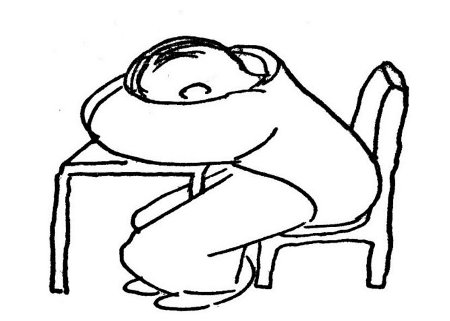
He sat down in his rocker and stayed there, empty-headed, hands loose on his thighs. Long ago when he was young he used to envision old age this way: man in a rocker, idle. He had read somewhere that old people could sit in their chairs and watch their memories roll past like movies, endlessly entertaining; but so far that hadn’t happened to him. He was beginning to think it never would.
Part of the series of Haiku inspired by from Noah’s Compass (2009, Alfred A. Knopf) by Anne Tyler. Anne Tyler is an American novelist, short story writer, and literary critic. She has published twenty-three novels, including Dinner at the Homesick Restaurant (1982), The Accidental Tourist (1985), and Breathing Lessons (1988). I came across Noah’s Compass as an audio book when living in Atlanta I commuted 1 hour each way. As the book had to deal with memories and memory loss and it involved someone my age, I was taken with the book. I have enjoyed reading most of Ms. Tyler’s work. Accidental Tourist maybe better known for the movie which I also recommend.
things that can’t ever be replaced or re-created real personal loss
Based on a passage from My Life Through Food, (Gallery Books, New York, 2021).
The passage reads:
Losing a beloved family heirloom is a very real personal loss; they’re things that cannot ever be replaced or re-created.
But perhaps the most precious heirlooms are family recipes.
Like a physical heirloom, they remind us from whom and where we came and give others, in a bite, the story of another people from another place and another time.
Yet unlike a lost physical heirloom, recipes are a part of our history that can be re-created over and over again.
The only way they can be lost is if we choose to lose them.
doesn’t know if cause is hopeless, most fantastic victories ever
Listening to the 3rd Test at Leeds of India’s tour of England today, I was able to hear the BBC Test Match Special broadcast team when they took time during the lunch break to revisit the Ashes Series of 1981.
Cricket, if you read this blog, is something of a hobby with me.
At some point years ago I said I am going to figure that game out.
And I did or at least to the point of being able to follow the game.
Cricket, like many other sports, has a couple of ways that one team can, within the rules, insult the other team.
Somewhat along the lines of when an American Football team that is ahead, will go for two points after scoring a touchdown instead of one, just to rub it in.
The true Dark Lord, Woody Hayes of that school in Ohio once went for 2 against Michigan with a 50-14 lead.
When asked why, he said, “Because I couldn’t go for three.”
In cricket there are two innings like baseball.
But unlike baseball, there aren’t 3 outs but 10.
In other words, you have to get everyone out.
That is why in test cricket, the ultimate in cricket, a test match is played over 5 days in a series of 6 hour games with Lunch and Tea breaks after two hours play.
30 hours of cricket.
Again you have to get everyone out for the match to be over.
And it has to be over at the end of day five or the match goes into the books as No Result or a draw.
There is a difference between a NR and a draw but I can’t remember.
With that mind, you can understand that time can often come into play even when 30 hours for the match is scheduled.
With this in mind, the team in the lead has two calls they can make.
One, they can declare.
They are so far ahead in their half of the inning, for example they have scored 423 and only given up 4 wickets or outs, they can declare.
That is to say they feel they have enough runs and will stop batting.
That is say they declare that the other team is so bad they might as well bat, we got enough to beat you, nannie nannie boo boo.
This is often used with an eye on the clock and an eye on the weather to make sure the other team gets their innings in and the match is played out to the end.
The other thing a team can do to the other is ‘follow on.’
This happens when Team One bats first in the 1st inning and gets a big lead.
Team Two in their half of the 1st inning bats for a miserable total.
Team One can then call for Team Two to ‘follow on.’
That means, instead of Team One batting in the top of 2nd inning, Team Two has to get right back up to the wicket and start batting again.
Team One is saying you are so bad we don’t even have to bat again to beat you.
During the lunch break today, the BBC broadcast team talked about how until that series in 1981, only ONE team in the history of test match cricket, won after following on.
Then came 1981.
The Ashes is the Test Match played between Australia and England every 2 years, alternating host country for each match.
It is separate from all other leagues and schedules.
In a way it would be as if Michigan and Ohio State were not in same conference or even association or anything and regardless of any other schedule, played each other every other year in a grudge match.
In 1981, with the series being playing in England, Australia destroyed and demoralized England in the first match.
The 2nd match was a draw (time ran out).
Though it was a draw, Australia looked so big and mean that the England team and fans felt hopeless.
Except for the England Captain, Mike Brearley.
In cricket, the Captain will function much like a baseball manager and put together lineups and put in / pull out bowlers.
It was said of Mike Brearley that he didn’t know if a cause was hopeless.
The 3rd match, Australia batted for a big lead and then forced England to follow on in the 2nd Inning.
England batted again and got a small lead.
Geoff Boycott got a ‘stubborn’ 46 at bat for England but who has enough time to talk about Geoff Boycott.
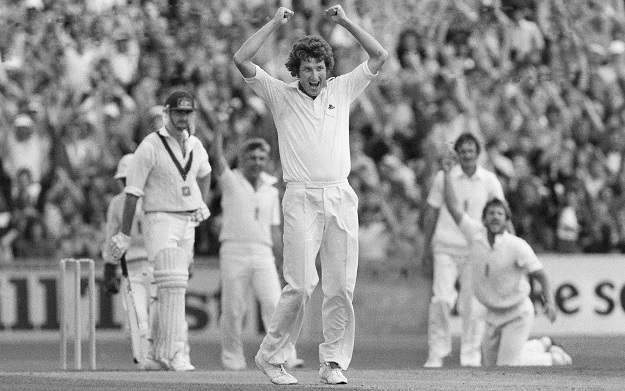
Bob Willis
Then Mike Brearley put in a bowler named Bob Willis.
Mr. Willis then got 8 wickets or outs while giving up only 43 runs.
THIS DOES NOT HAPPEN IN CRICKET.
If this was American Football it would like throwing 3 Hail Mary passes after 3 successful onside kicks.
England became only the second team in Test Match history to win a match after being made to follow-on.
The BBC Commentators reminisced about how low tickets sales had been due to the power of the Aussie line up yet everywhere they went today, people told them they had been there.
England went on to win the test match 3-1 (with 2 draws) and the Ashes stayed in England for two years.
The key was that 2nd half of match three.
Mr. Willis’ 8 wickets took the wind out of the Australian sails.
It was, from the recorded match play-by-play that was played today, one of the most “fantastic victories ever known.”
Now here is the point.
Bob Willis was interviewed today as part of the broadcast.
He was asked, was he, now 40 years later, still recognized, still appreciated, still a hero?
And Mr. Willis responded:
“The other weekend my daughter was over with her family and we had a barbecue out back.
I had the wine glass in one hand and the cricket bat in the other and I played with my grand kids.
The next day my daughter called me to say that she had just got back from taking her kids to school.
One her sons got out of the car and turned back to his Mom and asked, ‘Was Grand Dad really really good when he played?’
His Daughter looked at her boy and said, ‘One of the best.’
The boy looked down, then looked at his Mom and said, ‘Well, he’s crap now.'”

 No Haiku For You