suddenly conscious power in numbers safely permit viciousness
Part of the Mencken Project
Taken from the line:
Not because the stoneheads, normally virtuous, are suddenly criminally insane. Nay, but because they are suddenly conscious of the power lying in their numbers—because they suddenly realize that their natural viciousness and insanity may be safely permitted to function.
In other words, the particular swinishness of a crowd is permanently resident in the majority of its members—in all those members, that is, who are naturally ignorant and vicious—perhaps 95 per cent. All studies of mob psychology are defective in that they underestimate this viciousness.
From Damn! A Book of Calumny. XX The Crowd, by HL Mencken, 1918
Night drew attention to facets, effects that were submerged in the day
Adapted from the book, The Art of Travel (2002, Vintage Books) by Alain de Botton, and the passage:
I began word-painting.
Descriptive passages came most readily: the offices were tall; the top of one tower was like a pyramid; it had ruby-red lights on its side; the sky was not black but an orangey-yellow.
But because such a factual description seemed of little help to me in pinning down why I found the scene so impressive, I attempted to analyse its beauty in more psychological terms.
The power of the scene appeared to be located in the effect of the night and of the fog on the towers.
Night drew attention to facets of the offices that were submerged in the day.
Lit by the sun, the offices could seem normal, repelling questions as effectively as their windows repelled glances.
But night upset this claim to normality, it allowed one to see inside and wonder at how strange, frightening and admirable they were.
The offices embodied order and cooperation among thousands, and at the same time regimentation and tedium.
A bureaucratic vision of seriousness was undermined, or at least questioned, by the night.
One wondered in the darkness what the flipcharts and office terminals were for: not that they were redundant, just that they might be stranger and more dubitable than daylight had allowed us to think.
Adapted from the book, The Art of Travel (2002, Vintage Books) by Alain de Botton.
According to the website, GOOD READS, Any Baedeker will tell us where we ought to travel, but only Alain de Botton will tell us how and why.
As I said in the section on Architecture , what I find irresistible in reading Mr. de Botton is his use of language.
I get the feeling that if you made a spread sheet of all the words, adverbs and adjectives used by Mr. de Botton, you just might find that he used each word just once.
matter of making conscious effort to notice understand elements
Adapted from the book, The Art of Travel (2002, Vintage Books) by Alain de Botton, and the passage:
True possession of a scene is a matter of making a conscious effort to notice elements and understand their construction.
We can see beauty well enough just by opening our eyes, but how long this beauty will survive in memory depends on how intentionally we have apprehended it.
The camera blurs the distinction between looking and noticing, between seeing and possessing; it may give us the option of true knowledge, but it may also unwittingly make the effort of acquiring that knowledge seem superfluous.
Adapted from the book, The Art of Travel (2002, Vintage Books) by Alain de Botton.
According to the website, GOOD READS, Any Baedeker will tell us where we ought to travel, but only Alain de Botton will tell us how and why.
As I said in the section on Architecture , what I find irresistible in reading Mr. de Botton is his use of language.
I get the feeling that if you made a spread sheet of all the words, adverbs and adjectives used by Mr. de Botton, you just might find that he used each word just once.
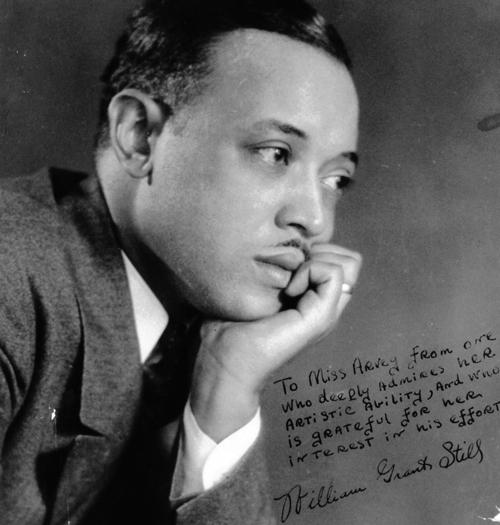
With a graceful lilt Autochthonous, Number 4 by William Grant Still
A reoccurring theme in this blog is the access to music that anyone and everyone, has so long as they have access to the world wide web.
I am sure there was NEVER been a time in all of human history that such much music is available to so many people for so little effort.
You can search You Tube (Bach and Emperor) to watch a scene for a movie where Frederick the Great summons Johann Sebastian Bach to the palace to play something.
Well, I can bring up anyone from anywhere for any piece of music with a few taps of my fingers.
Boy howdy!
Almost beyond belief.
As my faithful readers know, I listen to Classic FM when I am working.
Being from London, it is four or five hours ahead of me so I know that somewhere in the world, someone has already made through the next four or five hours.
It also has the best traffic reports.
When the A1 to Cambridge was backed up all the way to the anti clockwise at Potter’s Bar due to a lorry overturned in the lay by, Atlanta traffic didn’t seem so bad.
It is an interesting radio station in that it uses the same software to determine playlists used by pop radio stations.
This is bad as that you did get to hear a lot of music a lot.
I mean it repeats favorites often.
Maybe I could do with a little less Elgar in my day.
But this is good as you avoid a lot of Mahler.
And it is good because when you hear something unfamiliar there is a chance you will hear it again.
So it happened today.
You see, some time back I caught a piece of music new to me.
While I could browse the online playlists for the stations, I think this was one of those moments when the presenter snuck a piece of music on air to see the reaction.
I could tell from the sound that the piece was American.
And I could tell from the sound that the piece was most like from the Big Band – Jazz era.
It was Aaron Copland-esque without being Aaron Copland.
It was Virgil Thomson-esque without being Virgil Thomson.
But I could not found what it was.
And it was played again today.
This time it WAS listed in the online playlist.
I wasn’t prepared for what I learned.
I had never, NEVER heard of the piece of music or the composer ever.
The piece was the 3rd Movement of the 4th Symphony of one William Grant Still.
The symphony is titled, Autochthonous which is defined as an adjective (of an inhabitant of a place) indigenous rather than descended from migrants or colonists.
The 3rd Movement is titled, ” With a graceful lilt.”
William Grant Still, according to Wikipedia, is known primarily for his first symphony, Afro-American Symphony (1930), which was, until 1950, the most widely performed symphony composed by an American. Also of note, Still was the first African-American to conduct a major American symphony orchestra, the first to have a symphony (which was, in fact, the first one he composed) performed by a leading orchestra, the first to have an opera performed by a major opera company, and the first to have an opera performed on national television.
Wikipedia continues, “Still arranged music for films. These included Pennies from Heaven (the 1936 film starring Bing Crosby and Madge Evans) and Lost Horizon (the 1937 film starring Ronald Colman, Jane Wyatt and Sam Jaffe). For Lost Horizon, he arranged the music of Dimitri Tiomkin. Still was also hired to arrange the music for the 1943 film Stormy Weather, but left the assignment because “Twentieth-Century Fox ‘degraded colored people.’
I typed William Grant Still into the google and am now introducing myself to the wonderful works that Mr. Still created for us.
I didn’t know his name until today.
But I will know his name and his work for the rest of my life.
I have to ask, how many more William Grant Still’s might be out there?
Sometimes the changes brought upon us by the information superhighway are for the better.
I’ll take the access to the music of William Grant Still any day.
floods of yellow gold gorgeous, indolent, sinking burning, expanding
Adapted from When Lilacs Last in the Dooryard Bloom’d by Walt Whitman
Pictures of growing spring and farms and homes, With the Fourth-month eve at sundown, and the gray smoke lucid and bright, With floods of the yellow gold of the gorgeous, indolent, sinking sun, burning, expanding the air, With the fresh sweet herbage under foot, and the pale green leaves of the trees prolific, In the distance the flowing glaze, the breast of the river, with a wind-dapple here and there, With ranging hills on the banks, with many a line against the sky, and shadows, And the city at hand with dwellings so dense, and stacks of chimneys, And all the scenes of life and the workshops, and the workmen homeward returning.
Sunset over Pinckney Island and Skull Creek at high tide on the north end of Hilton Head Island.


 No Haiku For You