4.10.2021 – Would you, could you fix

Would you, could you fix
Van Gogh? Destroy his art? save …
Vincent or the cat?

You are in a burning house and you can save one thing as you run out.

There is a Van Gogh painting on the wall.

There is a cat on the sofa.

Do you save the Van Gogh … or the cat?

So the conundrum goes.

Don’t come looking for an answer today though.

But as a twist on this question consider this.

I was reading this morning a wonderfully written essay on the what-might-have-been of John F. Kennedy, Jr.

The writer states, “I have a weakness for alternative histories that play on the idea of fixing a past wrong.”

As an example she uses a clip from the TV Show, Dr. Who, where the Doctor shows “Vincent van Gogh how beloved he would one day be.”

In this scene, the actor Bill Nighy, playing an art museum curator, relates the importance of the Van Gogh to the world in 100 words.

What Mr. Nighy does not know is that is is explaining this to Van Gogh.

I am sorry if you want me to explain how this all works because I can’t.

If this is important to you all I can recommend is that you don’t watch Dr. Who.

Mr. Nighy’s character says, “He [Van Gogh] transformed the pain of his tormented life into ecstatic beauty. Pain is easy to portray, but to use your passion and pain to portray the ecstasy and joy and magnificence of our world, no one had ever done it before. Perhaps no one ever will again.

From my point of view and history and such, I can’t argue with this statement.

I wouldn’t want to.

But here is the point.

If you could show Van Gogh how much his painting meant to world.

If you could ease his pain. (Wasn’t that also a line from the feller in the corn field in Iowa?)

If you could remove his torment.

Would you do it?

Understanding that it was his passion and pain to portray the ecstasy and joy and magnificence of our world, if you remove the passion and pain, do you remove the motivation for the art?

Do you fix Vincent but destroy his art.

If you destroy his art, do you destroy Vincent?

Growing up, I was lucky that my father had a friendship with a painter in the Grand Rapids Michigan area by the name of Armond Merizon.
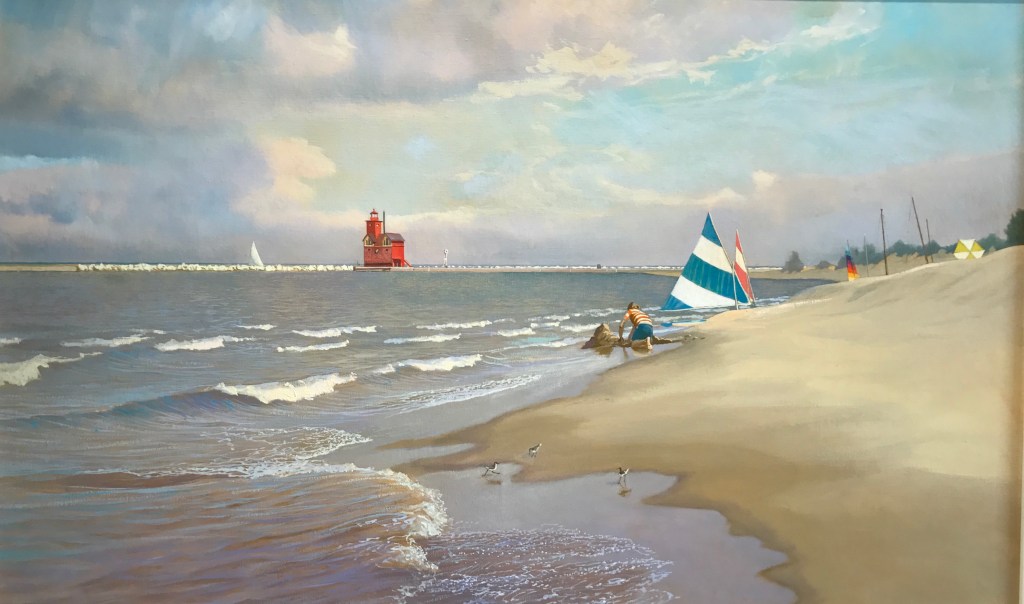
Most people I know knew his brother who taught for years at Grand Rapids Central High School.

Mr. Merizon would come by our house and bring along a few of his latest works to show my Dad.

I would sit nearby and listen to the conversation.

On one visit, Mr Merizon related a recent trip to Chicago to see a Van Gogh show.

Mr. Merizon told how overcome he was by the passion, the pain and the torment in the paintings.

Mr. Merizon was hit so hard by the pain that he said as he got closer to the end of the show, knowing how the story would end, he could not go on, and he had to leave the museum.

The passion, the pain and the torment was too much.

There are indeed artists who had the passion but not the pain.

Consider John Singer Sargent.

His life was nothing like Mr. Van Gogh.

According to some accounts, Mr. Sargent averaged a portrait commission a month at a modern day $150,000 per commission.

The pain Mr. Sargent went through as he put it, was having to talk with these people to get them to smile.

Andy Warhol famously commented on John Singer Sargent that, “made everybody look glamorous. Taller. Thinner. But they all have mood, every one of them has a different mood.”

But they all have mood.

Everyone one of them.

Has a different mood.

Like the other architect said about Frank Lloyd Wright, “I don’t know who it does that. If I did, I would do it.”
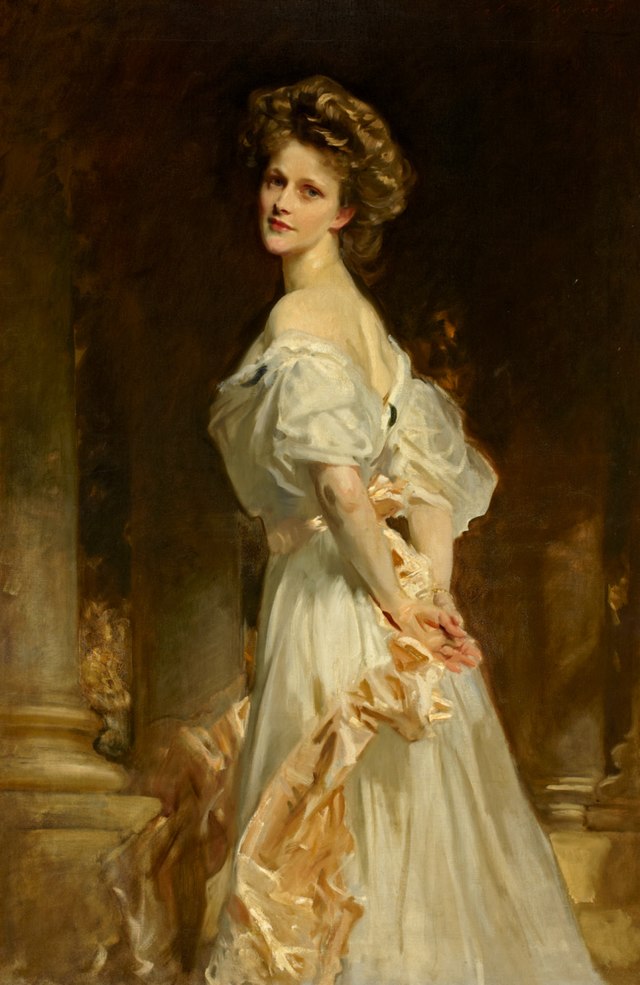
Nancy Langhorne, Viscountess Astor by John Singer Sargent (1909)

Motivation is the thing.

As Abraham Lincoln put it, that grub that gets to gnaw at you.

I have a weakness for alternative histories that play on the idea of fixing a past wrong.

I am exploring motivation and lost motivation.

So much motivation seems to be grounded in torment, passion and pain.

If I had a choice to be ‘creative’ but the price was pain, what would I choose.

Do you save the Van Gogh or the cat?

I will continue my exploration.

But it will continue at the beach.

4.9.2021 – distinction between

distinction between
looking noticing, between
seeing possessing

Adapted from the book, The Art of Travel (2002, Vintage Books) by Alain de Botton, and the passage:

True possession of a scene is a matter of making a conscious effort to notice elements and understand their construction.

We can see beauty well enough just by opening our eyes, but how long this beauty will survive in memory depends on how intentionally we have apprehended it.

The camera blurs the distinction between looking and noticing, between seeing and possessing; it may give us the option of true knowledge, but it may also unwittingly make the effort of acquiring that knowledge seem superfluous.

Adapted from the book, The Art of Travel (2002, Vintage Books) by Alain de Botton.

According to the website, GOOD READS, Any Baedeker will tell us where we ought to travel, but only Alain de Botton will tell us how and why.

As I said in the section on Architecture , what I find irresistible in reading Mr. de Botton is his use of language.

I get the feeling that if you made a spread sheet of all the words, adverbs and adjectives used by Mr. de Botton, you just might find that he used each word just once.

Neat trick in writing a book.

If I knew how to do that, hey, I would.

** More from the category TRAVEL — click here

4.8.2021 – Lit by the sun their

Lit by the sun their
windows repelled questions as
repelling glances

Adapted from the book, The Art of Travel (2002, Vintage Books) by Alain de Botton, and the passage:

I began word-painting.

Descriptive passages came most readily: the offices were tall; the top of one tower was like a pyramid; it had ruby-red lights on its side; the sky was not black but an orangey-yellow.

But because such a factual description seemed of little help to me in pinning down why I found the scene so impressive, I attempted to analyse its beauty in more psychological terms.

The power of the scene appeared to be located in the effect of the night and of the fog on the towers.

Night drew attention to facets of the offices that were submerged in the day.

Lit by the sun, the offices could seem normal, repelling questions as effectively as their windows repelled glances.

But night upset this claim to normality, it allowed one to see inside and wonder at how strange, frightening and admirable they were.

The offices embodied order and cooperation among thousands, and at the same time regimentation and tedium.

A bureaucratic vision of seriousness was undermined, or at least questioned, by the night.

One wondered in the darkness what the flipcharts and office terminals were for: not that they were redundant, just that they might be stranger and more dubitable than daylight had allowed us to think.

Adapted from the book, The Art of Travel (2002, Vintage Books) by Alain de Botton.

According to the website, GOOD READS, Any Baedeker will tell us where we ought to travel, but only Alain de Botton will tell us how and why.

As I said in the section on Architecture , what I find irresistible in reading Mr. de Botton is his use of language.

I get the feeling that if you made a spread sheet of all the words, adverbs and adjectives used by Mr. de Botton, you just might find that he used each word just once.

Neat trick in writing a book.

If I knew how to do that, hey, I would.

** More from the category TRAVEL — click here

4.7.2021 – aristocracy

aristocracy
or democracy, openness
over arrogance?

Adapted from the book, The Architecture of Happiness (2009, Vintage Books) by Alain de Botton, and the passage:

However, there might be a way to surmount this state of sterile relativism with the help of John Ruskin’s provocative remark about the eloquence of architecture.

The remark focuses our minds on the idea that buildings are not simply visual objects without any connection to concepts which we can analyse and then evaluate.

Buildings speak – and on topics which can readily be discerned.

They speak of democracy or aristocracy, openness or arrogance, welcome or threat, a sympathy for the future or a hankering for the past.

What Ruskin is quoted as saying is:

‘A day never passes without our hearing our architects called upon to be original and to invent a new style,’ observed John Ruskin in 1849, bewildered by the sudden loss of visual harmony.

What could be more harmful, he asked, than to believe that a ‘new architecture is to be invented fresh every time we build a workhouse or parish church?

According the The New York Review of Books, this is “A perceptive, thoughtful, original, and richly illustrated exercise in the dramatic personification of buildings of all sorts.”

What I find irrestible in reading Mr. de Botton is his use of language.

I get the feeling that if you made a spread sheet of all the words, adverbs and adjectives used by Mr. de Botton, you just might find that he used each word just once.

Neat trick in writing a book.

If I knew how to do that, I would.

4.6.2021 – colossal display

colossal display
of such professorial
bombast, flatulence

The Mencken Project

From the American Language, HL Mencken, 1919

Commenting on the “Reorganization of English in Secondary Schools,” compiled by James Fleming Hosic and issued by the National Bureau of Education, “Reorganization of English in Secondary Schools,” compiled by James Fleming Hosic and issued by the National Bureau of Education, Mr. Mencken writes, “The aim of this pamphlet is to rid the teaching of English, including grammar, of its accumulated formalism and ineffectiveness–to make it genuine instruction instead of a pedantic and meaningless routine. And how is this revolutionary aim set forth? By a meticulous and merciless splitting of hairs, a gigantic manufacture of classifications and sub-classifications, a colossal display of professorial bombast and flatulence. “