melodramatic pursuit of monsters, mostly imaginary
For the Mencken Project.
Taken from Notes on Democracy, 1927
From the line: The whole history of the country has been a history of melodramatic pursuits of horrendous monsters, most of them imaginary. It was long ago observed that the plain people, under democracy, never vote for anything, but always against something.
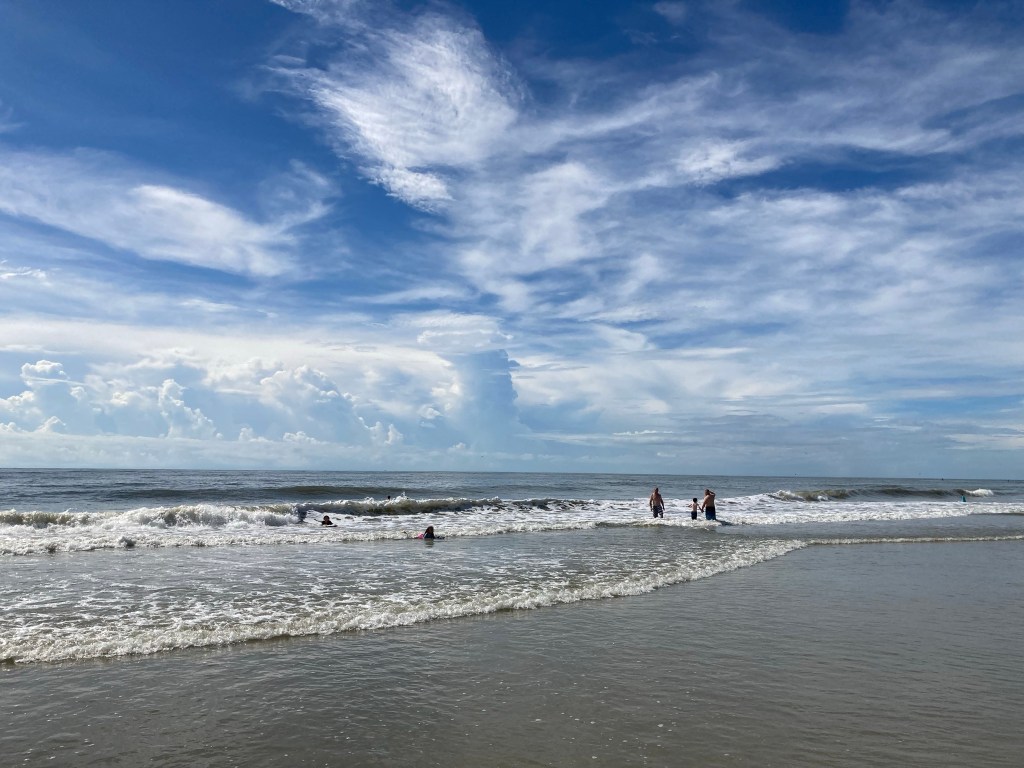
sunshine off and on dial it up and dial it down windy cloud day
Part of a series based on an afternoon spent at the beach on Hilton Head Island.
I wanted to see if I would be ‘inspired’ by what I saw, by what I heard, by what I smelled, by what I tasted, what I felt emotionally and what I felt tactilely.
Some turned out okay.
Some were too forced.
Some were just bad.
Some did involve some or all of those feelings.
As far as it goes, I guess I was inspired by by what I saw, by what I heard, by what I smelled, by what I tasted, what I felt emotionally and what I felt tactilely.
but came the tide, and made my pains his prey vain man dost in vain assay
Adapted from the sonnet, Amoretti LXXV, by Edmund Spenser.
This is one of several haiku I got from this sonnet.
Edmund Spenser (1553-1559), according to wikipedia, was an English poet best known for The Faerie Queene, an epic poem and fantastical allegory celebrating the Tudor dynasty and Elizabeth I. He is recognized as one of the premier craftsmen of nascent Modern English verse and is often considered one of the greatest poets in the English language.
In 1595, Spenser published Amoretti and Epithalamion. This volume contains eighty-eight sonnets commemorating his courtship of Elizabeth Boyle. In Amoretti, Spenser uses subtle humour and parody while praising his beloved, reworking Petrarchism in his treatment of longing for a woman.
Spenser used a distinctive verse form, called the Spenserian stanza. The stanza’s main meter is iambic pentameter with a final line in iambic hexameter (having six feet or stresses, known as an Alexandrine), and the rhyme scheme is ababbcbcc. He also used his own rhyme scheme for the sonnet. In a Spenserian sonnet, the last line of every quatrain is linked with the first line of the next one, yielding the rhyme scheme ababbcbccdcdee.
But you knew that.
Here is the full sonnet.
One day I wrote her name upon the strand, But came the waves and washed it away: Again I wrote it with a second hand, But came the tide, and made my pains his prey. ‘Vain man,’ said she, ‘that dost in vain assay, A mortal thing so to immortalize; For I myself shall like to this decay, And eke my name be wiped out likewise.’ ‘Not so,’ (quod I); ‘let baser things devise To die in dust, but you shall live by fame: My verse your vertues rare shall eternize, And in the heavens write your glorious name: Where whenas death shall all the world subdue, Our love shall live, and later life renew.
offered perspective on how masses can assume and convey meaning
Adapted from the book, The Architecture of Happiness (2009, Vintage Books) by Alain de Botton, and the passage:
We will, of course, run a risk if we spend extended periods analyzing the meanings that emanate from practical objects. To be preoccupied with deciphering the message encoded in a light switch or a tap is to leave ourselves more than usually vulnerable to the commonsensical scorn of those who seek little from such fittings beyond a means of illuminating their bedroom or rinsing their teeth.
To inoculate ourselves against this derision, and to gain confidence in cultivating a contrary, more meditative attitude towards objects, we might profitably pay a visit to a museum of modern art. In whitewashed galleries housing collections of twentieth-century abstract sculpture, we are offered a rare perspective on how exactly three-dimensional masses can assume and convey meaning – a perspective that may in turn enable us to regard our fittings and houses in a new way.
According the The New York Review of Books, this is “A perceptive, thoughtful, original, and richly illustrated exercise in the dramatic personification of buildings of all sorts.”
What I find irrestible in reading Mr. de Botton is his use of language.
I get the feeling that if you made a spread sheet of all the words, adverbs and adjectives used by Mr. de Botton, you just might find that he used each word just once.
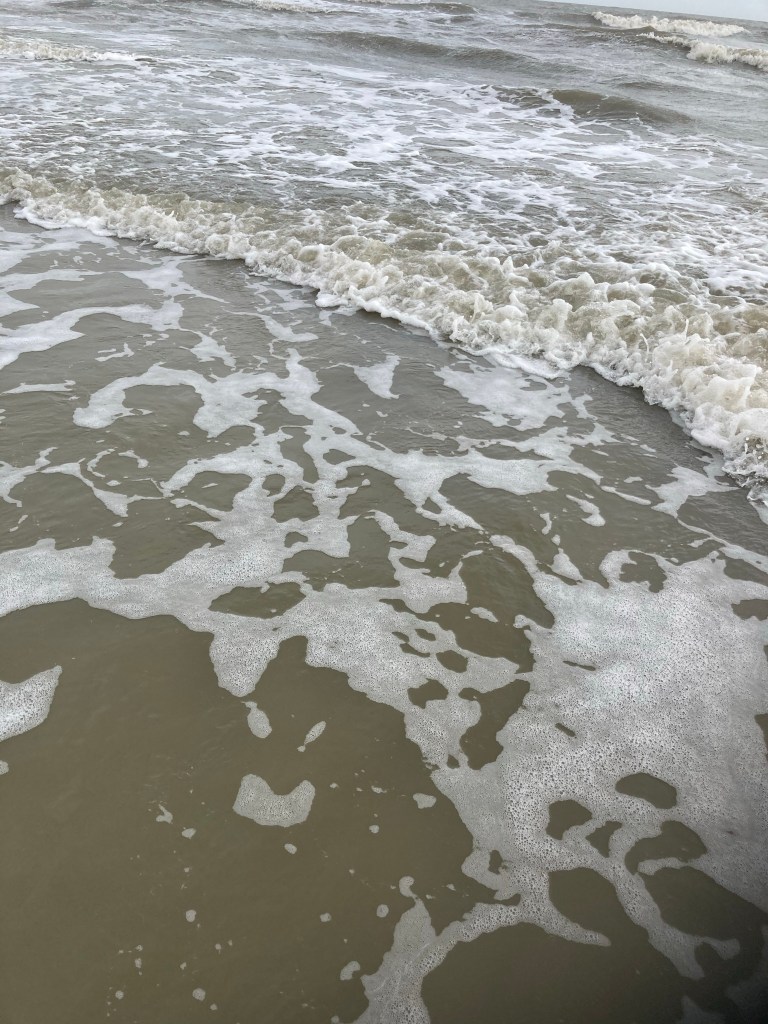
white water bubbles surf crashes foams flows flat clear waves tide rolls up beach
Part of a series based on an afternoon spent at the beach on Hilton Head Island.
I wanted to see if I would be ‘inspired’ by what I saw, by what I heard, by what I smelled, by what I tasted, what I felt emotionally and what I felt tactilely.
Some turned out okay.
Some were too forced.
Some were just bad.
Some did involve some or all of those feelings.
As far as it goes, I guess I was inspired by by what I saw, by what I heard, by what I smelled, by what I tasted, what I felt emotionally and what I felt tactilely.


 No Haiku For You