2.29.2020 – Reading Anxiety

Reading Anxiety
excessive interest
Bound box of Moonlight

I suffer from reading anxiety.

Abibliophobia.

Maybe it is a made up but it fits.

The fear of being stuck, somewhere, some place, with nothing to read.

When I was a kid I had this green metal case about the size of a small typewriter case.

When we went on family trips I would stare at my piles of books and carefully assemble a travel library.

This was harder than it sounds as I also had to predict what book I MIGHT want to read.

I did this whether it was a day trip to Sleeping Bear Dunes or a 10 day odyssey to Washington DC.

I never went anywhere without something to read.

The invention of the Kindle, the iPhone and the iPad would seem to be the answer.

Instead my anxity has new manifestations.

Now almost any and every book is just a few clicks away.

What I am missing?

What MIGHT I BE missing.

Maybe someone has a phrase or description or combination of words that, well, will not change my life, but my life might be somewhat less if I never read it.

Hemingway’s description of setting up camp in Michigan’s Upper Pinnesula in the short story, “Big Two Hearted River.”

I love those paragraphs.

Maybe it is the memory of where or how I read and re-read those paragraphs.

I remember reading some of The Nick Adams stories to my son’s Frank and Luke as bedtime tales.

After the scene with the camp, Frank says to me, “Dad, Nick needs a camper.”

I have what might be called excessive interestingness.

I stole those words from a review of the acting of Sam Rockwell for his role in Ridley Scott’s Matchstick Men (2003).

Excessive interest.

Interested in everything.

My dear wife has to pay the price as she never knows when I will set down my book, kindle, iPad or Iphone and say, “I can’t believe it. I was taught that FDR first said ‘Unconditional Surrender’ at the spur of moment at Casablance in 1943 and this book shows that he was thinking of it in early 1942.”

Mr. Thurber writes in “Back Home Again” about making table conversation out of odd facts, “I don’t know what my table companion could reply to this, beyond a polite ‘Indeed’ or an impolite ‘So what?’”

But my wife listens.

I go on and on.

I can’t help myself.

Books and books and more books.

Each one a mystery.

Each one filled with new things and never emptied.

Bound boxes of moonlight.

I feel better knowing I have one nearby.

Books, of course.

And my wife.
2.28.2020 – Thousands of pictures

Thousands of pictures
Create, Imagine, Discover
Need millions of words

For as long as I can remember, one of my core operating procedures when I am in a library is to browse the shelves for oversize books of photographs and images.

Historical books.

Travel books.

Cook books.

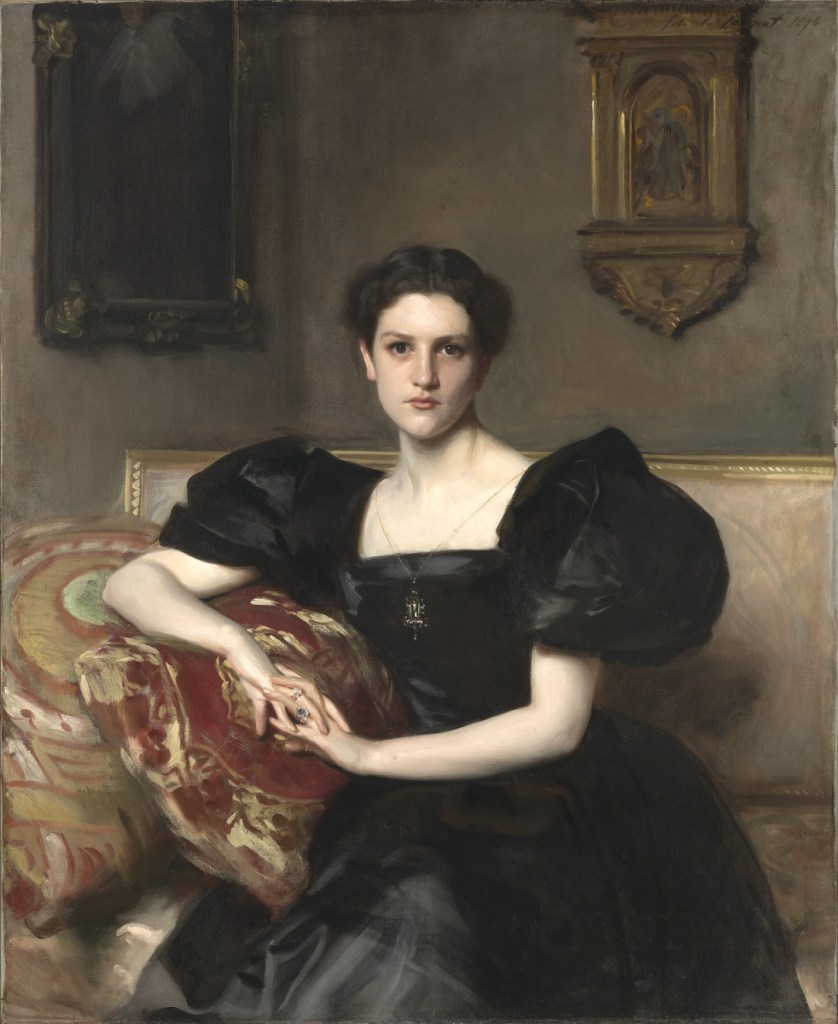
Elizabeth Winthrop Chanler
by John Singer Sargent
USED WITH PERMISSION

Published collections of places and businesses like The Chicago Institute of Art or the New York Times.

I will load myself up with these monster books and take them to a table and thumb through the pages.

When I got to the University of Michigan and discovered study carrels, I found my idea of Heaven on Earth.

I would prowl the stacks of the Harlen Hatcher Graduate Library looking for oversize books.

I traveled through time and space and never left.

I felt the world was at my fingertips.

When the World Wide Web came along with the Graphical User Interface and high speed internet access, worlds of other kinds were at my fingertips.

When I can, I ‘goof off online’ or ‘surf’ randomly looking for photos.

Access beyond belief.

Last night I was reading about Hitler making a speech in the Kroll Opera House in Berlin in 1939.

The author described the setting.

Less than a minute later, I was looking at photos of the speech.

Readers of this blog will notice that I often include photos from history that I find online.

But there is a problem.

Being in news and with a history in publishing, I am all too aware of the question of owners rights.

Who owns the photo?

Do I really have the rights to use this photo?

For the most part I don’t worry too much but the thought is there.

This week, the Smithsonian Institution gave me a gift.

Everyone else in the world is in on the gift as well, but I feel this gift was made with me in mind.

The Smithsonian has released 2.8 million high-resolution two- and three-dimensional images from across its collections onto an open access online platform for patrons to peruse and download free of charge.

Did you see that last line?

FREE OF CHARGE.

2.8 million images?

At a 1,000 words per picture that 2.8 Billion words!

The online press release states, “And this gargantuan data dump is just the beginning. Throughout the rest of 2020, the Smithsonian will be rolling out another 200,000 or so images, with more to come as the Institution continues to digitize its collection of 155 million items and counting.”

The release also has an invitation.

The Smithsonian wants users to Create, Imagine, Discover.

Create, Imagine, Discover.

Silly that these three words can stir my soul.

But they do.

The new digital depot encourages the public to not just view its contents, but use, reuse and transform them into just about anything they choose—be it a postcard, a beer koozie or a pair of bootie shorts.

Says Effie Kapsalis, who is heading up the effort as the Smithsonian’s senior digital program officer. “We can’t imagine what people are going to do with the collections. We’re prepared to be surprised.”

As I work to make sure that you can watch you Local TV News on your phone, I realize that not all technical advances are cultural ones.

This effort promises to be both.

I am off to surf https://www.si.edu/openaccess.

See you later … next week … maybe next year.

2.27.2020 – The sky is falling

The Sky is falling!
Aarne-Thompson-Uther scale!
Run and tell the King!

I saw on the news where a Flight Attendant was identified as having coronavirus.

She had walked through LAX, the international airport in Los Angeles.

Not to worry as the entire terminal was being disinfected.

I then saw video of people wearing trash bag like ‘haz-mat’ suits spraying fog all over the interior of LAX with leaf blowers.

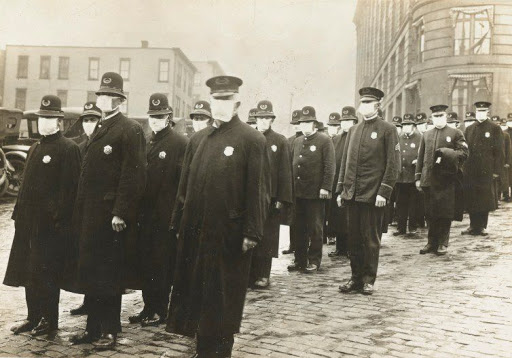
SPANISH FLU – 1918 – Boston, MA

I have tried to find out just what I will experience when I get coronavirus.

Seems to me that for a week or so I will have aches and pains, a cough and a fever.

This isn’t On the Beach.

We aren’t in Australia after the world’s powers have destroyed themselves in a nuclear war.

We are not all waiting for the unavoidable, fatal dose of radiation.

It’s the flu.

People are dying from coronavirus to be sure.

Sometimes I feel that I have a better chance of being in a fatal car crash driving on i85 in Atlanta everyday than I do of being killed by the coronavirus.

I get on i85 everyday without a thought.

I drive on i85 concerned only with how long it will take.

What is going on here.

IN A WORLD GONE C R A Z Y, we need a Franklin Roosevelt to say, “All we have to fear … is fear itself.”

Good luck with that.

Good luck with getting that message out.

I work in news.

The company line is, “We are here to INFORM not SCARE YOU.”

Monica Lewinsky said, “No editor ever assigned a story that wouldn’t get eyeballs.”

And the eyeballs are focused on the DEADLY COVID-19.

It’s OUTSIDE OF YOUR DOOR.

It’s GOING TO GET YOU.

Nothing new here really I guess.

By now you must be wondering.

What is the Aarne-Thompson-Uther scale?

Is it a measure of a pandemic?

Is it a type of flu?

Is it a reference to panic levels in a crowd?

Aarne-Thompson-Uther type or more accurately, Aarne-Thompson-Uther type 20C, is the classification of folktales that includes the story of Chicken Little

According to Wikipedia, “The story is listed as Aarne-Thompson-Uther type 20C, which includes international examples of folktales that make light of paranoia and mass hysteria. There are several Western versions of the story, of which the best-known concerns a chick that believes the sky is falling when an acorn falls on its head. The chick decides to tell the king and on its journey meets other animals (mostly other fowl) which join it in the quest. After this point, there are many endings. In the most familiar, a fox invites them to its lair and then eats them all. Alternatively, the last one, usually Cocky Lockey, survives long enough to warn the chick, who escapes. In others all are rescued and finally speak to the king.”

Paranoia and mass hysteria.

Add this to social media and a fire will get started that cannot be extinguished.

It is sad.

It is really sad.

The story Chicken Little goes back to the 1800’s.

Haven’t grown up much since then.

So easy to give in to the paranoia and mass hysteria.

So easy to go along.

Nothing new there either.

Back in 1600, Big Bill wrote in his play, Hamlet,

“Thus conscience does make cowards of us all,
And thus the native hue of resolution
Is sicklied o’er with the pale cast of thought,
And enterprises of great pitch and moment
With this regard their currents turn awry
And lose the name of action.”

2.26.2020 – Everyone gets sick

Everyone gets sick
Everyone has guns – panic
This will not end well

Fill a large pot with water.

Water from Flint, Michigan works best.

Add 1 full measure of bread and milk anxiety.

The type of anxiety on display when supplies of bread and milk are wiped out due to predicted bad weather.

And equal measures of any type of fear you have laying around.

Fear of getting sick.

Fear of sick people.

Fear of guns.

Fear of losing guns.

Fear of Immigrants.

Fear of being poor.

Fear of the poor.

Fear of other people.

Fear of other people who look different.

Fear of other people who speak a different language.

And several spoonfuls of outrage.

Outrage caused by the possibility of getting sick when it is a Constitutional Right of Americans to never be sick.

It is in the CONSTITUTION for crying out loud.

I would prove it if I wasn’t so busy, but its in there.

Outrage by the Government not doing enough to prevent everybody from getting sick.

Add generous helpings of media coverage.

Stir well.

Cover tightly with lid.

Place pot on social media and set to boil.

Stand back and see what this Country is really made of.

Talk about eye wide shut.

Looking at an accident with hands over the eyes.

I would use that wonderful German term, schadenfreude, or pleasure derived by someone from another person’s misfortune, except that this won’t be another person’s misfortune.

It is going to ours!

It is my prediction that the outcome of the election this November will be decided by how the Coronavirus is handled.

How it is handled by the people.

How it is handled by the media.

How it handled by the Government.

How it is handled by the Candidates.

How it is handled by the President.

By the President …..

Hmmmmmmmmmmmmmmmmmmmmmm.

2.25.2020 – wealth and privilege

wealth and privilege
empathetic perspective
bias of money

In the movie Citizen Kane, Charles Foster Kane, played by Orson Welles, explains why he is attacking the money and the trusts that are trying to run the city.

Kane says, “I am the publisher of the Enquirer. As such, it is my duty – I’ll let you in on a little secret, it is also my pleasure – to see to it that decent, hard-working people of this city are not robbed blind by a group of money – mad pirates because, God help them, they have no one to look after their interests! I’ll let you in on another little secret, Mr. Thatcher. I think I’m the man to do it. You see, I have money and property –

If I don’t defend the interests of the underprivileged, somebody else will – maybe somebody without any money or any property and that would be too bad.”

Is this what motivates the billionaire of today to enter politics?

They have money and property and if they don’t defend ‘the working man’ someone else will.

A someone without any money and property.

And that would be too bad.

Too bad for who?

The people with money and property?

I cannot figure where, why or what is motivating these billionaires.

Barbara Holland wrote of the Roosevelt’s, that their money was so old, it didn’t crackle anymore, it whispered.

Mr. FD Roosvelt (to keep him straight from his cousin and wife’s uncle, TR Roosevelt) was born rich.

Mr. Roosevelt had it all.

Money, privilege and position.

And then he got polio.

Then he ran for Governor of New York and President of the United States.

Ran in the political sense of word as after the polio, he had to use a wheelchair.

Eleanor Roosevelt was once asked if the polio had affected FDR’s mind at all.

Anyone who has gone through great suffering,” Eleanor explained, “is bound to have a greater sympathy and understanding of the problems of mankind.”

Somewhere I read a version of this quote that Eleanor said polio had affected his mind.

It taught him to understand the hopeless.

In his 2nd Inaugural address, FDR said, “I see one-third of a nation ill-housed, ill-clad, ill-nourished. … The test of our progress is not whether we add more to the abundance of those who have much; it is whether we provide enough for those who have too little.”

Worth repeating, The test of our progress is not whether we add more to the abundance of those who have much; it is whether we provide enough for those who have too little.

A third time, it is whether we provide enough for those who have too little.

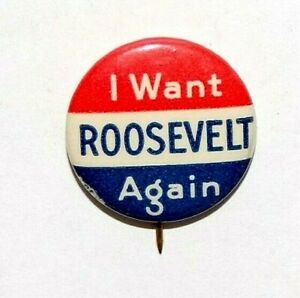
I want Roosevelt again.

POSTSCRIPT: A story was told back in the day that after FDR died in 1945, a Republican was laughing at a Democrat, saying “who are you gonna get to run now?” The Democrat shook his head and said, “Don’t know, we will dig someone up.” “NO NO NO PLEASE,” said the Republican.

ONE last thing, many Political Scientists and Historians don’t think that Mr. Truman was elected in 1948 but that FDR was reelected for a 5th term.