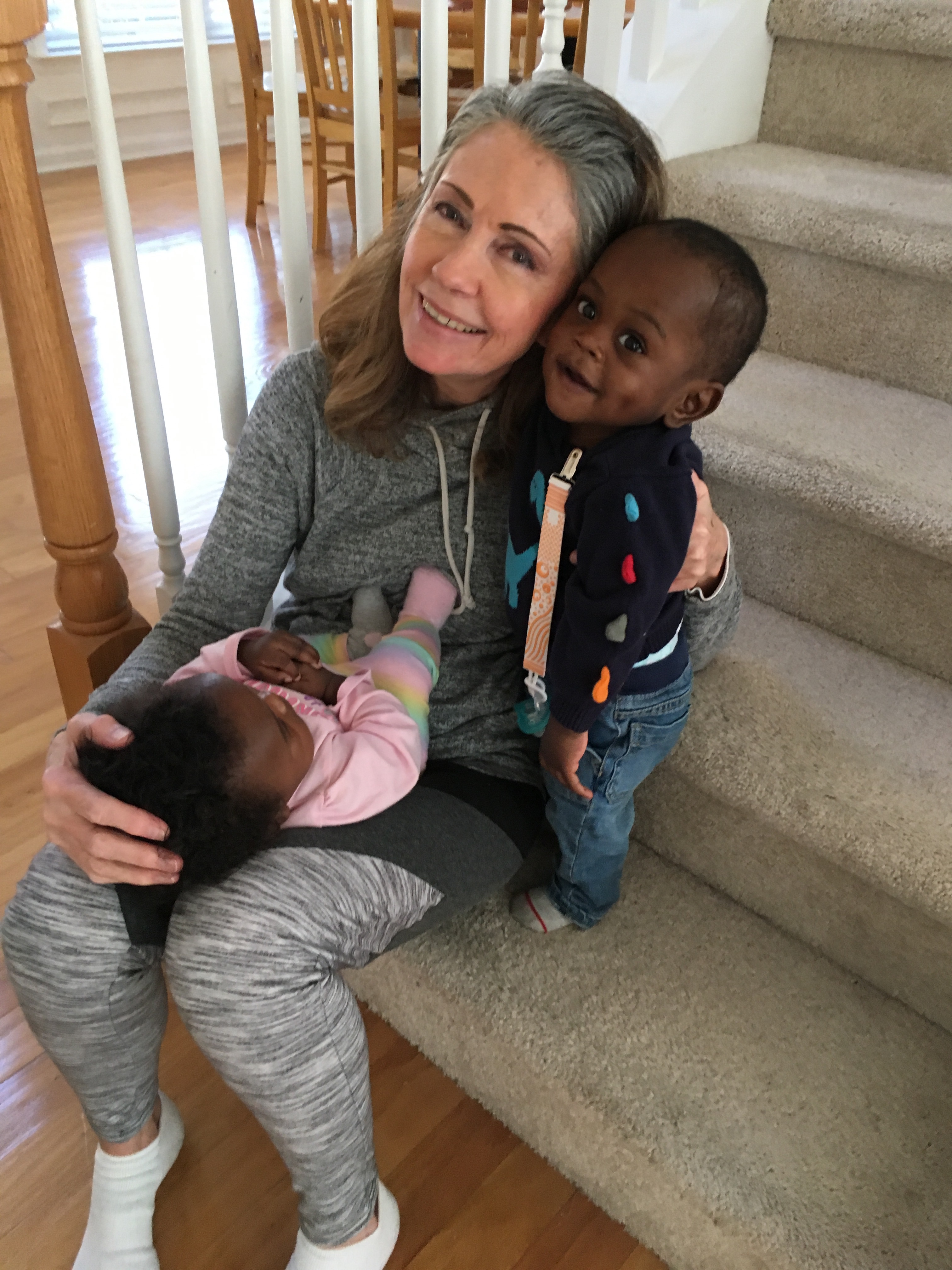
Leslie and Grand Kids …. Haec Ornamenta Mea I need not translate
Haec ornamenta mea is a Latin phrase meaning “These are my jewels”. The expression is attributed to Cornelia Africana (c. 190 – c. 100 BC). When women friends questioned Cornelia about her mode of dress and personal adornment, which was far more simple and understated than was usual for a wealthy Roman woman of her rank and station, Cornelia indicated her children and said, Haec ornamenta mea!
The final line, “I need not translate”, I took from the movie, GoodBye Mr. Chips.
When Chips retires, he addresses the student body and says, “haec olim meminisse juvabit.” and then says, “I need not translate.”
Chips had been the latin master and so, of course, all those attending could identify and translate the phrase, which is from Virgil, as “Some day it will be a pleasure to remember these things.”
Gens du pays, c’est votre tour, De vous laisser parler d’amour … Bon!
Good words for today.
This is the un-official anthem of Quebec.
One translation is ‘ Folks of the land, it is your turn to let yourselves be lovingly spoken to’
But Google Translate returns:
People of the country,
it’s your turn,
To let you talk about love
I am not sure how Haiku works with French so I will have to ask my niece Joann, who teaches French for her opinion on the syllables and the translation.
FROM Wikipedia:
“Gens du pays” has been called the unofficial national anthem of Quebec. Written by poet, songwriter, and avowed Quebec nationalist Gilles Vigneault (with music co-written by Gaston Rochon), it was first performed by Vigneault on June 24, 1975 during a concert on Montreal’s Mount Royal at that year’s Fête nationale du Québec ceremony. It quickly became a folk classic, and it has been played frequently at Fête nationale ceremonies since then. The chorus is by far the most famous part of the song: Gens du pays, c’est votre tour / De vous laisser parler d’amour, which, translated, says, “Folks of the land, it is your turn to let yourselves be lovingly spoken to.”
The song is also associated with the Quebec sovereignty movement and the sovereigntist Parti Québécois, which use it as a sort of anthem. A famous instance of this took place at René Lévesque’s concession speech after the citizens of the province rejected independence in the 1980 Quebec referendum. At the end of Lévesque’s speech, the crowd assembled to hear him speak stood up at the end of the speech and sang “Gens du pays”, which Lévesque called “the most beautiful Québécois song in the minds of all Quebecers.”




 No Haiku For You